
Naan
India's beloved leavened flatbread, made soft and chewy with yogurt in the dough. No tandoor needed — a screaming-hot skillet bakes it beautifully at home. Perfect for scooping up butter chicken and curries.
Ingredients
- Flour · all-purpose250 g
- Plain yogurt4 tbsp
- Milk · lukewarm4 tbsp
- Dry yeast1 tsp
- Sugar1 tsp
- Salt0.5 tsp
- Oil1 tbsp
- To finish
- Melted butter (ghee)2 tbsp
- Minced garlic · garlic naan, optional1 tbsp
- Cilantro · optional
Steps
- ⏲ 5 min
Stir the yeast and sugar into the lukewarm milk and leave 5 minutes until frothy.
- ⏲ 60 min
Mix the flour and salt with the yogurt, oil, and yeast milk, and knead to a smooth dough. Let it rise in a warm spot for 1 hour, until doubled.
- ⏲ 5 min
Divide the dough into 6, roll into balls, then roll or stretch each into a thin teardrop shape.
- ⏲ 2 min
Heat a skillet (cast iron or nonstick) until very hot. Lay a naan on it; when big bubbles form and the underside browns in spots, flip it.
- ⏲ 1 min 30 sec
Brown the other side, pressing gently so it puffs evenly.
- ⏲ 1 min
Brush the hot naan with melted butter (for garlic naan, use butter mixed with garlic and cilantro). Serve warm.
Tips & Variations
Variations
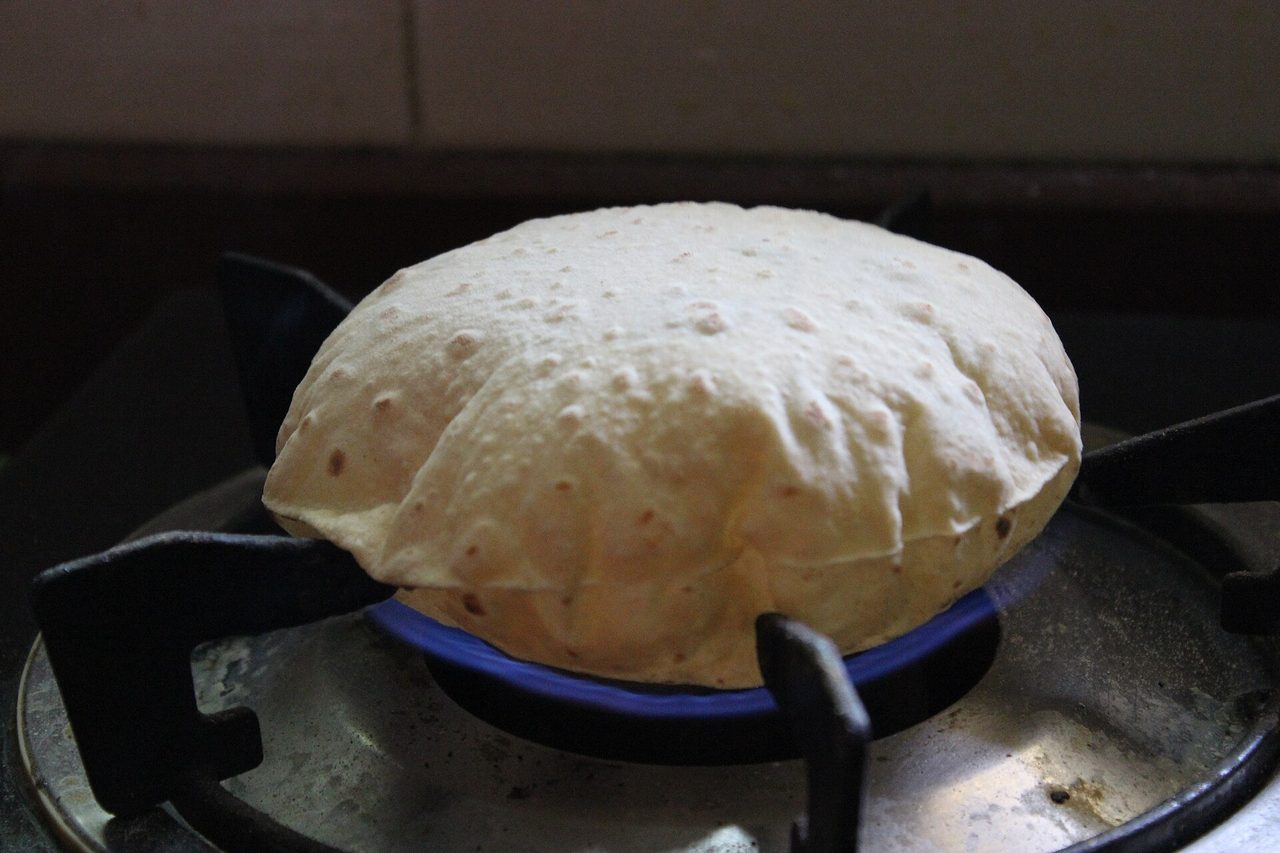
- The dough is a different thing from chapati. Chapati has no yeast and no baking powder and inflates on steam alone from three ingredients; naan has yeast, yoghurt and fat. Which is why a chapati is rolled thin and balloons whole, while a naan stays thick and blisters only in places.
- The yoghurt does two jobs and both are chemistry. Its acid weakens gluten so the bread stays tender rather than chewy, and the lactose in it browns at a lower temperature than sucrose does. The leopard-spotting on a naan that spent barely a minute in a tandoor is that lactose (browning).
- It sticks to the tandoor wall because the dough is slack. Only a wet dough can be slapped on by hand, and against clay above 400°C the underside cooks by conduction while the top cooks by radiant heat from the coals — both at once, in sixty to ninety seconds.
- Garlic naan: brush with butter mixed with minced garlic and coriander.
- Cheese naan: fold mozzarella into the dough before cooking.
- Butter naan: slather generously with melted ghee.
- Wholewheat naan: mix in wholemeal flour for a nuttier bread.
Tips
- Yoghurt makes the dough soft and chewy — do not skip it.
- Get the pan as hot as possible for tandoor-like char and puff.
- Roll into thin teardrops, but not too thin.
- Brush with butter the moment it comes off the heat, for aroma and moisture.
- Covering the pan briefly helps the top puff up too.
- At home the lid stands in for the tandoor's top heat. A cast-iron pan is hot underneath only, so left uncovered the base cooks and the top does not. A lid traps steam, which warms the top surface and lets it rise.
- There is a reason not to roll it too thin. A naan puffs because bubbles already in the dough expand, and they need thickness to expand into. Rolled to paper it simply lets the steam out and what comes out is closer to lavash — a dry sheet.
The basics behind this dish
- Dough and Gluten: When to Build It and When to Avoid ItThe same flour and water becomes a dumpling wrapper or a tender pancake. The difference is whether you built gluten or avoided it — and kneading and resting do different jobs.
- Heat Control: Preheating, Oil, and Reading the PanThe same ingredients become a different dish depending on pan temperature. When to add the oil, how to read heat by sound, and which dishes want low heat instead.
- Knife Skills: Grip, Cuts, and Why Size MattersHow you hold the knife matters more than how fast you cut. The pinch grip, the claw hand, and why uniform size is a cooking decision rather than a cosmetic one.
More of the same kind



More from this country



Sign in to edit.
AI-drafted, editor-reviewed · edits: 0 ·Edit history
https://cookiki.com/en/r/naan · cookiki · User contributions are licensed under CC BY-SA 4.0.