
Photo: RightCowLeftCoast · CC BY-SA 4.0
Orange Chicken
American-Chinese favorite: crispy fried chicken tossed in a glossy sweet-and-sour orange sauce of orange juice, soy, sugar, and vinegar. Crunchy on the outside, sticky-glazed all over — irresistible over a bowl of rice.
Ingredients
- Chicken thighs · bite-size500 g
- Salt & pepper · to taste
- Egg1
- Cornstarch · for coating0.5 cup
- Flour0.25 cup
- Oil for frying · plenty
- Orange sauce
- Orange juice · 1-2 oranges0.5 cup
- Orange zest1 tsp
- Soy sauce2 tbsp
- Sugar3 tbsp
- Vinegar2 tbsp
- Minced garlic & ginger1 tbsp
- Cornstarch slurry · 1 starch + 2 water1 tbsp
- Scallion & sesame · garnish
Steps
- ⏲ 5 min
Cut the chicken into bite-size pieces, season with salt and pepper, toss with the egg, then coat well in the cornstarch and flour.
- ⏲ 8 min
Heat oil to 175C/350F and fry the chicken until golden and crisp. Fry twice for extra crunch. Drain.
- ⏲ 3 min
Fry the garlic and ginger briefly, then add the orange juice, zest, soy, sugar, and vinegar and bring to a boil.
- ⏲ 2 min
Stir in the cornstarch slurry and cook until the sauce is thick and glossy.
- ⏲ 1 min
Add the fried chicken and toss quickly to coat it all over.
- ⏲ 1 min
Scatter scallion and sesame seeds over the top and serve with rice.
Tips & Variations
Variations
- Orange shrimp: Use shrimp for a quicker version.
- Air-fryer/oven: Bake instead of frying for a lighter dish.
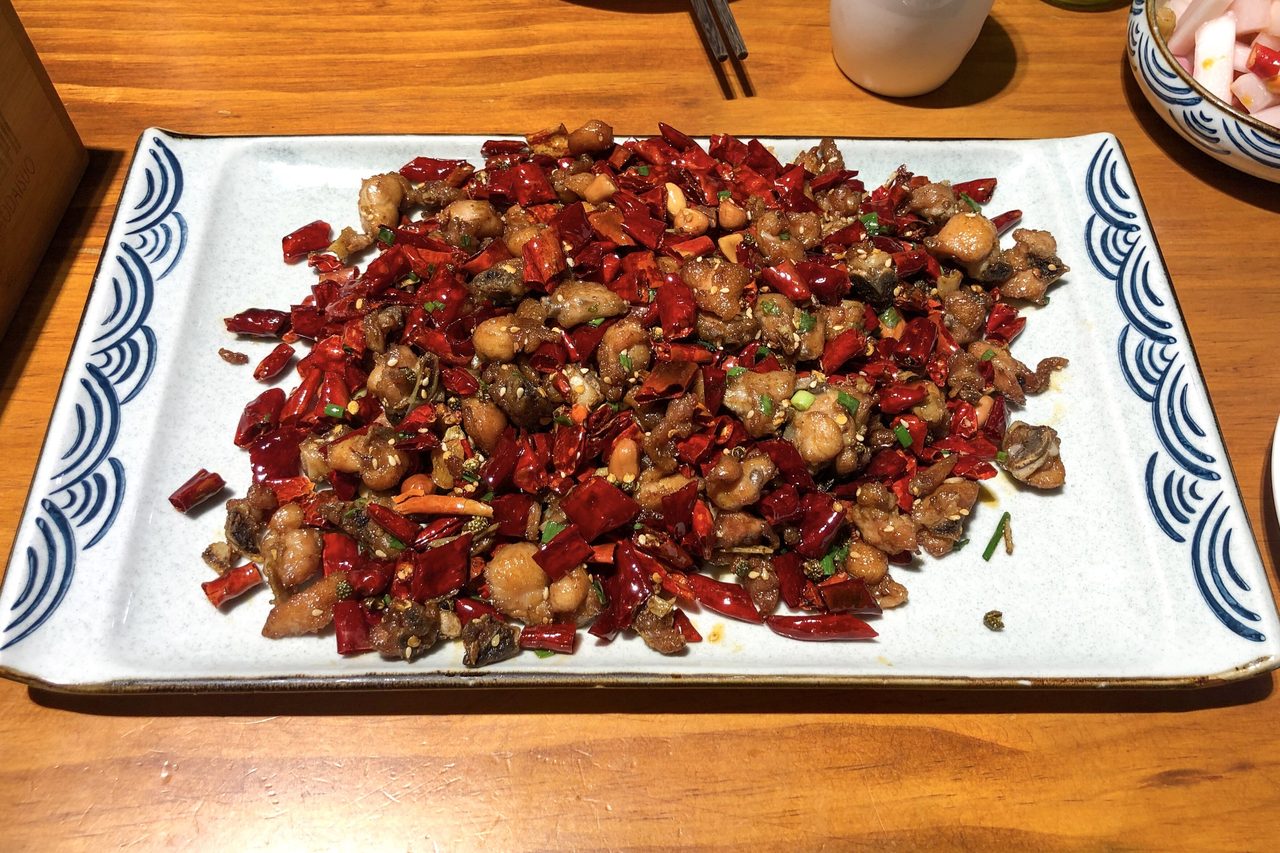
- Spicy: Add dried chilies or chili paste (mandarin chili style).
- Lemon chicken: Swap orange for lemon for a zestier take.
Tips
- A cornstarch-heavy coating stays crispier longer.
- Double-fry for crunch that lasts.
- Toss and serve immediately so it doesn't go soggy.
- Use fresh orange juice and zest for real citrus aroma.
- Serve over rice with a side of blanched broccoli.
- This sauce is acidic all the way through, and the thickening guide's advice cannot be followed. Thickening explains that acid cuts starch chains, so acidic sauces need more starch — and it recommends adding the acid after the thickening has set. Here the acid is not a seasoning you could hold back: half a cup of orange juice and two tablespoons of vinegar are the sauce. Two things follow. Use a little more starch than a neutral glaze of the same thickness would need, and once the slurry is in, stop — every extra minute of boiling with that much acid present cuts the chains further and it thins back on you.
- Most of the orange aroma is in the zest, and boiling it destroys the point. What reads as "orange" is largely limonene and other oils from the peel, and they are volatile: added at the start of step 3 and brought to a boil, most of it leaves with the steam. Hold back half the zest and stir it in off the heat, and the difference is not subtle. The juice is doing something else entirely — sugar, acid and water.
- Its Chinese ancestor uses dried peel, not fresh. The dish is American-Chinese, created in the 1980s, and the Hunan-derived plate it descends from is chenpi ji — chicken with aged dried tangerine peel, which has lost those volatile top notes over years of drying and tastes deeper and faintly bitter instead. If a version with fresh orange tastes thin to you, that is the gap you are noticing.
- The toss is measured in seconds. A cornstarch shell is porous, so it starts drinking the sauce the moment they meet, and there is no way back. Tangsuyuk puts the rule as thickening the sauce well enough that it clings to the meat; the reason that works is that a properly thick sauce sits on the crust as a film, while a loose one soaks straight in. Same family: guobaorou, yangnyeom chicken and karaage all manage the same trade between crust and sauce.
The basics behind this dish
- Browning and the Maillard ReactionMeat fails to brown for one of three reasons: it is wet, the pan is cool, or you put too much in at once. Plus how the brown film stuck to the pan becomes your sauce.
- Cooking Meat: Temperature, Resting, and Cutting Against the GrainDoneness is a core temperature, not a number of minutes. What resting actually does, how to handle a thick cut, and why the direction you slice changes the texture.
- Knife Skills: Grip, Cuts, and Why Size MattersHow you hold the knife matters more than how fast you cut. The pinch grip, the claw hand, and why uniform size is a cooking decision rather than a cosmetic one.
More of the same kind


More from this country


Sign in to edit.
AI-drafted, editor-reviewed · edits: 0 ·Edit history
https://cookiki.com/en/r/orange-chicken · cookiki · User contributions are licensed under CC BY-SA 4.0.