
Photo: HEEYON KIM · CC BY 2.0
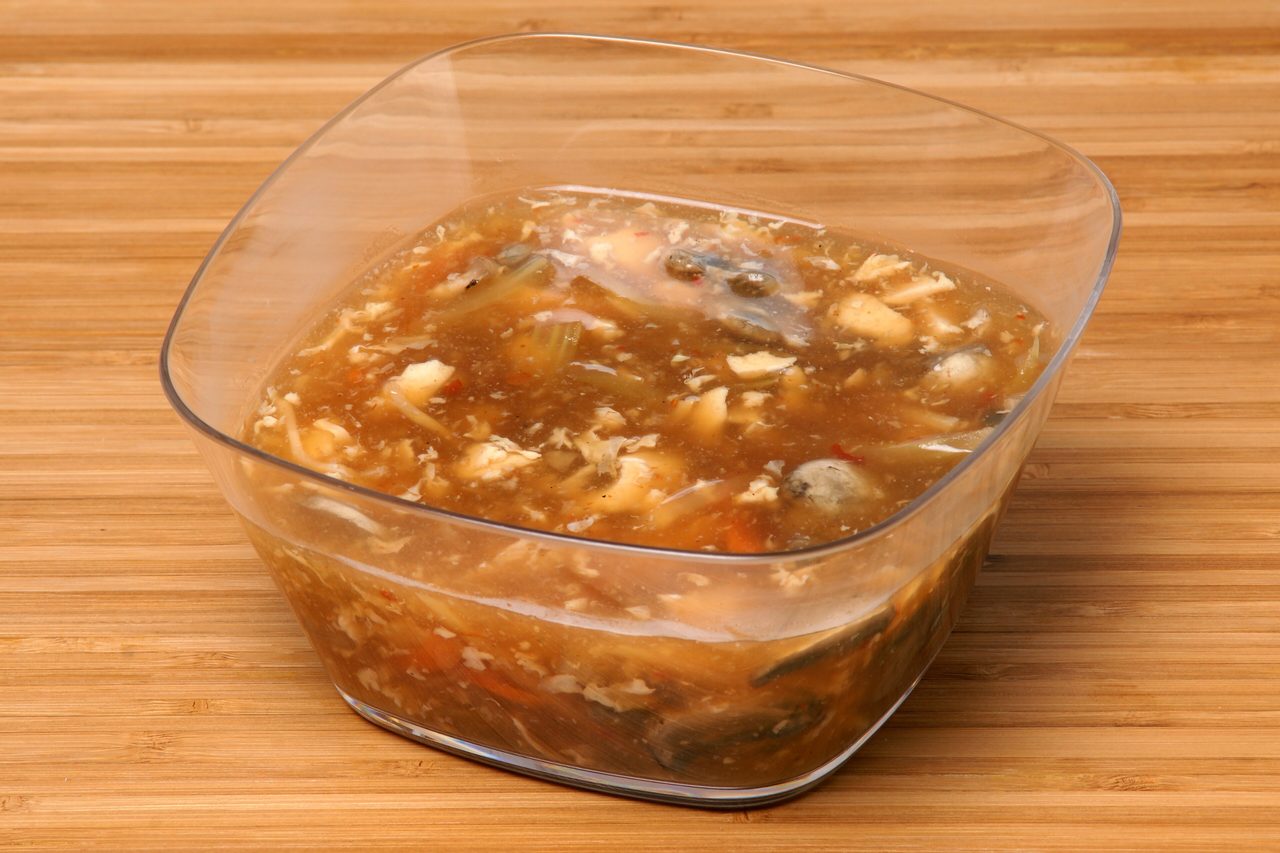
Yukgaejang (Spicy Beef Soup)
A fiery Korean beef soup: brisket simmered until tender and shredded, loaded with scallion, fernbrake, and bean sprouts in a broth spiked with chili oil. Deep, hot, and restorative — ladle it over rice for a full meal.
Ingredients
- Beef brisket400 g
- Scallions · cut large3
- Fernbrake (gosari) · cooked/soaked100 g
- Bean sprouts150 g
- Onion0.5
- Minced garlic1 tbsp
- Water8 cups
- Seasoning
- Gochugaru3 tbsp
- Oil (or sesame oil)3 tbsp
- Soup soy sauce3 tbsp
- Salt & pepper · to taste
- Egg · optional, beaten1
Steps
- ⏲ 50 min
Soak the brisket in cold water 30 minutes to draw out blood, then simmer in water with the scallion tops and onion for 40-60 minutes. Keep the broth.
- ⏲ 5 min
Lift out the beef, cool slightly, and shred it along the grain.
- ⏲ 20 sec
Make chili oil by stirring the gochugaru into the oil (20 seconds in the microwave, or warm gently).
- ⏲ 20 min
Return the shredded beef to the broth with the fernbrake, scallions, garlic, chili oil, and soup soy sauce, and simmer 15-20 minutes.
- ⏲ 5 min
Add the bean sprouts and cook 5 more minutes, then season with salt and pepper. Swirl in the beaten egg if you like.
- ⏲ 1 min
Ladle into bowls and serve with rice and kkakdugi.
Tips & Variations
Variations
- Dak-gaejang: Use shredded chicken instead of beef.
- Yukgaejang kalguksu: Add knife-cut noodles to the broth.
- With taro stem: Add torandae for extra earthiness.
- Milder: Cut back the gochugaru and season with soy.
Tips
- Shred the beef along the grain so it blends into the broth.
- Making chili oil separately brings out deep color and aroma.
- Use plenty of scallion, cut large — it's the heart of the dish.
- Soaking out the blood first keeps the broth clean and clear.
- It tastes even richer the next day.
- Gosari has to be processed before it is food, and the recipe assumes you bought it that way. Bracken fern contains ptaquiloside, which is water-soluble and breaks down with heat — which is why dried gosari is boiled and then soaked with changes of water, traditionally in water with wood ash in it. Packaged gosari sold ready-to-cook has been through that; if you start from dried, boil it and soak it overnight rather than treating the soak as a texture step. It puts this dish in the same family as rawon and fufu, where the first job is making the ingredient edible at all.
- The scallion is a vegetable here, not an aromatic. Three whole stalks cut into lengths, simmered fifteen to twenty minutes until they go soft and sweet — that is why they are cut large enough to survive it and why the tip calls them the heart of the dish. In galbitang and seolleongtang the scallion goes in for aroma and is often lifted out; here you eat it, and a bowl of yukgaejang without a great deal of it is a different soup.
- Shredding along the grain is written up elsewhere. Jangjorim explains why a dish built on long strands wants the opposite of the usual slice-across-the-grain rule, and ropa vieja uses the same move to let a sauce reach every strand. Here the point is that the strands hang in the broth and carry the chilli oil rather than sitting in a lump.
- The chilli oil, and why soup soy sauce rather than salt. Pozole notes that both dishes build their chilli separately and pour it in — gochugaru's colour and aroma are fat-soluble, so they need the oil, and 20 seconds of gentle heat is the whole of it. Guk-ganjang then brings salt and a fermented savour that plain salt cannot (building umami), which is why swapping in table salt leaves the bowl tasting thin however much you add. Serve with kkakdugi.
The basics behind this dish
- Stocks and Broths: Clarity, Time, and Why You Do Not Salt ThemWhat separates a clear stock from a cloudy one is temperature, not ingredients. Why you start in cold water, how long each ingredient wants, and why salt comes later.
- Salt: When You Add It Matters More Than How MuchThe same amount of salt either draws water out or seasons all the way through, depending on when it goes in. Osmosis, seasoning in layers, and why salt types are not interchangeable by volume.
- Knife Skills: Grip, Cuts, and Why Size MattersHow you hold the knife matters more than how fast you cut. The pinch grip, the claw hand, and why uniform size is a cooking decision rather than a cosmetic one.
More of the same kind


More from this country


Sign in to edit.
AI-drafted, editor-reviewed · edits: 0 ·Edit history
https://cookiki.com/en/r/yukgaejang · cookiki · User contributions are licensed under CC BY-SA 4.0.