
Photo: Acabashi · CC BY-SA 4.0
Thai Green Curry (Kaeng Khiao Wan)
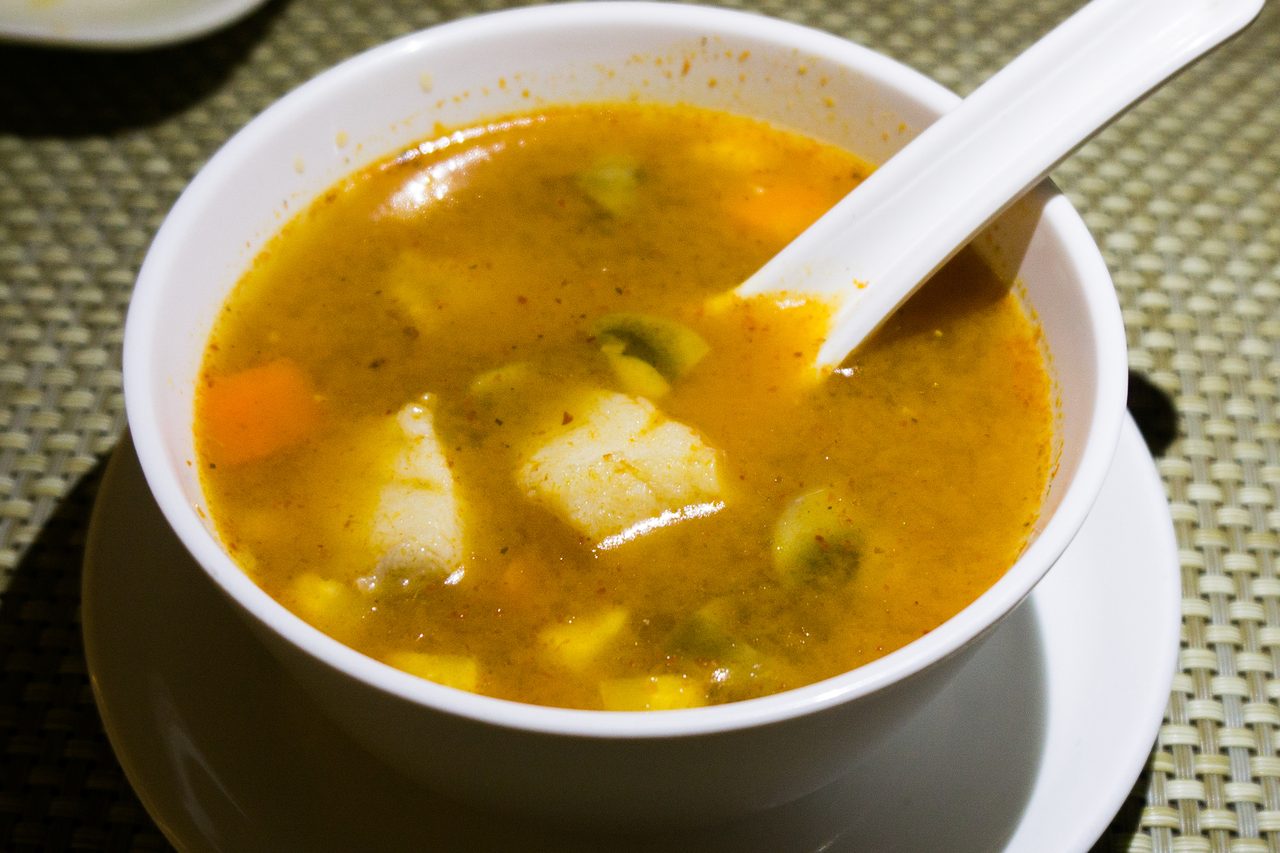
A fragrant, gently spicy Thai curry of chicken and vegetables simmered in green curry paste and coconut milk. With store-bought paste it's a 25-minute one-pot dish, perfect over jasmine rice.
Ingredients
- Chicken thigh (or breast) · bite-size400 g
- Green curry paste · store-bought3 tbsp
- Coconut milk · 1 can400 ml
- Water or chicken stock150 ml
- Eggplant (Thai or regular) · bite-size1
- Bell pepper · sliced1
- Bamboo shoots · optional100 g
- Fish sauce2 tbsp
- Sugar (or palm sugar)1 tbsp
- Kaffir lime leaves · optional4
- Thai basil · optional1 handful
- Lime · cut into wedges, to serve0.5
- Cooking oil1 tbsp
Steps
- ⏲ 3 min
Spoon 3–4 tbsp of the thick cream from the top of the coconut milk into a pan and simmer over medium heat 2–3 minutes until it 'cracks' and the oil separates (use oil if it won't separate).
- ⏲ 2 min
Add the green curry paste and fry 1–2 minutes until fragrant.
- ⏲ 3 min
Add the chicken and stir-fry until the surface turns opaque.
- ⏲ 7 min
Pour in the rest of the coconut milk and the water (stock), bring to a simmer, add the eggplant and bamboo, and cook 5 minutes.
- ⏲ 5 min
Season with fish sauce, sugar, and lime leaves, add the bell pepper, and simmer 3–4 minutes more until the chicken is cooked and the veg is tender-crisp.
- ⏲ 30 sec
Off the heat, stir in the Thai basil. Serve with warm jasmine rice.
Variations
- Shrimp or beef: Swap the chicken for shrimp or beef.
- Vegetarian: Tofu, mushrooms, and veg, with soy sauce instead of fish sauce.
- Red/yellow curry: Just change the paste for a different curry.
- Milder: Use less paste and more coconut milk.
Tips
- Crack the coconut cream first — frying the paste in the separated oil blooms the aroma.
- Fry the paste well to cook off the raw edge for deeper flavor.
- Balance fish sauce, sugar, and lime for salty-sweet-sour harmony.
- Add the basil and lime leaves at the end to keep them fragrant.
- Pastes vary in saltiness, so season last.
More detail and the reasons why (5)
- One to two minutes here, where a rempah gets fifteen. Laksa fries its paste for 15-20 minutes, rawon for eight to ten, mee rebus for eight. This recipe takes one to two, and that is not carelessness — it is what the paste is made of. The fork in the road is the one that separates it from massaman curry: a heavy dose of toasted cinnamon, clove, cardamom and star anise sets massaman apart, while a green curry paste toasts only a little coriander seed, cumin and white pepper and is built on fresh herbs.
- Fresh aromatics have the least tolerance for heat of anything that goes into a paste. Coriander, basil and their kind are delicate herbs that belong off the heat, or in the last thirty seconds, because their aroma compounds start escaping well below the boil (fresh herbs). Dried chilli, shallot and belacan need time and heat to give theirs up; green chilli, lemongrass stems, kaffir leaf and coriander root hand it over within a minute and then start losing it. So the length of "fry the paste until it is fragrant" is set by the ingredient, not by the dish.
- Then why fry it at all. Because aroma dissolves in fat and not in water, which is the fact kaeng som is built on — that curry has no fat in it anywhere and pounds its paste far longer to compensate. And the fat does not only extract, it holds: what would leave for the air in an open pan is captured in the oil and then carried through the whole pot. That is what the cracked coconut cream is for, and why a spoon of plain oil is an honest substitute rather than a compromise.
- The green is chlorophyll, and chlorophyll is the pigment acid destroys. As in blanching, heat releases organic acids from the cells, those acids strip the magnesium out of the chlorophyll, and the colour shifts to olive and then to yellow. That is why the whole simmer here is under ten minutes, and why the ingredients carry kaffir lime leaves rather than juice — the aroma without the acid. Squeeze the lime into the bowl instead.
- Tear the basil; do not take a knife to it. Chopped basil oxidises where the blade cut it, turns black, and leaves its aroma on the board. Off the heat and torn by hand is the whole of step 6.
The basics behind this dish
- Blooming Spices: Why Aromatics Go into Fat FirstStir ground spice into liquid and half the aroma never arrives, because most aroma compounds are fat-soluble. The thirty-second window, and the order things go in.
- Fresh Herbs: Hardy, Delicate, and When to Add ThemAroma is volatile, so timing is the whole game. What separates a hardy herb from a delicate one, why the stems are worth more than you think, and why basil should never meet a knife.
- Browning and the Maillard ReactionMeat fails to brown for one of three reasons: it is wet, the pan is cool, or you put too much in at once. Plus how the brown film stuck to the pan becomes your sauce.
More of the same kind



More from this country


Sign in to edit.
Written with AI · how we check it · Edit history
https://cookiki.com/en/r/green-curry · cookiki · User contributions are licensed under CC BY-SA 4.0.