
Yakiniku (Japanese Table-Grilled Beef)
Japanese beef grilled cut by cut on a grate set into the table. The tare is a dipping sauce rather than a marinade, which is why most of the meat arrives unseasoned. Each cut has its own thickness and therefore its own timing, and the order you grill them in matters too.
Ingredients
- Meat (serves 4)
- beef short rib · karubi, sliced 2–3mm400 g
- sirloin or chuck · rosu, 3mm300 g
- skirt or flap steak · harami, cut a thick 1.5cm300 g
- beef tongue · tan, 3mm; optional200 g
- beef intestine · horumon; optional, but it is where the dish began200 g
- Tare (dipping sauce)
- soy sauce6 tbsp
- mirin3 tbsp
- sake2 tbsp
- sugar2 tbsp
- apple · grated; Asian pear works too0.25
- garlic · grated, added after boiling2 cloves
- ginger · grated1 tsp
- sesame oil1 tbsp
- toasted sesame seeds1 tbsp
- Salt dip (for tongue and skirt)
- coarse salt1 tsp
- sesame oil2 tbsp
- black pepper0.5 tsp
- lemon · in wedges, served alongside0.5
- To serve
- lettuce and perilla leaves200 g
- shredded spring onion · tossed with sesame oil and chilli flakes100 g
- kimchi200 g
- cooked rice800 g
- wakame soup · the standard soup in a yakiniku restaurant800 ml
Steps
- ⏲ 2 min
Make the tare. Simmer the soy sauce, mirin, sake and sugar in a small pan over a low heat for 2 minutes, to drive off the alcohol and the raw edge.
- ⏲ 20 min
Let it cool completely, then stir in the grated apple, garlic and ginger with the sesame oil and seeds. The order matters: garlic and ginger boiled with the rest lose their aroma and leave you with soy sauce.
For the salt dip, mix the coarse salt, sesame oil and pepper in a small dish and serve the lemon separately. Leaner cuts and tongue suit this rather than the tare.
Arrange the meat on separate plates by cut. Never mix thicknesses on one plate — they cook at different rates, so a mixed plate guarantees some burnt and some raw. Treating every cut with one timing is the most common mistake here.
Get the grate properly hot: you should not be able to hold a hand 20cm above it for three seconds. On an under-heated grate the meat sticks, and where it sticks it releases water and steams instead of searing.
Start with the plain and salted thin cuts. Karubi and rosu at 2–3mm take 20–30 seconds a side; turn them the moment the red has gone and give them 20 seconds more. They keep cooking on the plate, so lift them a touch early.
Thick skirt at 1.5cm gets 90 seconds a side and then 2 minutes resting on the plate. Given the same time as the thin cuts, it chars outside and stays cold in the middle.
Tongue is shorter still — 15 seconds a side and it is done. Overcooked it turns rubbery, and thinly sliced tongue is already late by the time you look back at it.
Tare-marinated cuts and horumon go on last. Sugar from the tare burns onto the grate as a black crust, and everything grilled after that picks up the bitterness. Change the grate or the foil once the crust forms.
Dip the grilled meat in the tare or the salt dip and eat it with the lettuce, spring onion, kimchi and rice. The person grilling should be the person eating — grill it all in advance and pile it up and half the dish is gone.
Tips & Variations
Variations
- Shio yakiniku: no tare at all, just salt, sesame oil and lemon. The choice for leaner cuts, for tongue, and for good beef — salt does not cover the meat.
- Horumonyaki: built on offal — intestine, tripe, heart. It looks like a separate menu but is closer to the original form of the dish (see the history note below). Open the offal out flat, let the fat render off and grill it hot and briefly.
- Buta yakiniku: pork belly and shoulder. Pork has to be cooked through, so cut it thicker than beef and give it longer. A tablespoon of miso in the tare suits it.
- Jingisukan: Hokkaido's grilled lamb, on its own domed grate with onion and cabbage. A cousin rather than a variation.
- Yakiniku-don: leftover meat tossed briefly in tare and piled on rice — the standard next-day lunch.
- At home: a cast-iron grill pan, or a grate over a portable gas burner. It smokes a lot, so opening a window and running the extractor flat out is part of the preparation, not an afterthought. A non-stick pan will not survive this temperature.
Tips
- The tare is a dip, not a marinade. This is the biggest difference from bulgogi, which is steeped in pear, soy and sugar so the seasoning goes right through the meat. Yakiniku is mostly grilled unseasoned and dipped afterwards, which is why a yakiniku plate arrives as raw red beef (what marinades do). The same logic runs through the tare/shio split at a yakitori counter.
- The grilling order exists because of sugar. Put tare-marinated meat on first and the sugar burns to a black crust on the grate, and everything after it tastes bitter. Salted, then plain, then tare, then offal.
- Thickness sets the time. 2–3mm wants 20–30 seconds a side; 1.5cm wants 90. That is nearly a factor of ten, and mixed on one plate there is no way to judge it.
- Heat the grate fully first. Under-heated, the meat sticks, and where it sticks the juices run out and you are boiling rather than searing (heat control).
- Only the thick cuts get to rest. Two minutes on the plate settles the juices in skirt. Thin karubi has no resting time — it finishes cooking on the way to the plate (cooking meat and resting).
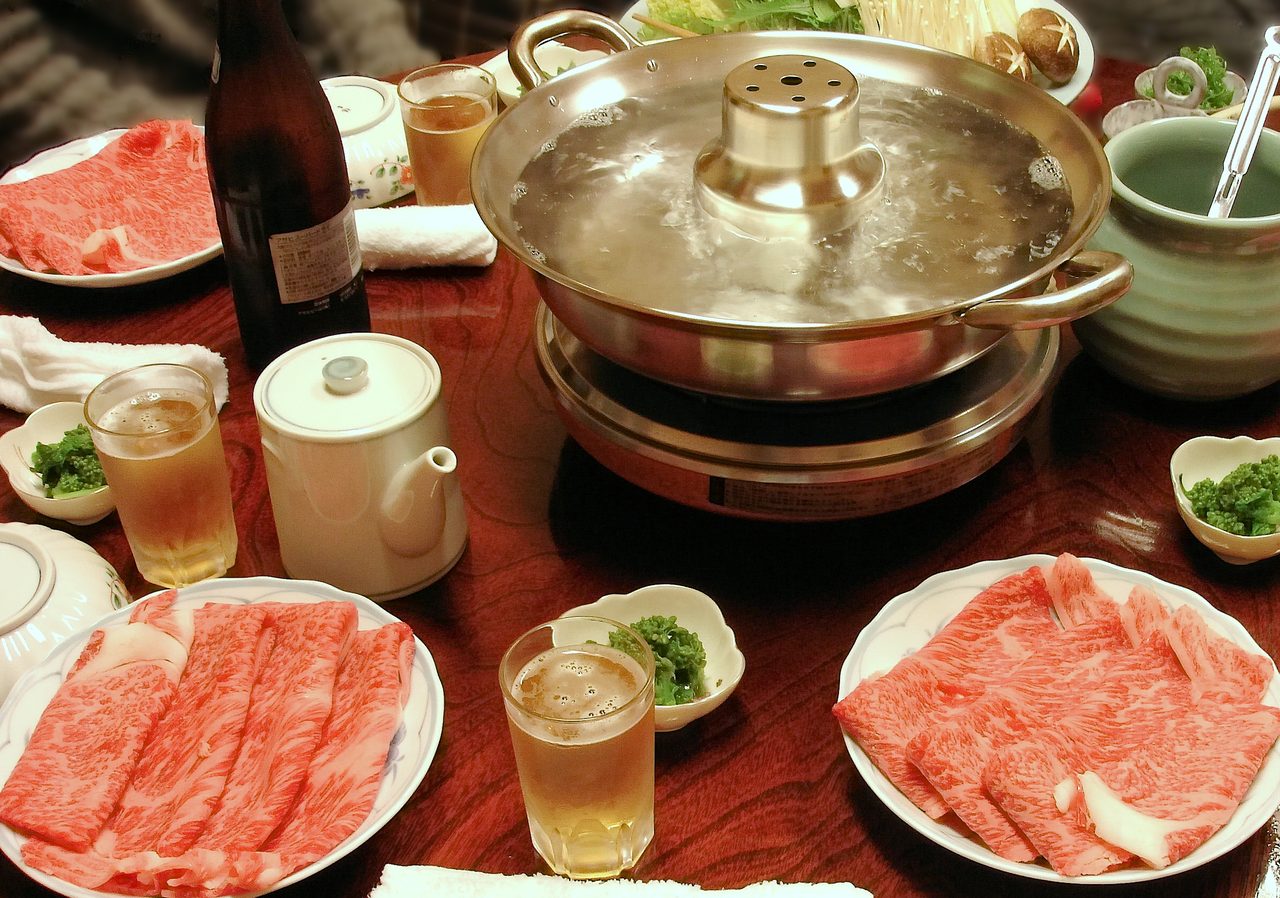
- Shabu-shabu is the same table and the opposite heat. Shabu-shabu cooks in water, so the fat melts into the broth and nothing browns. Yakiniku cooks in dry heat, so the fat drips and flares and the surfaces brown. Both are cooked a little at a time at the table, and they build completely different flavours (dry heat and moist heat).
- The spring onion salad and the seaweed soup are not garnish. Sharpness and broth between mouthfuls of fatty meat are what let you keep eating, which is why the supporting cast at yakiniku restaurants is so consistent.
- The history, accurately: yakiniku is not an old Japanese dish. It took shape after the war in Korean-run restaurants in Osaka and Tokyo, and the name spread in the 1960s and 70s. Horumon is the offal Japanese butchers were discarding at the time, which is why offal sits at the origin of the dish rather than off to one side. Beef import liberalisation in 1991 and the spread of smokeless grates through the 1990s made it what it is now. Its roots are tangled with Korean grilled meat, and the dish is easier to explain with that left in.
The basics behind this dish
- Browning and the Maillard ReactionMeat fails to brown for one of three reasons: it is wet, the pan is cool, or you put too much in at once. Plus how the brown film stuck to the pan becomes your sauce.
- Cooking Meat: Temperature, Resting, and Cutting Against the GrainDoneness is a core temperature, not a number of minutes. What resting actually does, how to handle a thick cut, and why the direction you slice changes the texture.
- Knife Skills: Grip, Cuts, and Why Size MattersHow you hold the knife matters more than how fast you cut. The pinch grip, the claw hand, and why uniform size is a cooking decision rather than a cosmetic one.
More of the same kind


More from this country


Sign in to edit.
AI-drafted, editor-reviewed · edits: 0 ·Edit history
https://cookiki.com/en/r/yakiniku · cookiki · User contributions are licensed under CC BY-SA 4.0.