
Tteokguk (Rice Cake Soup)
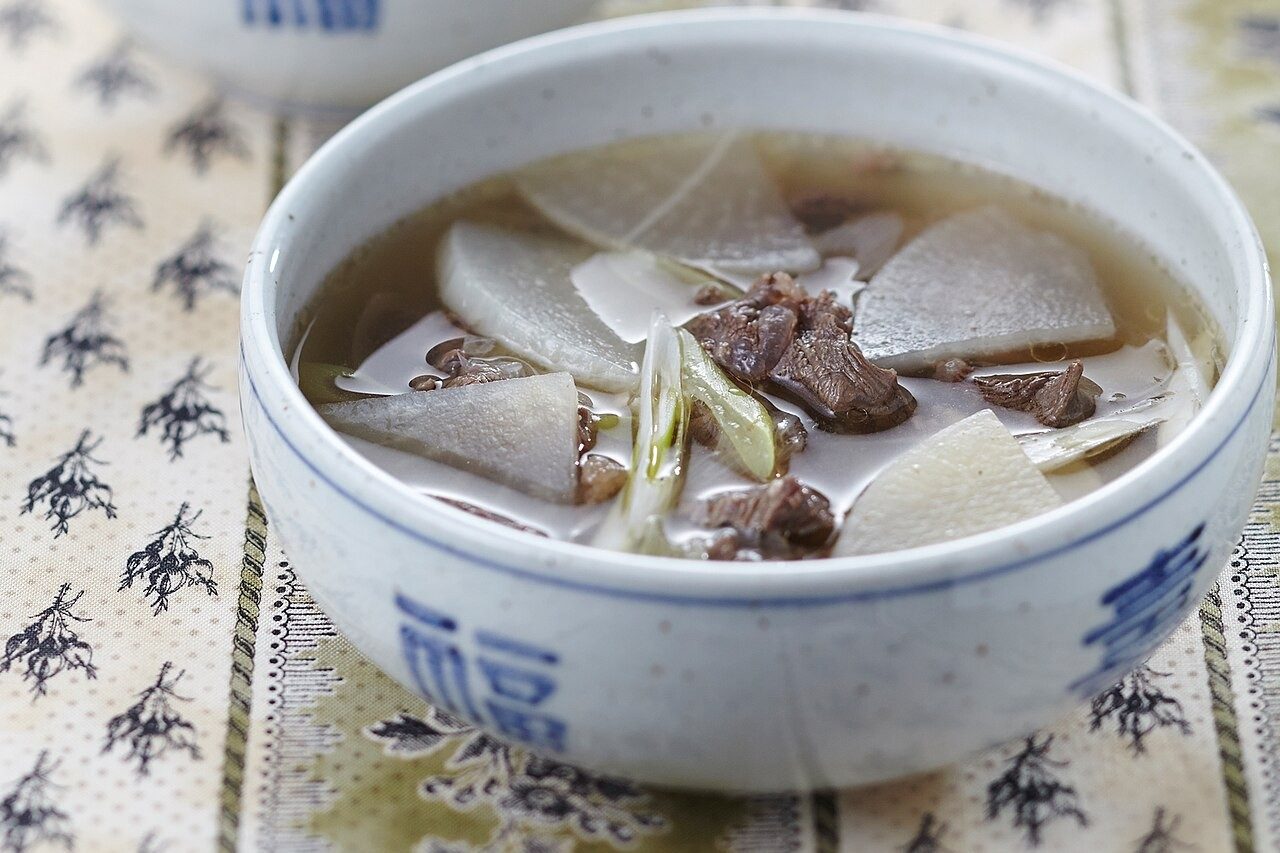
Korean rice cake soup: oval rice cakes simmered in anchovy or beef broth, topped with egg ribbons and nori. Eaten at Lunar New Year (it 'adds a year'), and ready in 30 minutes once you have the rice cakes.
Ingredients
- Sliced rice cakes (tteokguk-tteok) · soaked 30 min in cold water400 g
- Beef (brisket or ground) · sliced or minced100 g
- Eggs · for the garnish2
- Green onion · sliced1
- Nori · crumbled, to garnish1 sheet
- Soup soy sauce (guk-ganjang)1 tbsp
- Minced garlic1 tsp
- Sesame oil1 tsp
- Salt & pepper1 to taste
- Broth
- Water1.2 L
- Dried anchovies · or beef broth10
- Kombu (dried kelp) · 10cm1 piece
Steps
- ⏲ 15 min
Soak the rice cakes in cold water 30 minutes (longer if hard). Make broth: simmer water with anchovies and kombu; once boiling, remove the kombu, simmer 10 minutes more, then remove the anchovies.
- ⏲ 5 min
Make egg garnish: separate the whites and yolks (or not), fry into thin sheets, and slice into ribbons.
- ⏲ 3 min
Season the beef with sesame oil, soy, and garlic and lightly stir-fry in the pot (if minced, you can add it straight to the broth).
- ⏲ 2 min
Pour in the strained broth, season with soup soy sauce, and bring to a boil.
- ⏲ 7 min
Add the soaked rice cakes and cook 5–7 minutes until soft and floating (don't overcook or they go mushy).
- ⏲ 1 min 30 sec
Add the green onion and adjust with salt and pepper. Serve topped with egg ribbons and nori.
Variations
- Tteok-mandu-guk: Add dumplings for a heartier soup.
- Beef vs anchovy vs bone broth: Choose your broth (bone broth is richer).
- Chicken or seafood broth: Clams or oysters for a clean, briny version.
- Egg-drop style: Swirl beaten egg into the boiling soup instead of ribbons.
Tips
- Pre-soak the rice cakes so they cook fast and keep the broth clear.
- Add the rice cakes last and don't overcook (they turn mushy and thicken the broth).
- Use soup soy sauce for color and seasoning; finish with salt if needed.
- Skim the foam as it rises for a clear broth.
- Egg ribbons, nori, and pepper are the classic festive garnish.
More detail and the reasons why (5)
- Garae-tteok is made from non-glutinous rice on purpose, so that it will go hard. Ordinary short-grain rice is about 17% amylose and glutinous rice effectively 0%, and amylose is the part that recrystallises on cooling (cooking rice). In Dango and songpyeon that is the enemy — they harden within hours. Here it is the point. A cake that stayed soft could not be sliced, and without slices there is no soup. This is where rice made into tteok parts company with rice cooked as a grain.
- So soaking is not rinsing, it is reversing. A hard rice cake is starch that cooked once and then recrystallised. Half an hour in cold water puts water back into those crystals, so the cake can gelatinise again in the few minutes it gets in the broth. Dropped in dry, the outside dissolves into the soup while the middle is still firm.
- The cloudy broth is the same story. Surface starch leaves the cake, disperses through the liquid and scatters light. Soaking strips most of it into the soaking water first, which is what keeps the bowl clear. Galbitang goes one step further: because tteok clouds a broth, it is blanched separately and added to the bowl — the right answer where a clear broth is the whole dish.
- Past five to seven minutes the soup changes consistency. Keep boiling and the cakes gelatinise right through, their starch disperses into the broth, and you get a thickened soup with shapeless tteok in it. What would count as the failure of a pot of rice, porridge throughout, happens here inside a minute or two. That is why the tteok goes in last.
- Skimming is the broth's half of the job. The grey foam is coagulated protein out of the beef and anchovies; left there it breaks up again and clouds what you just kept clear. Every soup that drops lumps of starch into a broth — sujebi is the other obvious one — is managing these two things at once, surface starch and protein scum.
The basics behind this dish
- Cooking Rice: Rinsing, Ratios, and RestingHow far you rinse, how much water, and the ten minutes of resting decide the texture. And for fried rice or risotto, the rules invert.
- Freezing and Thawing Without Wrecking the TextureTexture damage from freezing comes down to ice crystal size. Freeze fast, exclude air, thaw in the fridge, and most of the problem disappears.
- Reviving Leftovers: Reheating by Texture, Not by DefaultThe microwave is not the right tool for everything. What you do depends on what degraded — moisture, crispness, or starch — and the three want opposite treatments.
More of the same kind


More from this country


Sign in to edit.
Written with AI · how we check it · Edit history
https://cookiki.com/en/r/tteokguk · cookiki · User contributions are licensed under CC BY-SA 4.0.