
Photo: Pasquale Paolo Cardo from Finale Ligure (Savona), Italy · CC BY 2.0
Caldo Verde (Kale Soup)
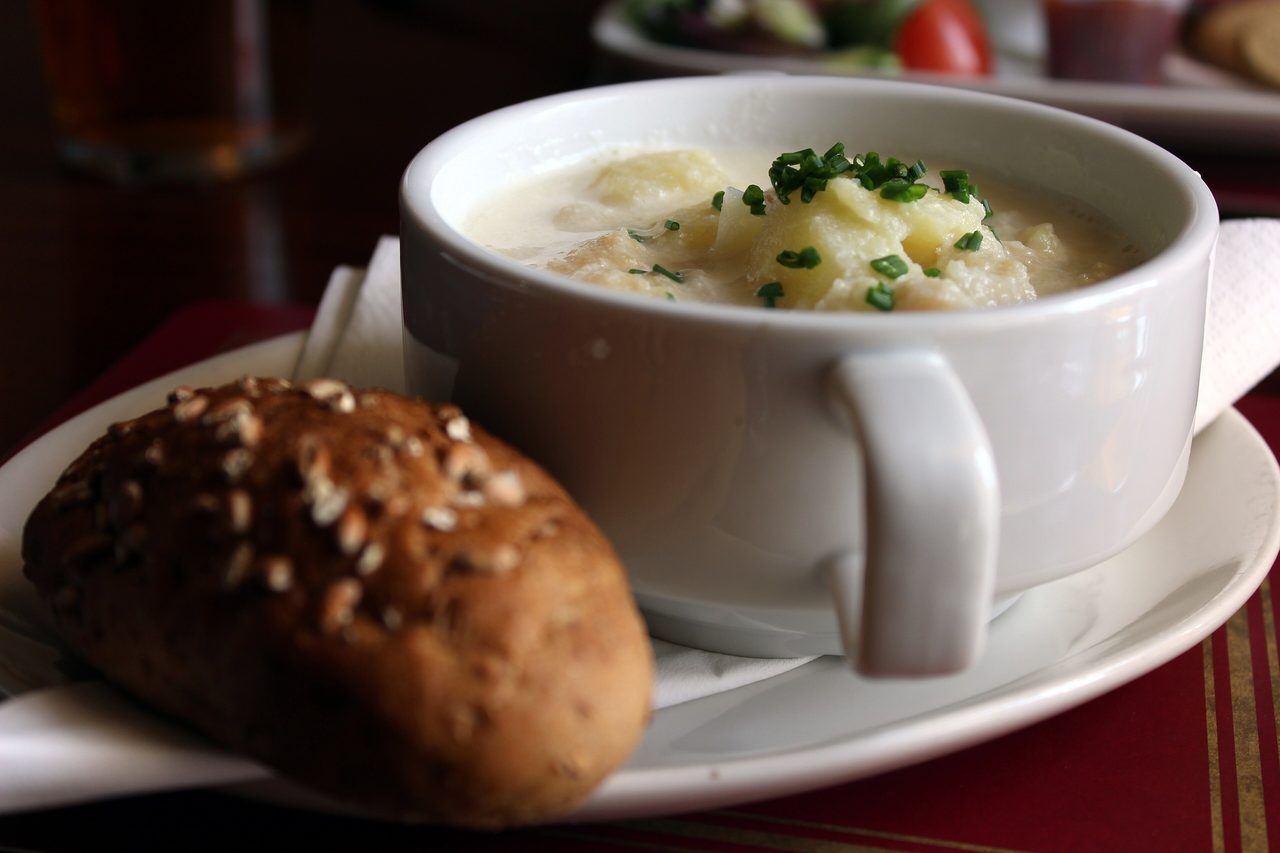
A thick potato broth studded with thread-thin shredded kale and slices of chorizo — Portugal's national soup. Humble ingredients, but the silky potato base, smoky chorizo, and generous olive oil make it deeply comforting.
Ingredients
- Potatoes · about 600g4
- Collard greens · or kale, very finely shredded200 g
- Chorizo · or linguica, sliced100 g
- Onion · chopped1
- Minced garlic3 cloves
- Olive oil3 tbsp
- Water · or stock6 cups
- Salt & pepper · to taste
Steps
- ⏲ 5 min
Roll the collard (or kale) leaves and slice them as thin as thread — the finer the more authentic.
- ⏲ 15 min
Fry the onion and garlic in olive oil, add the peeled, chopped potatoes and water, and simmer until the potatoes are soft.
- ⏲ 2 min
Mash or blend the potatoes into a thick, smooth broth.
- ⏲ 3 min
Lightly fry the chorizo to release its aroma and red oil (reserve a few slices to garnish).
- ⏲ 5 min
Add the shredded greens to the broth and cook just 5 minutes — longer dulls the green.
- ⏲ 1 min
Stir in the chorizo, drizzle olive oil, and season with salt and pepper.
Ladle into bowls, add a little more olive oil, and top with a few chorizo slices.
Variations
- Vegetarian: Skip the chorizo and use smoked paprika for aroma.
- Heartier: Blend in a few white beans.
- Other greens: Use chard or spinach instead of kale.
- With broa: Serve with broa, Portugal's yeasted maize bread.
Tips
- Slice the greens thread-thin for the authentic texture.
- Blend the potatoes to thicken the broth — silky without any cream.
- Cook the greens only the last 5 minutes to keep them green and fragrant.
- Finish with a generous drizzle of good olive oil.
More detail and the reasons why (4)
- Cooking the greens in the soup takes every one of blanching's remedies away. Blanching protects green with three moves: plenty of water so the vegetable's own organic acids are diluted, the lid off so those acids leave as steam, and the water thrown out afterwards. None of the three exists here. The water is the dish, so it cannot be five times the volume and cannot be discarded, and the acid the leaves release stays in the pot. That leaves exactly two levers, which is why the recipe insists on both — cut them thread-thin, and give them five minutes. Horta is the far end of the same choice, fifteen to twenty minutes and olive-drab on purpose, and sigeumchi namul is the version that gets the full treatment because its cooking water is thrown away.
- Blending the potato is the thing every mash recipe warns against. Mashed potatoes says not to overmix, because working the starch makes it pasty. Here that pastiness is the whole point: amylose worked out of the granules reads as body in a broth rather than as glue on a plate, which is how the soup gets silky with no cream, butter or flour anywhere in it. Dishes thickened by potato starch release it differently — gratin dauphinois by not rinsing the slices, ajiaco by choosing a variety that falls apart, this one by working it after boiling.
- The chorizo is fried apart and joins at the end, and that is not just tidiness. Paprika's colour and aroma sit in carotenoids, which are fat-soluble, so frying releases them into the fat as the red oil the soup is finished with. Simmered in from the start that oil disperses into six cups of broth and the sausage goes rubbery besides.
- Both fats go in late and neither is a cooking fat. The chorizo oil and the raw olive oil at the table are seasoning, which is why the olive oil is worth spending money on — cooking oils files unrefined olive oil as a finishing oil precisely because heat destroys what you paid for.
The basics behind this dish
- Balancing Flavour: Salt, Acid, Sweet, Fat, HeatWhen something tastes like it is missing something, it is usually salt or acid. Five dials, the order to turn them, and how to taste properly.
- Stocks and Broths: Clarity, Time, and Why You Do Not Salt ThemWhat separates a clear stock from a cloudy one is temperature, not ingredients. Why you start in cold water, how long each ingredient wants, and why salt comes later.
- Salt: When You Add It Matters More Than How MuchThe same amount of salt either draws water out or seasons all the way through, depending on when it goes in. Osmosis, seasoning in layers, and why salt types are not interchangeable by volume.
More of the same kind


More from this country


Sign in to edit.
Written with AI · how we check it · Edit history
https://cookiki.com/en/r/caldo-verde · cookiki · User contributions are licensed under CC BY-SA 4.0.