
Photo: Brücke-Osteuropa · CC0
Haemul Pajeon (Seafood Scallion Pancake)
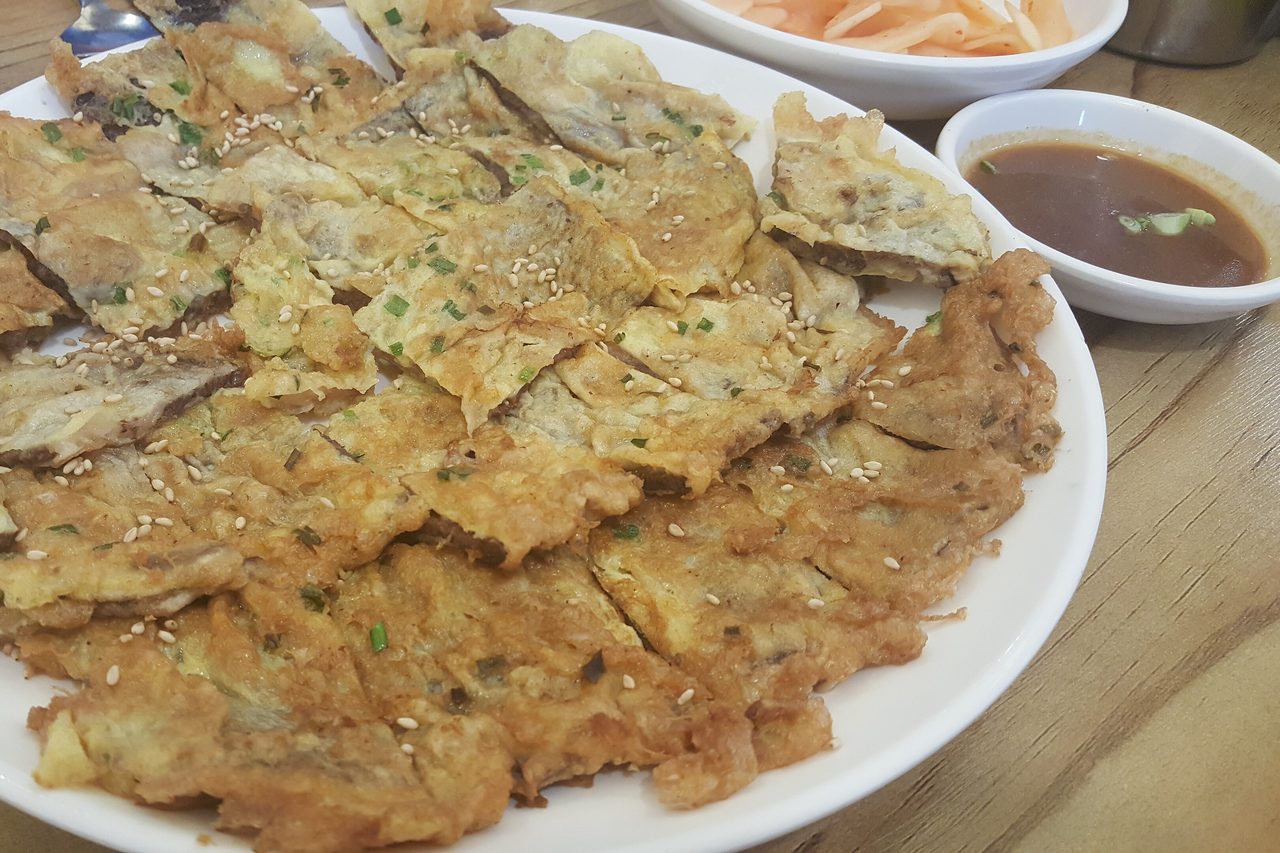
A crispy Korean pancake — a bed of scallions loaded with squid and shrimp in a golden batter, crisp at the edges and tender inside. The classic rainy-day dish to share with makgeolli.
Ingredients
- Scallions · or green onions1 bunch
- Mixed seafood · squid, shrimp, mussel200 g
- Cheongyang chili · optional1
- Red chili · garnish, optional1
- Cooking oil · generous4 tbsp
- Batter
- Korean frying mix · or flour + salt1 cup
- Water · cold0.75 cup
- Egg1
- Soy-vinegar dip
- Soy sauce2 tbsp
- Vinegar1 tbsp
- Water1 tbsp
- Gochugaru · optional0.5 tsp
- Sesame seeds · a pinch
Steps
Cut the scallions to the width of your pan; chop the seafood small and drain it well in a sieve.
- ⏲ 2 min
Whisk the frying mix with cold water and the egg into a slightly thin batter — not too thick.
- ⏲ 1 min
Heat a generous amount of oil in a pan over medium heat, lay the scallions out neatly, and pour the batter evenly over them.
- ⏲ 5 min
Scatter the seafood and chili on top, drizzle a little more batter, and fry until the bottom is golden.
- ⏲ 4 min
Flip once and crisp the other side, drizzling oil around the edges for extra crunch.
Mix the soy-vinegar dip. Cut the pancake into bite-size pieces and serve with the dip.
Tips & Variations
Variations
- Kimchi jeon: Use chopped sour kimchi instead of seafood.
- Buchu jeon: Swap the scallions for a pile of garlic chives.
- Dongnae pajeon: Busan style — heaped with seafood and a runny egg cracked on top.
- Gamja jeon: Finely grated potato for a chewy version.
Tips
- Bindae-tteok files this dish among the three that "stir ingredients into a wheat-flour batter", and this recipe stirs nothing. The scallions are cut to the width of the pan and laid out; the batter is poured over them; the seafood is scattered on top and a little more batter drizzled after. Kimchijeon folds everything in, and gamja-jeon has no separate batter at all — the potato's own starch is the adhesive. Among the jeon this one is built rather than mixed, and the batter is not the subject but the least amount that will hold a lattice of scallions together.
- Which is why the seafood is drained and goes on top. Bindae-tteok writes the failure down: "water left in any of these thins the batter and the pancake spreads in the pan — this is where it most often goes wrong." Chopped seafood is mostly water, and stirred through the batter it thins it from the inside and goes on releasing for the whole cook. Drained and laid on the surface, what it does release leaves upward, against the hot pan, instead of into the structure.
- Flipping only once follows from the same architecture. A mixed batter is the same material everywhere and has redundancy; a built one has a single seam, the layer where scallion meets batter. Move it before the underside has set and the top and the bottom travel separately, and nothing afterwards rejoins them.
- The thin-batter and cold-water tips are already explained next door. Kimchijeon ties those two together as routes to the same end, keeping a wheat batter from building a network, so there is nothing to repeat here — except that in this dish thinness is not only about crispness. The batter has to be thin enough to let the lattice show, because the scallions are what you are supposed to be eating.
- Keep the batter slightly thin for a thin, crisp pancake; thick batter turns gummy.
- Mixing with cold water makes it crispier.
- Use plenty of oil over medium heat so the inside cooks through and the edges crisp up.
- Flip it only once so it does not fall apart.
- Best eaten hot off the pan with makgeolli.
The basics behind this dish
- Knife Skills: Grip, Cuts, and Why Size MattersHow you hold the knife matters more than how fast you cut. The pinch grip, the claw hand, and why uniform size is a cooking decision rather than a cosmetic one.
- Salt: When You Add It Matters More Than How MuchThe same amount of salt either draws water out or seasons all the way through, depending on when it goes in. Osmosis, seasoning in layers, and why salt types are not interchangeable by volume.
- Heat Control: Preheating, Oil, and Reading the PanThe same ingredients become a different dish depending on pan temperature. When to add the oil, how to read heat by sound, and which dishes want low heat instead.
More of the same kind


More from this country


Sign in to edit.
AI-drafted, editor-reviewed · edits: 0 ·Edit history
https://cookiki.com/en/r/haemul-pajeon · cookiki · User contributions are licensed under CC BY-SA 4.0.