
Photo: Eugene Kim from San Francisco, USA · CC BY 2.0
Buffalo Wings
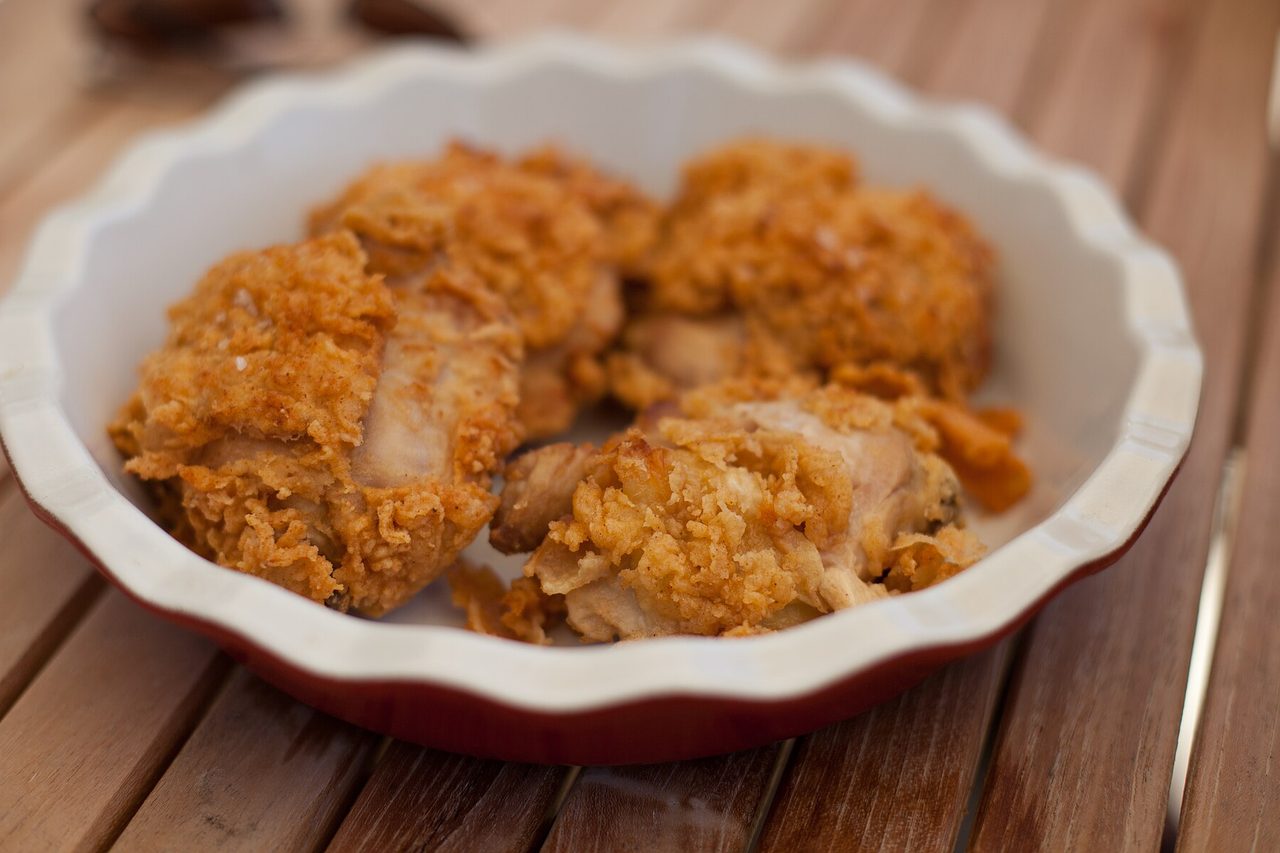
Crispy chicken wings tossed in a tangy, spicy buffalo sauce (hot sauce plus butter) — the bar snack born in Buffalo, New York. Serve with blue cheese dip and celery to cool it down. Crisp them in the oven or air fryer, no deep-frying needed.
Ingredients
- Chicken wings · flats and drumettes1 kg
- Baking powder · for crispness, oven method1 tbsp
- Salt & pepper · to taste
- Celery & carrot · to serve
- Buffalo sauce
- Hot sauce · e.g. Frank's RedHot0.5 cup
- Butter · melted60 g
- Vinegar1 tsp
- Garlic powder0.5 tsp
- Blue cheese dip
- Blue cheese · or sour cream50 g
- Mayo & sour cream4 tbsp
- Lemon juice1 tsp
Steps
- ⏲ 5 min
Pat the wings completely dry and coat with salt, pepper, and baking powder — this is what makes the skin crisp.
- ⏲ 40 min
Roast at 220°C in the oven (or air fryer), turning, for 40–45 minutes until the skin is golden and crisp.
- ⏲ 2 min
Meanwhile, stir the hot sauce, vinegar, and garlic powder into the melted butter for the buffalo sauce.
- ⏲ 2 min
Mix the blue cheese, mayo, sour cream, and lemon juice for the dip.
- ⏲ 2 min
Put the wings in a big bowl, pour over the buffalo sauce, and toss to coat. Serve with celery, carrot, and the blue cheese dip.
Tips & Variations
Variations
- BBQ wings: Use barbecue sauce instead of buffalo.
- Honey garlic: Toss in honey, soy, and garlic for sweet-savory.
- Extra crispy: Dredge in flour and cornstarch and deep-fry.
- Milder: Use more butter and a touch of honey, less hot sauce.
Tips
- Dry the skin completely and coat with baking powder for crispness without frying.
- Toss in the sauce right after roasting so they stay crisp and saucy at once.
- Roast hot (220°C) and turn halfway for even cooking.
- Dial the heat with the hot-sauce-to-butter ratio.
- The baking powder is alkali on the skin, which is a different job from what alkali usually does in a recipe. Raising the skin's pH does two things at once: browning runs faster in alkaline conditions, and a higher pH loosens the skin's protein structure so water escapes more readily instead of steaming underneath. Add the carbon dioxide it gives off, which leaves the surface microscopically rough, and you get a crust from a 220°C oven that would otherwise need a fryer (browning). Elsewhere alkali goes into a dough or a boiling bath — the kansui in Lanzhou lamian, the soda in a bagel, the lye in a pretzel — and the food is cooked afterwards. Here it is painted on a surface that is about to be dried out.
- Baking powder, not baking soda, and the difference matters at this quantity. A tablespoon of pure bicarbonate on a kilo of wings tastes soapy and metallic. Baking powder is bicarbonate buffered with acid salts, so it gives the same pH lift on the surface without that aftertaste. If all you have is soda, use about a third as much.
- The sauce is an emulsion, which is why it clings. Frank's is essentially vinegar, cayenne and water; melted butter whisked into it disperses as droplets held by the vinegar's acidity and the butter's own milk solids (emulsions). That is why the ratio dials texture as well as heat — more butter is thicker and milder, more hot sauce is thinner and sharper — and why a sauce that has sat and split should be re-warmed and whisked rather than poured as it is.
- The blue cheese is doing chemistry; the celery is not. Chilli and heat explains that capsaicin dissolves in fat and not in water, so the dairy fat in the dip is the only thing on the plate that actually removes any heat. Celery and carrot are cold and wet, which is pleasant and does nothing. Same family: fried chicken and dak gangjeong.
The basics behind this dish
- Browning and the Maillard ReactionMeat fails to brown for one of three reasons: it is wet, the pan is cool, or you put too much in at once. Plus how the brown film stuck to the pan becomes your sauce.
- Knife Skills: Grip, Cuts, and Why Size MattersHow you hold the knife matters more than how fast you cut. The pinch grip, the claw hand, and why uniform size is a cooking decision rather than a cosmetic one.
- Salt: When You Add It Matters More Than How MuchThe same amount of salt either draws water out or seasons all the way through, depending on when it goes in. Osmosis, seasoning in layers, and why salt types are not interchangeable by volume.
More of the same kind



More from this country


Sign in to edit.
AI-drafted, editor-reviewed · edits: 0 ·Edit history
https://cookiki.com/en/r/buffalo-wings · cookiki · User contributions are licensed under CC BY-SA 4.0.