
Chicken Tagine
A North African stew of chicken marinated in Moroccan spices and braised with onion, olives, and preserved lemon. The preserved lemon gives its signature salty-tangy note — serve with couscous or bread.
Ingredients
- Bone-in chicken (legs/thighs) · cut into pieces700 g
- Onion · sliced1
- Garlic · minced3 cloves
- Olive oil2 tbsp
- Chicken stock or water250 ml
- Green olives60 g
- Preserved lemon (or lemon + salt) · sliced0.5
- Cilantro & parsley · chopped1 handful
- Spices
- Turmeric1 tsp
- Ground cumin1 tsp
- Ground ginger0.5 tsp
- Paprika1 tsp
- Cinnamon · optional1 pinch
- Salt & pepper1 to taste
Steps
- ⏲ 30 min
Rub the chicken with the spices (turmeric, cumin, ginger, paprika, cinnamon), salt, pepper, and garlic and marinate 30 minutes (skippable if short on time).
- ⏲ 5 min
Heat olive oil in a wide pot (or tagine) and brown the chicken all over, then set aside.
- ⏲ 5 min
Soften the onion in the same pot.
- ⏲ 30 min
Return the chicken, add the stock, bring to a simmer, cover, and cook gently 30–35 minutes until tender.
- ⏲ 10 min
Add the olives and preserved lemon, uncover, and simmer 10 minutes more to reduce the sauce.
- ⏲ 1 min
Scatter with cilantro and parsley and serve with couscous or bread.
Variations
- Lamb tagine: Use lamb for a richer stew (longer cooking).
- Fruit tagine: Add dried apricots, prunes, or dates for sweetness.
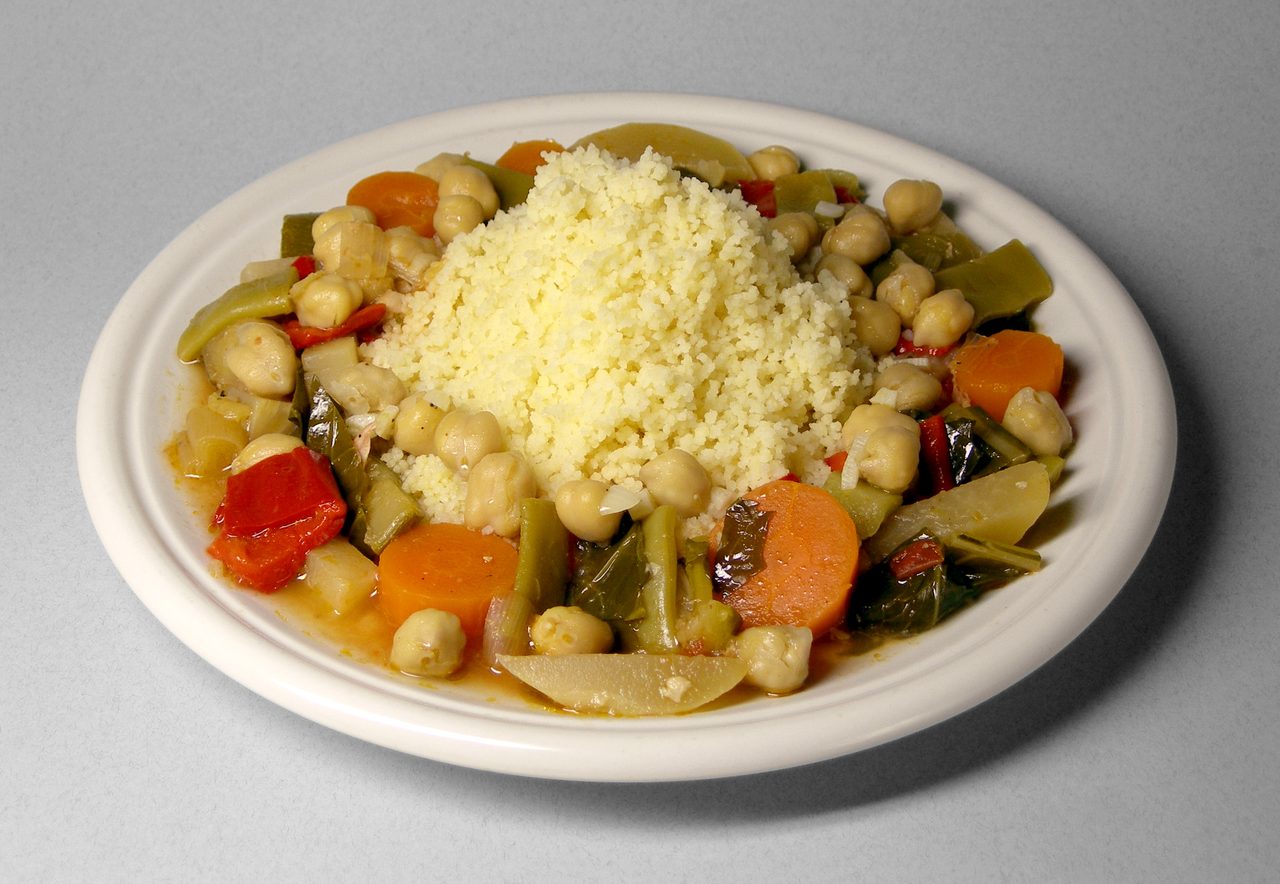
- Vegetarian: Chickpeas, carrots, and squash instead of meat.
- Couscous: The near-constant companion to serve alongside.
Tips
- Spice and marinate the chicken first for deep flavor.
- Brown the chicken, then braise low and slow so it turns tender.
- Preserved lemon and olives give tagine its signature salty-tangy note.
- No tagine pot? A heavy lidded pot works fine.
- Reduce the sauce until just saucy to soak up with bread or couscous.
More detail and the reasons why (4)
- The lid is the mechanism, and it is the opposite of the usual advice about lids. Condensation dripping off a lid is the commonest failure in steaming (steaming), and the fixes are to stretch a cloth underneath, set the lid slightly ajar so the water runs down the wall, or cover the food with parchment. All three get the water away from the food. A tagine's cone is the second of those built into the vessel and made permanent. The cone is tall, so its tip is the coolest surface over the pot; vapour condenses there and runs down the slope to the rim, back into the sauce at the edge rather than onto the meat. Nothing drips and nothing leaves.
- Which is why it is a braise that barely reduces, and why it is never stirred. A braise puts the liquid only two-thirds up the meat, and the exposed top cooks in steam (braising). Here that steam is handed back continuously, so the line hardly falls over an hour and there is nothing to do to the pot. Kedjenou is the neighbour that takes the same idea to its end — a sealed earthenware canari with no added water at all, where the vegetables make the entire sauce and instead of stirring you shake the pot.
- So "a heavy lidded pot works fine" is true, and it is worth knowing what changes. A flat lid drips straight down the middle. What compensates is exactly what this recipe already does: stock added at the start rather than trusting the chicken and onion to supply it, a heavy pot so a low setting stays steady, and the last ten minutes uncovered to bring the sauce back to where the cone would have held it.
- Preserved lemon and olives go in at the end because they are salt, and the pot is about to reduce. In solyanka the brined cucumbers, the brine, capers, olives and smoked sausage all arrive with saltiness and sourness on one handle, so the two cannot be dialled separately — which is why that stock is left deliberately unsalted and tasted for the first time only once everything brined is in (salt and seasoning). A tagine is that with a reduction after it, so salt put in early is concentrated twice. It is also why recipes specify the rind: a month in salt has taken the water out and softened the pith, so what arrives is salt and citrus aroma rather than the sharp acid of a fresh lemon.
The basics behind this dish
- Braising: Collagen, Time, and Why It Cannot Be RushedTough cuts turn tender not because the muscle relaxes but because collagen becomes gelatin — and that conversion needs time, not more heat.
- Steaming: Water Level, Condensation, and StackingSteam never exceeds 100°C and still cooks faster than boiling water. The reason is latent heat; the commonest failure is the drip off the lid; and stacking does not work the way people think.
- Browning and the Maillard ReactionMeat fails to brown for one of three reasons: it is wet, the pan is cool, or you put too much in at once. Plus how the brown film stuck to the pan becomes your sauce.
More of the same kind


More from this country


Sign in to edit.
Written with AI · how we check it · Edit history
https://cookiki.com/en/r/tagine · cookiki · User contributions are licensed under CC BY-SA 4.0.