
Photo: El Nuevo Doge · CC0
Ceviche (Lime-Cured Fish)
Peru's national dish — fresh white fish 'cooked' in lime juice and tossed with onion, chili, and cilantro. A bright, clean plate now on UNESCO's intangible heritage list. It lives or dies by fresh fish, lime, and the punchy 'leche de tigre'.
Ingredients
- White fish fillet · sushi-grade sea bass/snapper, cubed500 g
- Limes · about 200ml juice8 each
- Red onion · thinly sliced1 each
- Ají amarillo or chili · minced, to taste1 each
- Cilantro · chopped3 tbsp
- Garlic · finely grated1 clove
- Salt1 tsp
- To serve
- Sweet potato · boiled1 each
- Corn (choclo) · boiled1 each
- Lettuce2 leaf
Steps
- ⏲ 10 min
Choose very fresh fish and cut into 2cm cubes. Keep it cold throughout.
- ⏲ 5 min
Thinly slice the red onion and soak in cold water 5 min to mellow it, then drain.
- ⏲ 2 min
Leche de tigre: mix the lime juice with grated garlic, chili, salt, and a little cilantro.
- ⏲ 3 min
Lightly salt the cold fish, pour over the lime mix, and toss just 2-5 minutes — it's ready when the surface turns opaque (longer makes it tough).
- ⏲ 1 min
Fold in the onion, cilantro, and chili.
Plate over lettuce with boiled sweet potato and corn, and serve immediately.
Tips & Variations
Variations
- Acid does part of what heat does. Lime juice unfolds the proteins in the fish, which turns it opaque and firm, and by eye that is indistinguishable from cooked. Key lime pie records the same event on the dairy side: lime juice making fish look cooked and lime juice coagulating condensed milk are one phenomenon.
- It is not the same as heat, though. Heat unfolds the proteins and then binds them tightly to each other; acid binds them far more loosely. So a ceviche goes white on the outside while the inside keeps a raw grain — and given longer, even those loose bonds tighten and it turns rubbery. The two-to-five minutes is a description of that window.
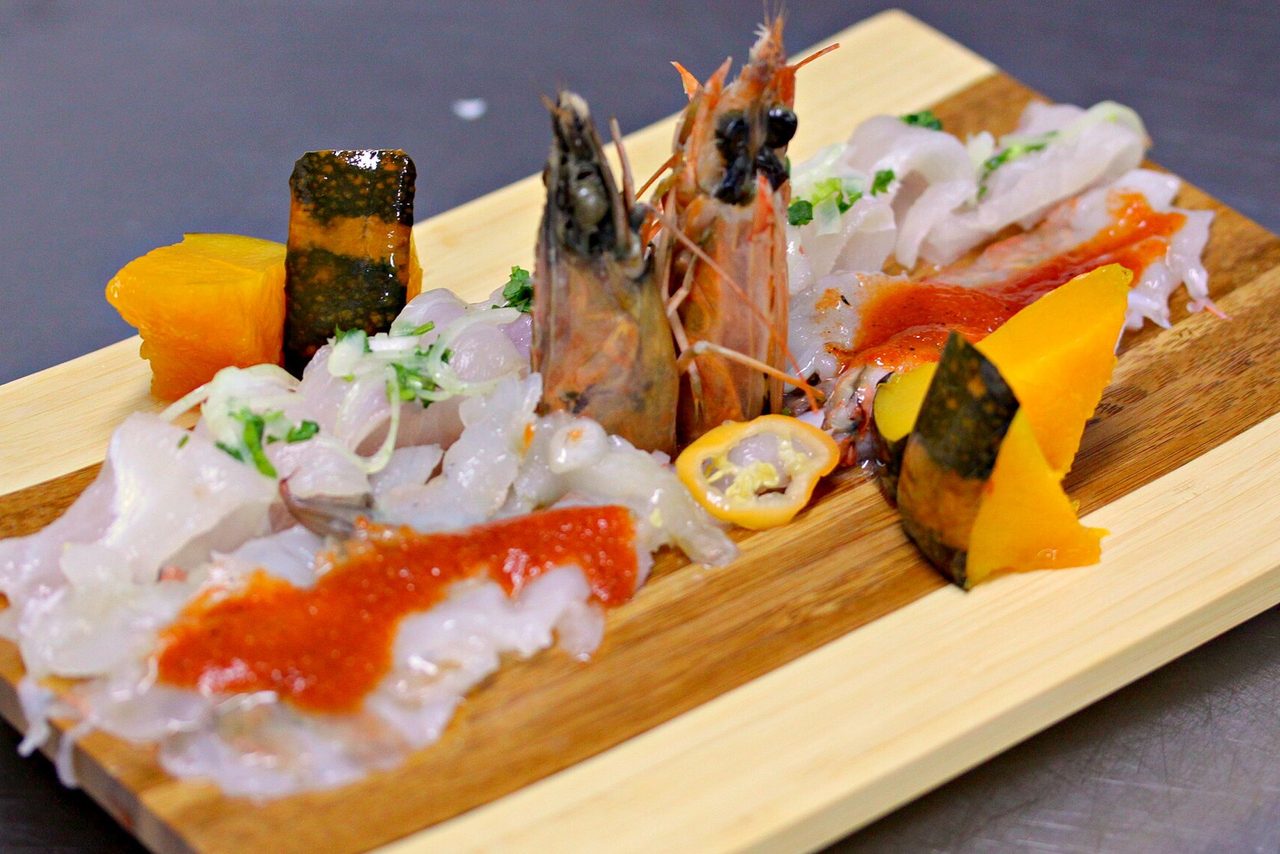
- Tiradito applies the same acid deliberately late. There the fish is sliced thin and the sauce goes on at the last second, so the acid never gets time to work. Ceviche cubes and marinates; tiradito slices and does not. Same ingredients, opposite clock.
- Leche de tigre: the leftover marinade poured into a glass — "tiger's milk".
- Mixto: squid or prawns added to the fish.
- Nikkei style: a Japanese-Peruvian version with a little soy and sesame.
- Mango or avocado: modern versions adding sweetness or creaminess.
Tips
- Freshness is 90% of it — sashimi-grade only, ideally bought the same day.
- Do not over-marinate — 2-5 minutes is plenty; longer and the proteins overcook and turn rubbery.
- Keep everything cold.
- Squeeze the lime fresh; juice squeezed ahead turns bitter.
- Ají amarillo is the authentic heat; any fresh chilli stands in.
- The size you cut it decides the doneness more than the clock does. The acid works inward from the surface, so in the same two minutes a 1cm cube keeps a raw centre while a thin slice does not. Choosing the size is more precise than timing it.
- Lime squeezed ahead is bitter because of the peel oil. Compounds pressed out of the skin turn bitter over an hour or so; the acidity of the juice itself does not change.
- Keeping it cold is a safety matter as well as a texture one. Acid denatures the surface; it does not sterilise. Poke sets that out at greater length — the safety comes from the fish's history, not from the citrus.
The basics behind this dish
- Balancing Flavour: Salt, Acid, Sweet, Fat, HeatWhen something tastes like it is missing something, it is usually salt or acid. Five dials, the order to turn them, and how to taste properly.
- What Marinades Actually Do (and Do Not)A marinade penetrates one to three millimetres. Acid does not tenderise the way it is said to, and the only thing that really travels inward is salt.
- Fresh Herbs: Hardy, Delicate, and When to Add ThemAroma is volatile, so timing is the whole game. What separates a hardy herb from a delicate one, why the stems are worth more than you think, and why basil should never meet a knife.
More of the same kind


More from this country


Sign in to edit.
AI-drafted, editor-reviewed · edits: 0 ·Edit history
https://cookiki.com/en/r/ceviche · cookiki · User contributions are licensed under CC BY-SA 4.0.