
Photo: AugustineKajur · CC BY-SA 4.0
Dal (Lentil Curry)
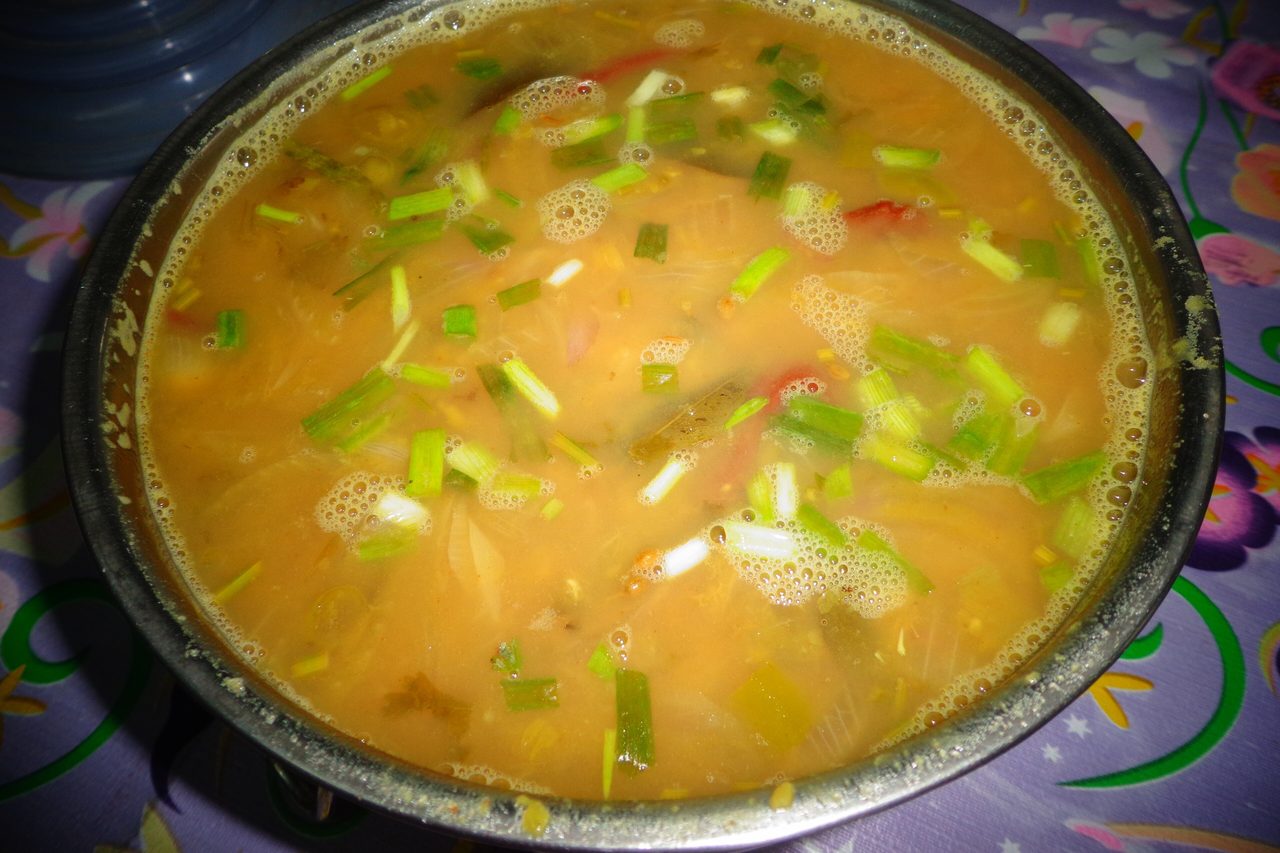
India's everyday comfort food — lentils simmered soft with turmeric, then finished with a 'tadka', spices bloomed in hot ghee or oil and poured over. One pot from a bag of lentils, vegetarian yet protein-rich. Serve with rice or naan; with a few spices, anyone can make it.
Ingredients
- Lentils · toor or masoor dal1 cup
- Water3 cup
- Turmeric0.5 tsp
- Salt1 tsp
- Tadka (tempering)
- Ghee or oil2 tbsp
- Cumin seeds1 tsp
- Onion · chopped0.5 each
- Garlic & ginger · minced1 tbsp
- Tomato · chopped1 each
- Dried chili / chili powder1 to taste
- Garam masala0.5 tsp
- Cilantro · to finish1 handful
Steps
- ⏲ 25 min
Rinse the lentils and simmer with water, turmeric, and salt until very soft, 20-25 minutes (skim the foam).
- ⏲ 2 min
Once soft, mash lightly for body and adjust the thickness with water.
- ⏲ 1 min
Tadka: heat ghee in a small pan and sizzle the cumin seeds until fragrant.
- ⏲ 3 min
Add the onion and cook golden, then the garlic, ginger, and dried chili to bloom.
- ⏲ 3 min
Add the tomato, chili powder, and garam masala; cook until the tomato breaks down.
- ⏲ 1 min
Pour the sizzling tadka over the simmering dal, stir, top with cilantro, and serve with rice or naan.
Tips & Variations
Variations
- Having no seed coat is the whole dish. What holds a pulse in shape and keeps water out is its seed coat. Pozole stakes an entire technique on dissolving that hull with alkali, and the beans in soaking all still have theirs, which is why they need soaking. Masoor dal is sold skinned and split. So it needs no soak and cannot hold its shape — twenty minutes and it is gone. That is why there is no thickener anywhere in this recipe: the body is the lentils themselves, collapsed.
- Dal makhani is the counter-example that proves it. That version uses whole urad with the coat still on, which is why it wants an overnight soak and hours of cooking and still has distinct beans at the end. Same pulse family; the coat alone decides both the soaking time and the finished texture.
- The tadka goes on at the end, not the beginning. Blooming spices is subtitled "why aromatics go into fat first", and its order — heat the fat, whole spices, then onion — sits at the start of a dish; aloo gobi is that base case. A tadka runs the identical sequence and pours it over something already cooked. The dal itself contains no aromatics at all: lentils, water, turmeric, salt. The aroma is laid on top rather than built in, which is why it has to be audible — silence means the fat is not hot enough to get anything out of the spices — and why the lid goes on the moment it is poured.
- Dal makhani: A rich version with black lentils and kidney beans, butter, and cream.
- Dal fry: An extra round of tadka for deeper, toastier flavor.
- Spinach dal (dal palak): Stir in spinach for more greens.
- Lemon finish: A squeeze of lime or lemon brightens it up.
Tips
- Cook the lentils really soft — they should mash easily for a creamy dal.
- The tadka is the soul — bloom whole spices in hot fat until fragrant, not burnt.
- Adjust thickness with water; dal thickens as it sits, so loosen before serving.
- Garam masala goes in late so its aroma survives.
- No need to soak red lentils (masoor); they cook fast straight from the bag.
- The tadka's window is about thirty seconds. Whole spices first, ground spices last and off the heat. Ground spice has far more surface, so it burns in seconds, and burnt cumin is a bitterness there is no way back from — the same failure pozole describes when it says one scorched chilli makes the whole pot bitter.
- Garam masala is late for that same reason. It is a blend of already-ground spices, so it belongs with the powders rather than the whole seeds. Stirred into a simmering pot early, the aroma goes off and what is left tastes dusty.
- It thickens as it stands because of the starch that left the lentils. Freed starch keeps taking up water as it cools. Loosen it with hot water rather than cold and it comes back smooth.
The basics behind this dish
- Blooming Spices: Why Aromatics Go into Fat FirstStir ground spice into liquid and half the aroma never arrives, because most aroma compounds are fat-soluble. The thirty-second window, and the order things go in.
- Building Umami: Glutamate, Synergy, and LayersUmami is built in layers, not added from one bottle. The key is synergy: glutamate plus nucleotides multiply each other rather than adding up.
- Soaking: Beans, Rice, and Everything DriedWhen beans refuse to soften no matter how long you boil them, and when the soaking water is an ingredient rather than waste. The old rule about salt is wrong.
More of the same kind


More from this country


Sign in to edit.
AI-drafted, editor-reviewed · edits: 0 ·Edit history
https://cookiki.com/en/r/dal · cookiki · User contributions are licensed under CC BY-SA 4.0.