
Photo: Miansari66 · CC0
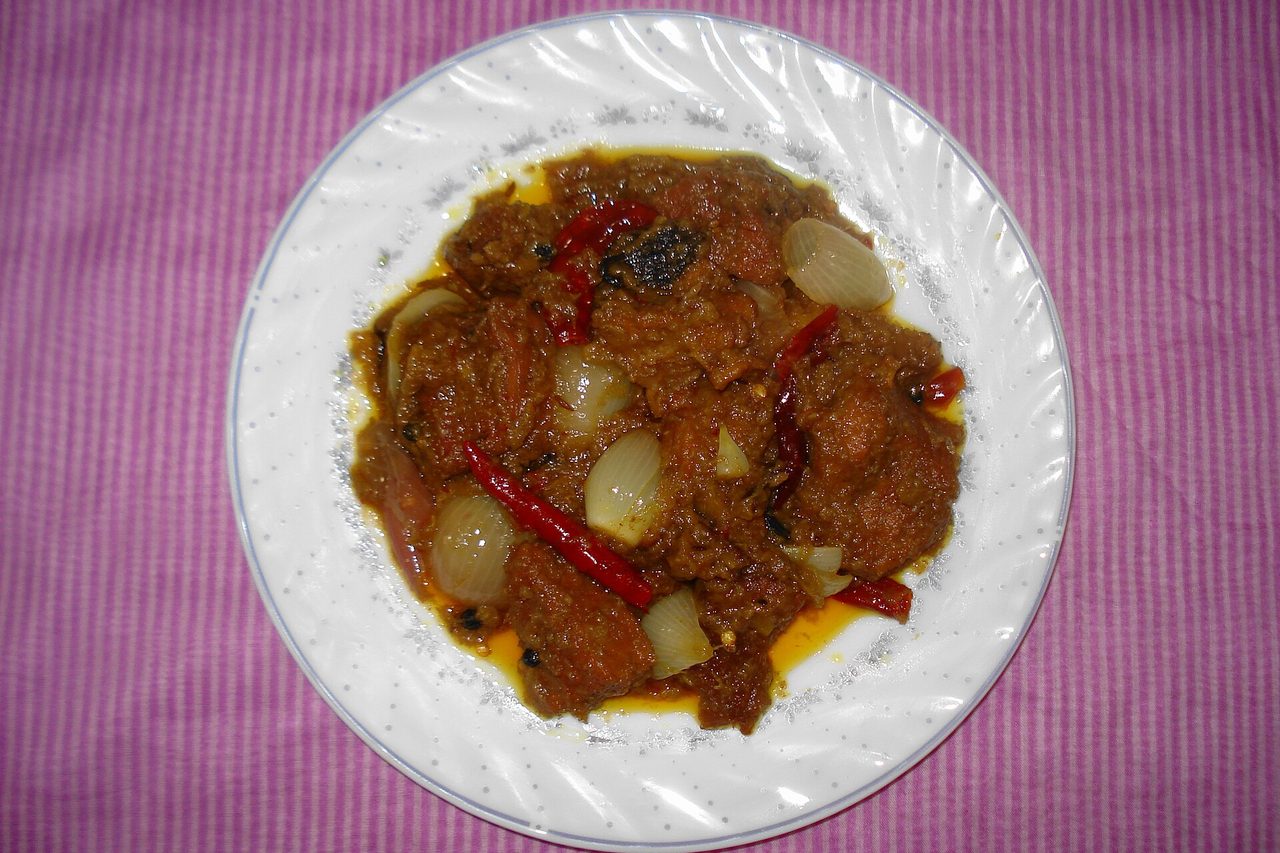
Vindaloo (Goan Pork in Vinegar and Garlic)
Goa's pork braise, marinated overnight in a paste of vinegar and garlic. Grinding the spices in vinegar rather than water is the dish itself: it descends from the way Portuguese ships carried meat without it spoiling, so the vinegar is structure rather than seasoning.
Ingredients
- Meat
- pork · belly or shoulder; it needs the fat to carry the acid1 kg
- salt1.5 tsp
- Vindaloo paste
- dried Kashmiri chillies · deseeded; use 8 if yours are hotter12 pcs
- garlic · the alhos of the name. Do not economise15 cloves
- ginger30 g
- cumin seeds2 tsp
- black peppercorns1 tsp
- cassia bark · 5cm1 piece
- cloves6 pcs
- green cardamom4 pods
- ground turmeric1 tsp
- vinegar · cane or malt vinegar, used instead of water for grinding. Rice vinegar is too mild150 ml
- To cook
- neutral oil4 tbsp
- onions · thinly sliced2 pcs
- green chillies · slit lengthways, added at the end4 pcs
- jaggery · or dark brown sugar; it rounds off the vinegar1.5 tbsp
- vinegar · to finish, replacing the sharpness lost to the cooking2 tbsp
- salt · to taste1 tsp
Steps
- ⏲ 10 min
Cut the pork into 3cm pieces, pat dry and salt with 1.5 tsp.
- ⏲ 15 min
Deseed the dried chillies and soak them in hot water for 15 minutes. Throw the soaking water away — it does not go into the paste.
- ⏲ 2 min 30 sec
Toast the cumin, peppercorns, cassia, cloves and cardamom in a dry pan over medium-low heat for 2 minutes. Stop at aroma, well before smoke.
- ⏲ 10 min
Blend the soaked chillies, garlic, ginger, toasted spices and turmeric to a fine paste using the 150ml of vinegar as the only liquid. Not a drop of water. This is the difference between vindaloo and a curry with vinegar splashed in: the acid has to be inside the paste to travel into the meat while it marinates.
Coat the pork with all of the paste, seal it in a container and refrigerate 12-24 hours. That time is not there to flavour the meat but to cure it — the same principle by which Portuguese ships carried pork without it spoiling.
- ⏲ 10 min
Fry the onions in the oil over medium heat for 8-10 minutes until browned. Their sweetness is the other side of the balance against the acid.
- ⏲ 5 min
Add the marinated pork with every bit of the paste and fry over high heat for 5 minutes, scraping the bowl out into the pan.
- ⏲ 80 min
Cover and cook over low heat for 60-80 minutes. Add no water: the pork's own moisture and the vinegar are enough, and water dilutes the acid this dish is built on. Stir every 20 minutes to check the base.
- ⏲ 15 min
Uncover and reduce for 10-15 minutes. It is ready when the sauce clings to the meat and red oil rises to the surface.
- ⏲ 3 min
Season with jaggery and salt, then add the final 2 tbsp of vinegar. Long cooking drives the sharpness off, and returning it here is what stands the dish up on its three axes of sour, sweet and hot. Add the green chillies and give it 2 more minutes.
Take it off the heat, cool, and refrigerate overnight. Vindaloo peaks on the second day: the vinegar works further into the pork and the spices even out. Reheat and serve with rice or bread.
Tips & Variations
Variations
- Chicken or lamb both work: 40 minutes for chicken, 100 for lamb. Cut the marinade to 4 hours for chicken — the acid is strong enough to turn the flesh chalky over a night.
- The British curry-house vindaloo is a different dish, invented to fill the hottest slot on a menu, with Goa's sourness and sweetness dropped and only the heat kept. This recipe is not that one.
- Sorpotel belongs to the same Goan-Portuguese family, made with pork liver and heart and matured in vinegar for longer. Richer and sourer than vindaloo.
- Add potatoes if you like — because they taste good, not because they are traditional (see the etymology below). Quarter two of them and add them for the last 25 minutes.
- Rogan josh is the other long-braised Indian meat dish on this site and its acid comes from somewhere else — yoghurt there, vinegar here. Cooking them near each other is a good way to see what acid does in a braise.
- Serve with rice, naan, or Goan sannas.
Tips
- Grind in vinegar, not water. The name says so: vindaloo comes from the Portuguese carne de vinha d'alhos, meat in wine or vinegar and garlic, where the acid and garlic acted as the preservative that let ships carry pork. Vinegar poured in later only seasons the surface; vinegar in the paste travels inward as it marinates.
- The "aloo" is a mishearing. Alhos is Portuguese for garlic, not potato. Restaurants in India and Britain began adding potatoes because of the name, so a vindaloo without them is the original, not a version with something missing.
- Add no water while it cooks. Diluting the acid slackens the meat and collapses the balance. If the base looks like catching, lower the heat rather than adding liquid.
- Vinegar in two goes. The first 150ml is for curing; the final 2 tbsp is for aroma and edge. Acid is volatile, so all of it at the start leaves nothing sharp by the time the dish is done (balancing flavour).
- Use a fatty cut. Made with loin, only the sourness survives. Belly or shoulder fat supports the vinegar, and the collagen turning to gelatin gives the sauce its body (braising: collagen and time).
- Toast the whole spices first. Two minutes in a dry pan before grinding makes a bigger difference here than you would expect (blooming spices).
- Do not skip the jaggery. Without sweetness, 150ml of vinegar simply stands there sharp. A tablespoon and a half of sugar does the same job.
- The second day, and the day after. Because the acid works as a preservative it keeps a week refrigerated and three months frozen. This is a dish to make ahead on purpose (salt and seasoning).
The basics behind this dish
- Chilli and Heat: Where It Lives and How to Take It BackHeat is not a taste but a pain signal. Where capsaicin actually sits, why water does nothing, and the four ways to pull a dish back once it has gone too far.
- What Sugar Does Besides SweetenCutting the sugar does not just cut sweetness. Colour, moisture, structure, and the counterweight to salt and acid — which is why savoury dishes call for it too.
- Soaking: Beans, Rice, and Everything DriedWhen beans refuse to soften no matter how long you boil them, and when the soaking water is an ingredient rather than waste. The old rule about salt is wrong.
More of the same kind


More from this country


Sign in to edit.
AI-drafted, editor-reviewed · edits: 0 ·Edit history
https://cookiki.com/en/r/vindaloo · cookiki · User contributions are licensed under CC BY-SA 4.0.