
Photo: Spice Eats · CC BY 3.0
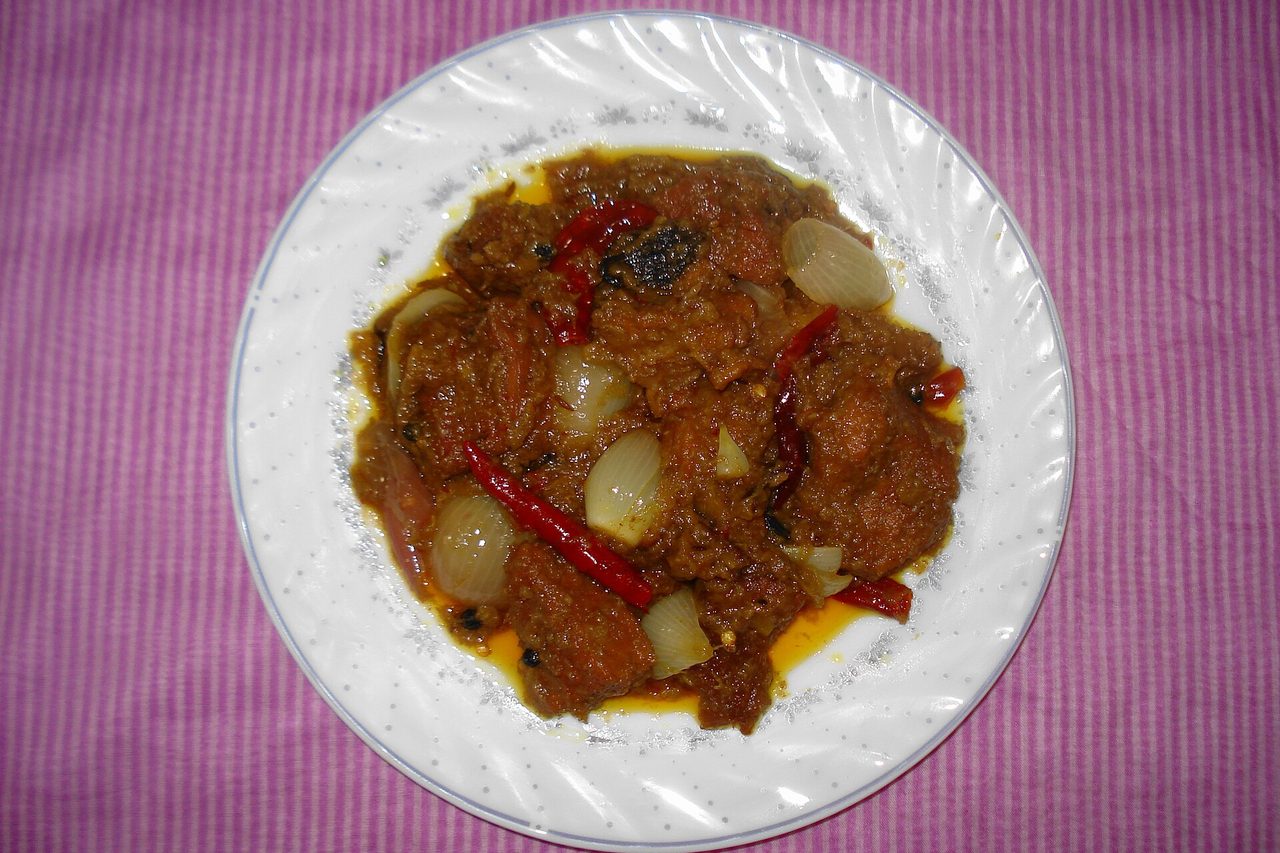
Rogan Josh (Kashmiri Braised Lamb)
Kashmir's braised lamb. The name is not about red gravy: rogan is fat and josh is intense heat, so it describes cooking in fat over fierce heat. The colour comes from Kashmiri chilli, not tomato — and the traditional version contains no onion, no garlic and no tomato at all.
Ingredients
- Meat
- lamb · bone-in neck or shoulder, cut into 4-5cm pieces. The bone and marrow are the body of the sauce1 kg
- Base
- ghee · or mustard oil, which is what Kashmir uses5 tbsp
- Kashmiri chilli powder · deep in colour and mild in heat. Ordinary chilli powder works at 2 tbsp instead of 33 tbsp
- plain yoghurt · full fat, whisked smooth and left at room temperature300 g
- salt2 tsp
- water · hot300 ml
- Whole spices
- cloves5 pcs
- green cardamom · lightly crushed open4 pods
- black cardamom · this is where the smokiness in Kashmiri cooking comes from2 pods
- cassia bark · 5cm1 piece
- bay leaves2 pcs
- Ground spices
- ground fennel · the signature aroma of Kashmiri rogan josh; without it this becomes some other curry2 tsp
- ground dried ginger · sonth. Dried rather than fresh is the traditional choice2 tsp
- asafoetida · optional; it fills the space left by having no onion or garlic0.25 tsp
- garam masala · at the very end1 tsp
- Colour (optional)
- ratanjot · alkanet root: steep 30 seconds in the hot fat for its red, then discard. It carries almost no flavour1 piece
Steps
- ⏲ 20 min
Pat the lamb completely dry, salt it with 1 tsp and leave 20 minutes. Whisk the yoghurt smooth and bring it to room temperature — cold yoghurt curdles.
- ⏲ 30 sec
Melt the ghee in a heavy pot and fry the whole spices (cloves, both cardamoms, cassia, bay) for 30 seconds only, until the cardamom swells and the smell rises.
- ⏲ 30 sec
If you are using ratanjot, steep it in the hot fat for 30 seconds now and discard it. The fat turns a clear red. This is how Kashmir gets the colour — not from tomato or paprika.
- ⏲ 10 min
Add the lamb and fry over high heat for 8-10 minutes, until the surface colours and the liquid it releases has cooked back off. This is the step the josh — fierce heat — in the name refers to.
- ⏲ 1 min 30 sec
Lower the heat, then add the Kashmiri chilli and fry 1 minute until the fat runs red. Chilli powder burns in half a minute and turns the whole pot bitter, so the heat comes down first.
- ⏲ 5 min
Take the pot off the heat and add the yoghurt in three additions, stirring each fully in. The pot needs to be off the flame for a moment or the yoghurt proteins seize into curds.
- ⏲ 5 min
Return it to low heat and warm through for 5 minutes, stirring, without letting it boil. Move on when the yoghurt has been absorbed and the surface looks smooth.
- ⏲ 3 min
Add the fennel, dried ginger, asafoetida and salt, fry 2 minutes, then pour in 300ml of hot water. Cold water drops the temperature and tightens the meat again.
- ⏲ 120 min
Cover and cook over low heat for 90 minutes to 2 hours, at a bare tremble, stirring once every half hour so nothing catches. It is done when the meat leaves the bone without resistance.
- ⏲ 10 min
Uncover and reduce another 10 minutes if needed. The finish signal is red fat rising to the surface — that slick is the rogan of the name, and it is not skimmed off.
- ⏲ 10 min
Stir in the garam masala, take it off the heat and leave covered 10 minutes. Serve with rice or naan.
Tips & Variations
Variations
- Wazwan style (the Muslim tradition). Kashmiri Muslim cooking fries praan, the local shallot, into the base. The recipe above is the Kashmiri Pandit (Hindu) version, which uses no onion or garlic at all. Two traditions share one name; neither is the wrong one.
- If you want onion, slice three shallots thin and fry them to golden after the whole spices, and drop the asafoetida. The sauce comes out sweeter and thicker.
- Goat takes about 30 minutes longer and gives a deeper sauce. In India, mutton usually means goat.
- Chicken does not work here. The dish assumes bone and collagen that can survive 90 minutes of braising. For a spiced chicken dish instead, look at tandoori chicken or butter chicken.
- A pressure cooker brings it to 30-35 minutes, but finish uncovered for 10 minutes to bring the fat back to the surface. Without that slick it is not rogan josh.
- Nihari is the Pakistani member of the same family — bone-in meat cooked long until the fat floats. That one gets its body from wheat flour; this one from yoghurt and bone.
Tips
- Do not mistake the name. Rogan is fat, josh is fierce heat. It says nothing about red, so reaching for tomato to get the colour is aiming at the wrong target: the colour comes from Kashmiri chilli, and from ratanjot if you use it.
- Yoghurt goes in off the heat, at room temperature, in stages. All three conditions are needed. Proteins that set too fast float as curds, and no amount of stirring brings them back (emulsions and pan sauces).
- Lower the heat before the chilli goes in. This is the commonest way the dish fails. Three tablespoons of chilli powder burn in thirty seconds over high heat, and burnt chilli stays bitter through two hours of cooking (blooming spices).
- Fennel and dried ginger are its identity. This is not a dish made deep with a heavy hand of garam masala; sweet fennel and the bite of dried ginger stand in front. Leave them out and you have lamb curry, not rogan josh.
- Use a bone-in cut. Lean meat alone gives no body. It is collagen turning to gelatin that makes the sauce cling (braising: collagen and time).
- Do not skim the fat. The red slick on top is the finish signal, not a mistake. If it bothers you, drop the ghee to 4 tbsp — but do not prevent the fat from surfacing.
- Better the next day, with the spices evened out and the fat set firm enough to handle. It keeps 4 days refrigerated, 3 months frozen. Reheat with 2 tbsp water and without boiling.
- With rice, plain is better than an aromatic pilaf like biryani — the sauce is already full of spice (salt and seasoning).
The basics behind this dish
- Braising: Collagen, Time, and Why It Cannot Be RushedTough cuts turn tender not because the muscle relaxes but because collagen becomes gelatin — and that conversion needs time, not more heat.
- Chilli and Heat: Where It Lives and How to Take It BackHeat is not a taste but a pain signal. Where capsaicin actually sits, why water does nothing, and the four ways to pull a dish back once it has gone too far.
- Dairy and Heat: Why Cream Splits and Butter BurnsThe temperature butter burns at, the conditions that split cream, the order yoghurt goes in. Dairy fails under heat in a small number of specific ways, so avoiding them is specific too.
More of the same kind


More from this country


Sign in to edit.
AI-drafted, editor-reviewed · edits: 0 ·Edit history
https://cookiki.com/en/r/rogan-josh · cookiki · User contributions are licensed under CC BY-SA 4.0.