
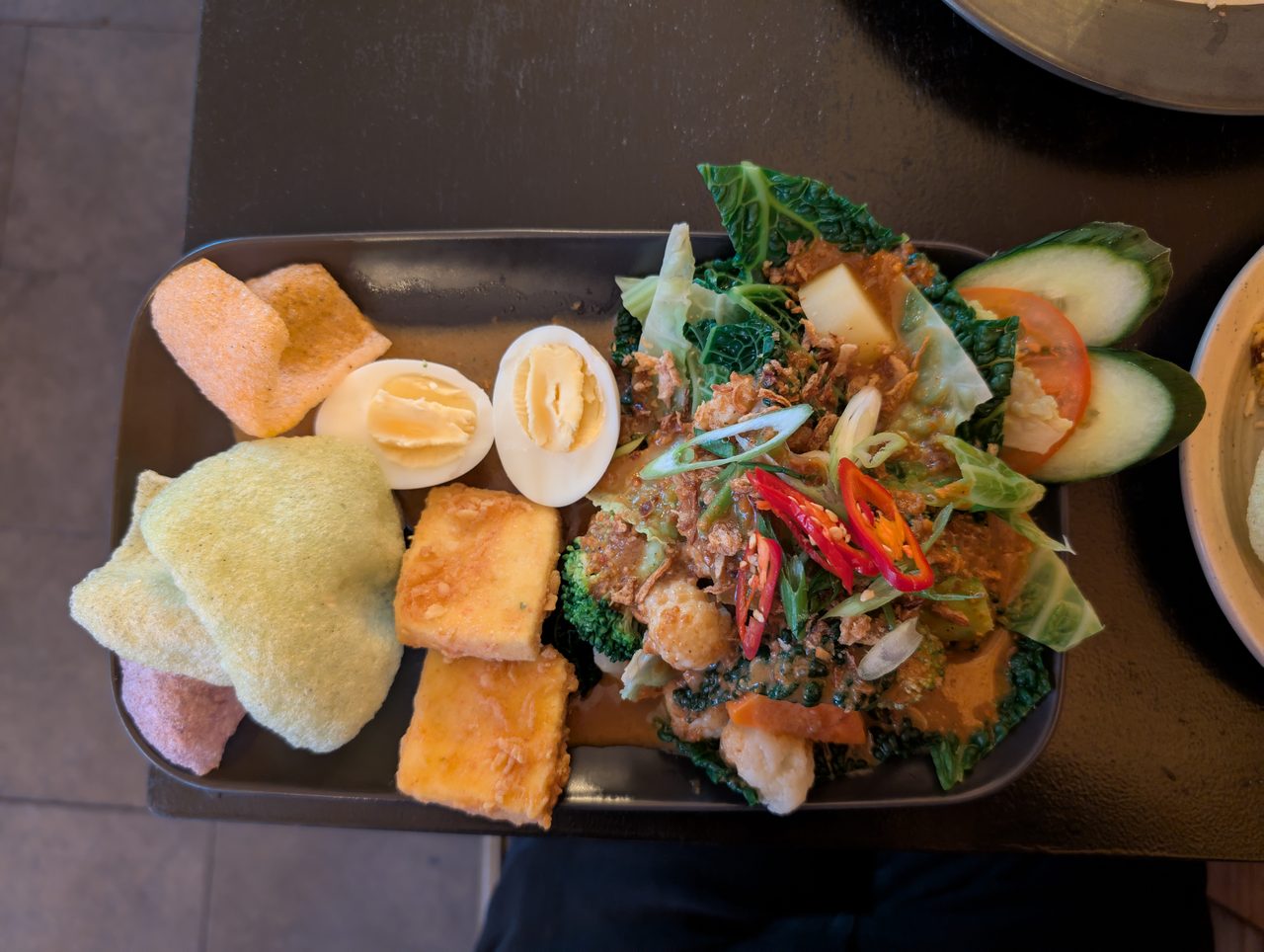
Photo: cyclonebill · CC BY-SA 2.0
Tabbouleh (Parsley Salad)
A Lebanese herb salad of chopped parsley with bulgur, tomato, and mint, dressed in lemon and olive oil. A bright, healthy no-cook dish that pairs perfectly with mezze like hummus and falafel.
Ingredients
- Parsley (flat-leaf) · coarsely chopped, dried well2 bunches
- Fine bulgur · soaked in warm water4 tbsp
- Tomatoes · finely diced, lightly seeded2
- Mint · chopped3 tbsp
- Scallions (or red onion) · sliced2
- Dressing
- Lemon juice3 tbsp
- Extra-virgin olive oil4 tbsp
- Salt0.5 tsp
- Black pepper1 to taste
Steps
- ⏲ 15 min
Soak the bulgur in warm water 10–15 minutes until tender, then squeeze out the liquid (fine bulgur can soften on the tomato juices alone).
- ⏲ 7 min
Dry the parsley thoroughly, remove the stems, and chop coarsely. Chop the mint and scallions too.
- ⏲ 3 min
Finely dice the tomatoes (remove some juice if very wet).
- ⏲ 1 min
Combine the parsley, mint, scallions, tomatoes, and bulgur in a large bowl.
- ⏲ 1 min
Add the lemon juice, olive oil, salt, and pepper and toss gently.
- ⏲ 10 min
Let it sit about 10 minutes to meld, taste, and adjust with lemon and salt. Serve chilled.
Tips & Variations
Variations
- Gluten-free: Use quinoa or cauliflower rice instead of bulgur.
- Parsley vs bulgur ratio: Traditional Lebanese is mostly parsley with just a little bulgur.
- Pomegranate: Add pomegranate seeds for a sweet-tart pop.
- Cucumber: Add cucumber for extra crunch.
Tips
- Dry the parsley fully so the salad isn't watery.
- Use fine bulgur, lightly soaked, and not too much, to keep it fresh.
- Be generous with lemon and olive oil — brightness is the whole point.
- Chop by hand, coarsely for better texture (don't blitz it fine).
- Let it rest briefly to meld, but don't leave it too long.
The basics behind this dish
- Knife Skills: Grip, Cuts, and Why Size MattersHow you hold the knife matters more than how fast you cut. The pinch grip, the claw hand, and why uniform size is a cooking decision rather than a cosmetic one.
- Balancing Flavour: Salt, Acid, Sweet, Fat, HeatWhen something tastes like it is missing something, it is usually salt or acid. Five dials, the order to turn them, and how to taste properly.
- Heat Control: Preheating, Oil, and Reading the PanThe same ingredients become a different dish depending on pan temperature. When to add the oil, how to read heat by sound, and which dishes want low heat instead.
More of the same kind


More from this country
Lebanese →


Sign in to edit.
AI-drafted, editor-reviewed · edits: 0 ·Edit history
https://cookiki.com/en/r/tabbouleh · cookiki · User contributions are licensed under CC BY-SA 4.0.