
Photo: Miansari66 · CC0
Fattoush
A Levantine salad of crisp toasted pita and crunchy vegetables tossed in a tangy sumac dressing. Loaded with cucumber, tomato, radish, and herbs, it is bright and fresh — a Mediterranean healthy classic that puts leftover bread to good use.
Ingredients
- Pita bread · toasted, torn2
- Romaine lettuce · chopped0.5 head
- Cucumber · diced1
- Tomatoes · diced2
- Radishes · thinly sliced, optional4
- Red onion · thinly sliced0.5
- Parsley & mint · chopped1 handful
- Sumac dressing
- Olive oil4 tbsp
- Lemon juice3 tbsp
- Sumac · tangy spice1 tbsp
- Minced garlic1 clove
- Pomegranate molasses · optional1 tsp
- Salt & pepper · to taste
Steps
- ⏲ 8 min
Tear or cut the pita into bite-size pieces and toast in a pan or oven until crisp (brush with a little oil for extra flavor).
- ⏲ 5 min
Cut the cucumber, tomato, lettuce, radish, and onion into bite-size pieces and chop the herbs.
- ⏲ 2 min
Whisk the olive oil, lemon juice, sumac, garlic, (pomegranate molasses,) salt, and pepper into a dressing.
- ⏲ 1 min 30 sec
Put the vegetables and herbs in a bowl and toss gently with the dressing.
- ⏲ 1 min
Add the toasted pita just before serving and toss lightly. Finish with a little more sumac.
Tips & Variations
Variations
- Gluten-free: Swap the pita for roasted chickpeas for crunch.
- Heartier: Add feta or grilled halloumi.
- Different greens: Use baby leaves or arugula.
- Spicy: Add green chili or chili flakes.
Tips
- Add the pita just before serving so it stays crisp — added early it goes soggy.
- Sumac is the signature tang; if you don't have it, be generous with lemon.
- Dry the vegetables well so the dressing clings instead of pooling.
- A spoon of pomegranate molasses adds a gentle sweet-tart note.
- Sumac is a dry acid, and that is the point of it. It is the ground dried fruit of Rhus coriaria, and its sourness is malic and citric acid sitting in the coating of the drupe — so it is tartness in powder form. In a salad whose stated rule is to keep everything dry, that matters: you can raise the acidity at any moment, including at the table, without adding a drop of liquid. That is why step 5 dusts more over the finished bowl, and why the same spice turns up on musakhan and kebab as a finishing sprinkle rather than in a marinade.
- Which means "just use more lemon" costs something the tip above does not mention. Lemon juice is mostly water. Doubling it to make up for missing sumac thins the dressing, so it slides off the leaves instead of clinging, and the extra liquid pulls water out of the tomato and cucumber and pools in the bottom of the bowl. If you have no sumac, add a little more lemon and accept a slightly different salad rather than chasing the same sourness.
- The bread is here to resist, not to drink. That is the opposite of what bread is usually asked to do: gazpacho and umm ali both use it as a body that a liquid is built onto. Fattoush toasts it hard and adds it at the last moment specifically so it does not take the dressing up, and that crunch against soft tomato is the texture the dish exists for. Pita gone leathery rather than crisp will never recover, so toast it dry and properly.
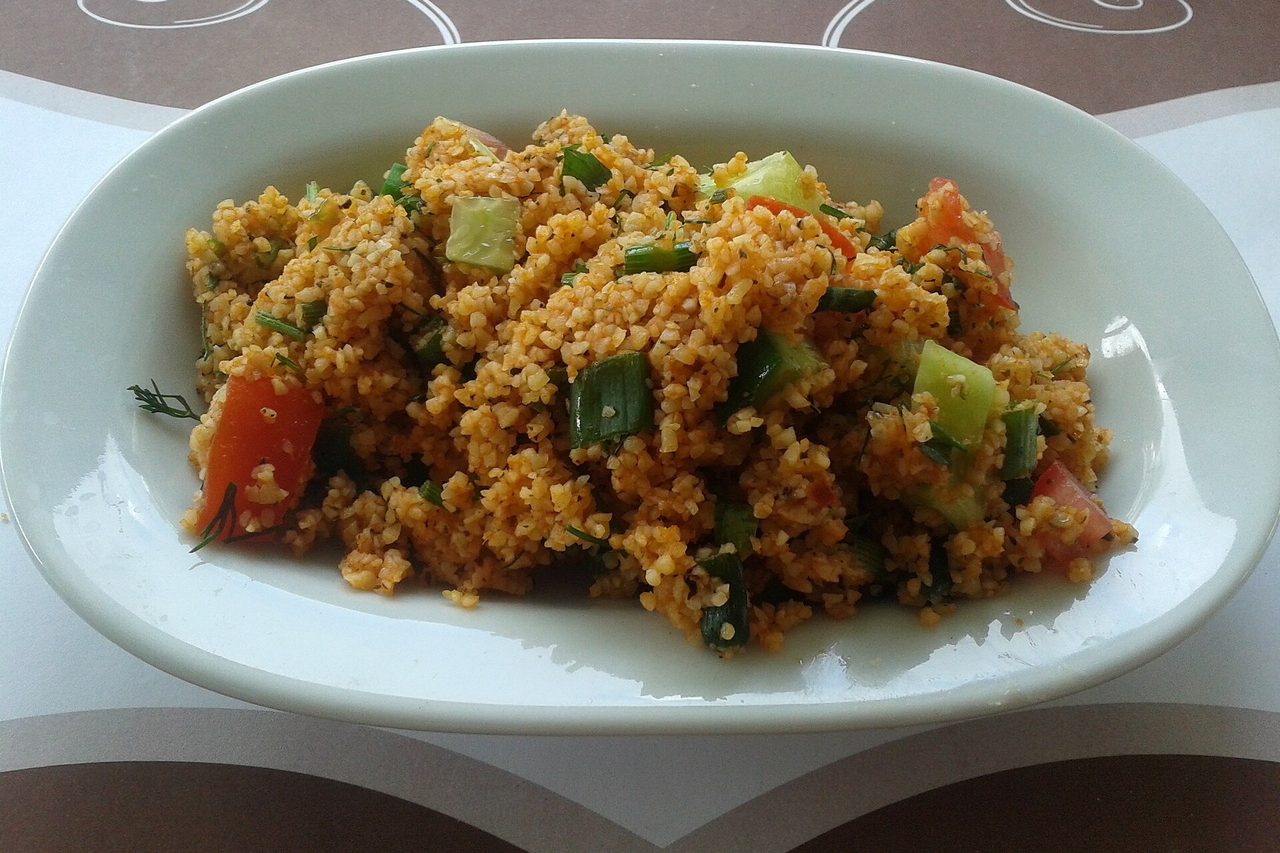
- The dressing is barely an emulsion, which is why dry vegetables matter. Emulsions files grated garlic among the weak emulsifiers, and one clove against four tablespoons of oil and three of lemon is about as weak as it gets. It clings by being thick rather than by being stable, and water on a leaf breaks that contact instantly. Same family: tabbouleh and kibbeh share the table, and pai huang gua notes that here the cucumber is one diced component among several rather than the whole dish.
The basics behind this dish
- Balancing Flavour: Salt, Acid, Sweet, Fat, HeatWhen something tastes like it is missing something, it is usually salt or acid. Five dials, the order to turn them, and how to taste properly.
- Knife Skills: Grip, Cuts, and Why Size MattersHow you hold the knife matters more than how fast you cut. The pinch grip, the claw hand, and why uniform size is a cooking decision rather than a cosmetic one.
- Heat Control: Preheating, Oil, and Reading the PanThe same ingredients become a different dish depending on pan temperature. When to add the oil, how to read heat by sound, and which dishes want low heat instead.
More of the same kind


More from this country


Sign in to edit.
AI-drafted, editor-reviewed · edits: 0 ·Edit history
https://cookiki.com/en/r/fattoush · cookiki · User contributions are licensed under CC BY-SA 4.0.