
Photo: Fan Majie 範瑪姐 · CC BY 2.0
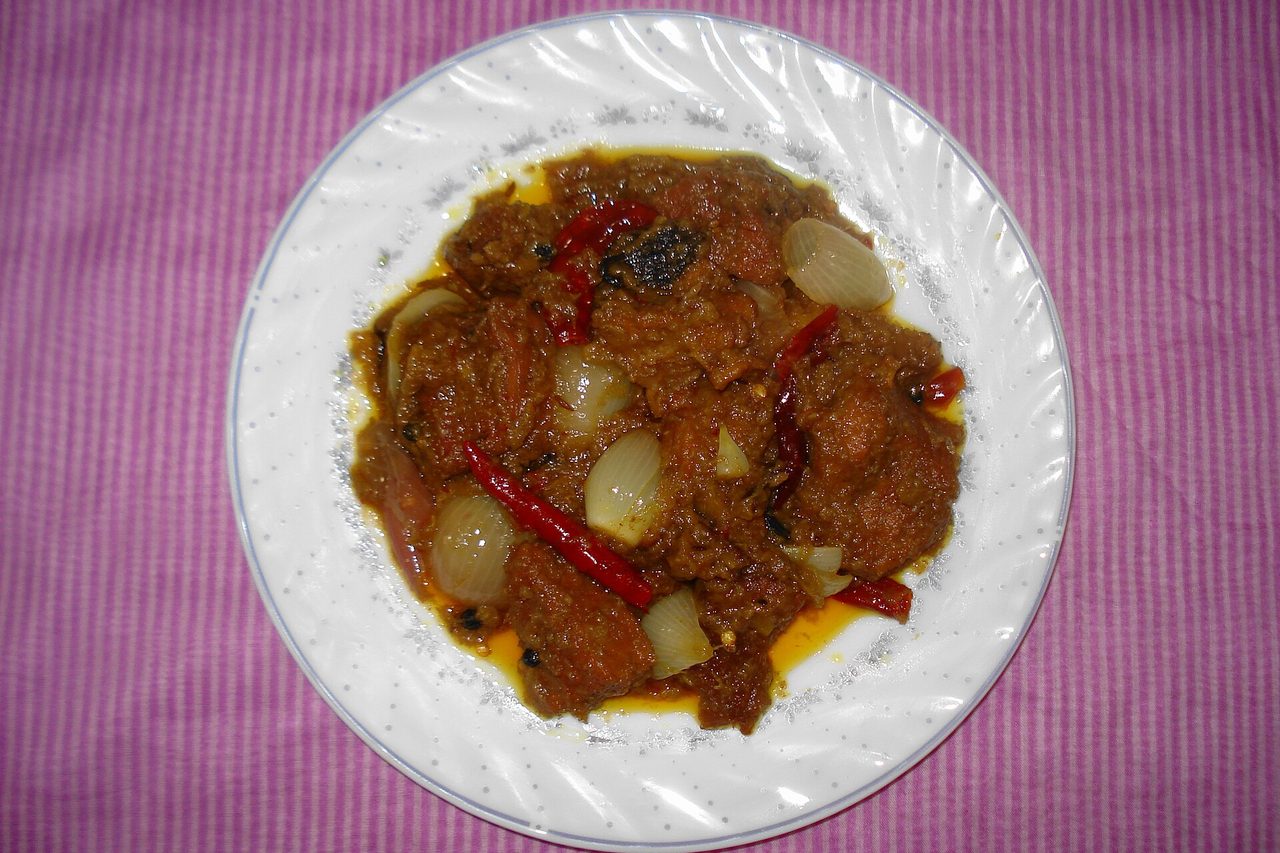
Moambe Chicken (Poulet à la Moambe)
The national dish of the DR Congo: chicken simmered in a thick sauce of ground palm nut pulp. The pulp — not palm oil — is the whole point, and a hard boil splits the fat out, so it stays at a gentle simmer. Served with rice and pounded cassava leaves.
Ingredients
- Main
- Chicken · Large pieces on the bone; thighs suit it best1.3 kg
- Palm nut sauce · Tinned 'sauce graine' or 'moambe' — see the tips400 g
- Onions · Thickly sliced2 large
- Tomatoes · Cut large; half a tin of whole tomatoes works3 medium
- Garlic · Minced4 cloves
- Ginger · Grated15 g
- Scotch bonnet · Added whole, lifted out at the end1
- Water or stock · Adjust to the thickness you want300 ml
- Salt1.5 tsp
- Black pepper · Coarsely ground
- Oil · For browning the chicken2 tbsp
- To serve
- Rice · Cooked dry and separate, to carry the sauce2 cups
- Cassava leaves · Sold frozen; spinach or kale instead300 g
- Plantains · Optional, fried alongside2
Steps
- ⏲ 30 min
Cut the chicken into large pieces on the bone and marinate 30 minutes with salt, pepper, grated ginger and minced garlic. Large pieces are what survive an hour in the pot.
- ⏲ 10 min
Heat oil and brown the chicken deeply, skin side first, in two batches. Crowded, it releases water and steams instead of browning.
- ⏲ 8 min
Lift the chicken out and cook the onions in the same pan until translucent, scraping the browned base with their moisture to lift the fond.
- ⏲ 7 min
Add the tomatoes and cook until they break down. Their acidity is the axis that carries the richness of the palm nut, so give them time.
- ⏲ 3 min
Stir in the palm nut sauce and drop the heat. From here it never boils hard — a rolling boil drives the palm fat out and it all floats to the surface.
- ⏲ 55 min
Return the chicken, add water or stock to almost cover, drop in the whole chilli, and simmer partly covered for 45 minutes to an hour.
- ⏲ 40 min
Meanwhile boil the cassava leaves. Frozen ground leaves need 40 minutes or more with the water changed, or the bitterness stays. Spinach instead takes five minutes.
- ⏲ 2 min
It is done when the sauce has thickened and a thin orange oil sits on the surface. That layer is characteristic of moambe — do not skim it. Remove the whole chilli.
- ⏲ 5 min
Season with salt at the end. Serve on one plate with the rice, the cassava leaves and fried plantain.
Tips & Variations
Variations
- Gabonese poulet nyembwe: neighbouring Gabon calls the same dish poulet nyembwe, sometimes adding okra to the palm nut sauce for body.
- Fish moambe: made with a large white fish or smoked fish. It cooks fast, so finish the sauce first and add the fish at the end.
- With peanut butter: where palm nut sauce is unavailable, 4 tbsp of unsweetened peanut butter is the standard substitute. It is the most common workaround outside the Congo and it tastes good, but it is closer to a different dish — none of the palm nut's earthiness or acidity is there.
- More heat: chop the scotch bonnet instead of leaving it whole. Locally, piri piri is often served on the side.
- Add smoked fish: a piece of smoked fish simmered in the sauce deepens it considerably — a common move across West and Central African cooking.
- Change the starch: fufu or chikwanga (cassava dough) alongside is more traditional than rice.
Tips
- Palm oil and palm nut sauce are not the same thing. Red palm oil alone gives you the colour but not the dish. What you need is tinned ground palm nut pulp, labelled sauce graine, noix de palme, moambe or "palm nut cream", from African or Caribbean grocers and online.
- Keep the heat low. This is as close as the dish has to a single rule. Boiled hard, the palm fat leaves the emulsion and separates into oil and thick sediment — the same mechanism as in Why sauces split.
- Brown the chicken first. Straight into the pot it comes out tender but shallow. Searing it and then dissolving that fond with the onions is one continuous move.
- Cassava leaves need long cooking. Raw cassava leaves contain cyanogenic compounds and must be cooked thoroughly — even frozen ground leaves want 40 minutes with the water changed. If in doubt, use spinach.
- Do not skim the orange oil. It is not a broken sauce; it is the layer palm nut naturally gives, and it is the part you stir through the rice.
- Better the next day. Palm nut sauce firms as it cools and the aroma spreads through the whole pot. Reheat it slowly, again over low heat.
- Moambe is the centre of feasts and Sunday meals in the DR Congo, and the arrangement itself — rice, cassava leaves and plantain on one plate — is part of what the dish is.
The basics behind this dish
- Browning and the Maillard ReactionMeat fails to brown for one of three reasons: it is wet, the pan is cool, or you put too much in at once. Plus how the brown film stuck to the pan becomes your sauce.
- Cooking Meat: Temperature, Resting, and Cutting Against the GrainDoneness is a core temperature, not a number of minutes. What resting actually does, how to handle a thick cut, and why the direction you slice changes the texture.
- Knife Skills: Grip, Cuts, and Why Size MattersHow you hold the knife matters more than how fast you cut. The pinch grip, the claw hand, and why uniform size is a cooking decision rather than a cosmetic one.
More of the same kind


Sign in to edit.
AI-drafted, editor-reviewed · edits: 0 ·Edit history
https://cookiki.com/en/r/moambe-chicken · cookiki · User contributions are licensed under CC BY-SA 4.0.