
Photo: Huangdan2060 · CC0
Stinky Tofu (Changsha-Style, Deep-Fried from Fermented Tofu)
Fermented tofu deep-fried and dressed with garlic and chilli — Chinese street food. The fermentation itself needs a brine kept for months, so this recipe buys the fermented tofu rather than attempting it: here the ferment is the ingredient, not a shortcut.
Ingredients
- Serves 2-3
- fermented stinky tofu · frozen or vacuum-packed, from a Chinese grocer or online. Changsha style is black, Taiwanese pale12 pieces
- oil for deep frying · a high-smoke-point oil such as canola, enough to submerge them800 ml
- Changsha sauce
- soy sauce2 tbsp
- chilli oil · including the sediment2 tbsp
- garlic · minced, raw — not cooked1 tbsp
- sugar1 tsp
- vinegar1 tsp
- coriander · roughly chopped, added at the end3 tbsp
- toasted sesame seeds1 tbsp
- For the Taiwanese service
- pickled cabbage · Taiwanese style, sweet and sour rather than salty200 g
Steps
Take the tofu out of the packet and pat it completely dry. Wet, it will spit violently in the oil. Frozen pieces thaw fully in the fridge first, then get dried.
Open a window and turn the extractor on. It smells strongly while it fries and the smell lingers in the house for about a day. That belongs on the equipment list.
Mix the sauce in advance: soy, chilli oil, sugar, vinegar and minced garlic, with the coriander and sesame going on at serving. The garlic is not cooked — its raw pungency is the axis of this sauce.
Bring the oil to 160-170°C. Hotter and the crust sets before the inside can puff; cooler and it drinks oil. Without a thermometer, a wooden chopstick should give a steady stream of fine bubbles.
- ⏲ 8 min
Fry three or four pieces at a time for 6 to 8 minutes. They sink, then rise, and as the outside firms the inside puffs into a honeycomb. Wait for a hard, deeply coloured crust — those holes inside are where the sauce is going to sit.
Lift them out onto a rack to drain. Stacked on a plate, the undersides go soggy.
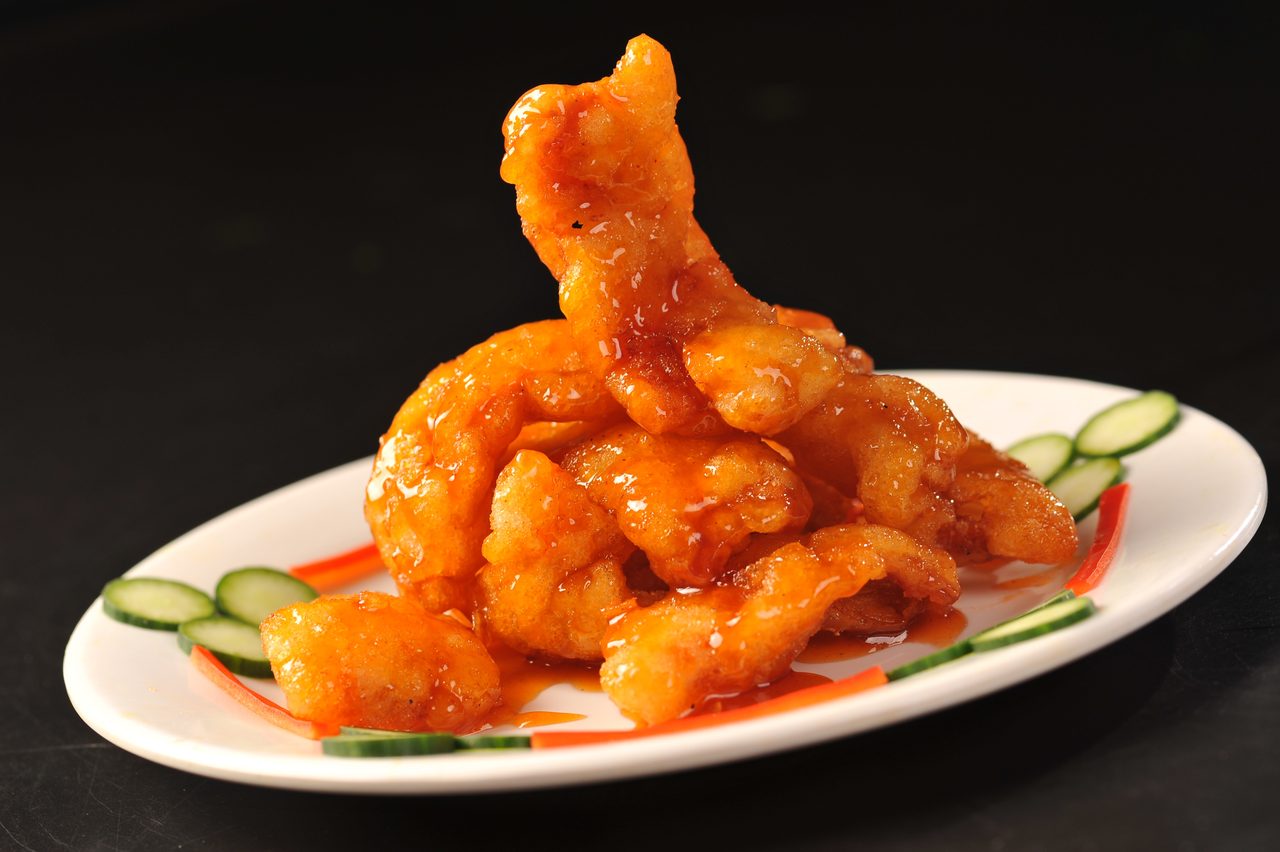
Split each piece open with scissors or a knife. Sauce on the outside only reads as salt in the first bite; split, the honeycomb inside soaks it up. That is why the cubes in the photo are cut open.
Spoon the sauce over, scatter the coriander and sesame, and serve at once. For the Taiwanese service, use a little garlic soy instead and pile pickled cabbage alongside.
Tips & Variations
Variations
- Changsha style (black): the Hunan version, where the brine contains fermented vegetables and beans that stain the tofu black. Fried, then dressed with soy, chilli oil, garlic and coriander. This page is built on it.
- Taiwanese (pale): the tofu keeps its colour, and after frying it comes with pickled cabbage and garlic soy. The cabbage's acidity cuts the oil, and this is the commonest night-market form.
- Steamed (蒸臭豆腐): steamed instead of fried, served with chilli oil and minced pork. The smell stays far stronger, which makes this the version for the already-converted.
- Dry-fried (乾炒): the Anhui approach — sliced thin and stir-fried with green chillies. A completely different texture from the fried cubes.
- Mala stinky tofu: the Sichuan direction, with Sichuan pepper and doubanjiang (fermented pastes).
- In soup: in Taiwan it also goes into mala-style broth. The point is the honeycomb interior soaking the broth up.
Tips
- Do not ferment it at home. Buy it. Stinky tofu is fermented by steeping tofu in a brine (滷水) kept for months or years, and that brine is itself a living culture built from long-fermented vegetables, shrimp and bamboo shoots. The shortcuts circulating online — steeping tofu in milk or kimchi liquid to make it smell — are not stinky tofu, they are a different food. Here the fermented tofu is not a compromise, it is the ingredient (fermentation basics).
- The smell and the taste go in different directions. The strong smell comes largely from volatile amines and indole compounds formed during fermentation, and frying drives much of it off. So the raw smell is not a fair warning about the eating: the fried result is far milder, and what stays behind is savour (building umami).
- Ventilation is equipment. It is still strong while it fries. Do not start without a window and an extractor.
- Hold 160-170°C. The goal is not a crisp shell but the honeycomb inside. Too hot and the crust sets before the interior can puff; too cool and it absorbs oil and turns heavy (deep frying, cooking oils).
- Drying it is a safety matter. Vacuum packs hold residual brine, and that water flashing to steam in 160°C oil is what throws it out of the pan. It is the commonest cause of a frying burn.
- Split it to sauce it. Dressed only on the outside, the first bite is salt and the inside is blank. Split after frying, the honeycomb absorbs the sauce and one piece tastes even throughout.
- Keep the garlic raw. Fried, the garlic in the sauce turns sweet and the dish loses its edge.
- Eat it straight away. That honeycomb absorbs moisture readily, so ten minutes after saucing the crust is gone (serving temperature).
- Better not to reuse the oil. The fermented aroma transfers into it and shows up in whatever you fry next. Treat it the way you would oil used for fish.
- Worth comparing with cheonggukjang. Both are soybeans fermented briefly into something strong-smelling, and both attract the claim that the worse it smells the better it tastes. The difference is that cheonggukjang ferments two or three days without salt while stinky tofu sits far longer in a salt brine — and both differ again from the lactic fermentation of kimchi.
- As a tofu dish it is the far end of the range. Where sundubu-jjigae and dubu-jorim work with tofu's mildness, stinky tofu turns tofu into a different ingredient altogether — with mapo tofu somewhere in between, using tofu as a vessel for a hot sauce.
The basics behind this dish
- Knife Skills: Grip, Cuts, and Why Size MattersHow you hold the knife matters more than how fast you cut. The pinch grip, the claw hand, and why uniform size is a cooking decision rather than a cosmetic one.
- Salt: When You Add It Matters More Than How MuchThe same amount of salt either draws water out or seasons all the way through, depending on when it goes in. Osmosis, seasoning in layers, and why salt types are not interchangeable by volume.
- Heat Control: Preheating, Oil, and Reading the PanThe same ingredients become a different dish depending on pan temperature. When to add the oil, how to read heat by sound, and which dishes want low heat instead.
More of the same kind


More from this country


Sign in to edit.
AI-drafted, editor-reviewed · edits: 0 ·Edit history
https://cookiki.com/en/r/stinky-tofu · cookiki · User contributions are licensed under CC BY-SA 4.0.