
Photo: Evan-Amos · Public domain
Hot and Sour Soup (Suan La Tang)
Tofu, wood ear, bamboo shoot and pork cut into matchsticks in a broth thickened with a starch slurry, finished with egg poured in as threads and with the vinegar and white pepper stirred in off the heat. The dish is the order of the last three minutes: the starch has to go in before the egg or the egg sinks instead of hanging in ribbons, and the vinegar and pepper go in away from the boil because heat takes their aroma away.
Ingredients
- The broth
- Chicken stock or water1.2 L
- Dried shiitake · keep the soaking water and use it4
- Dried wood ear · soaked 20 minutes in warm water10 g
- The solids — everything in matchsticks
- Pork loin or fillet · shredded fine120 g
- Firm tofu · cut into 5mm batons200 g
- Tinned bamboo shoot · rinsed and shredded80 g
- Carrot · shredded1/2
- Spring onion · sliced on the diagonal1
- Seasoning
- Soy sauce2 tbsp
- Dark soy sauce · for colour; leave it out if you have none1 tsp
- Salt to taste
- Body and finish
- Potato or corn starch3 tbsp
- Cold water · same volume as the starch3 tbsp
- Eggs · beaten and passed through a sieve2
- Stirred in off the heat
- Chinkiang black vinegar, or rice vinegar4 tbsp
- Ground white pepper · this is where the heat in this soup comes from1.5 tsp
- Sesame oil1 tsp
- Coriander · optional to serve
Steps
- ⏲ 20 min
Soak the dried shiitake and wood ear 20 minutes in warm water. Let the shiitake water settle and add the clear part to the broth; shred the soaked mushrooms fine.
- ⏲ 10 min
Cut the pork, tofu, bamboo shoot and carrot to the same thickness. Matching them is a question of time rather than looks — all of it has to be done in a few minutes.
- ⏲ 5 min
Bring the stock and the mushroom water to a boil. Add the pork for 2 minutes, then the mushrooms, bamboo and carrot for 3 minutes more.
- ⏲ 2 min
Add the tofu and season with the soy sauces. Take it slightly past where you want it — the vinegar to come will push the seasoning back down.
- ⏲ 1 min 30 sec
Slake the starch in an equal volume of cold water, pour it in, and keep the soup at a boil while you stir. Short of a boil it tastes floury and thins again as it cools.
- ⏲ 1 min
Turn the heat as low as it goes and pour the beaten egg in in a thin stream down a chopstick. Do not stir while it goes in; wait five seconds, then stir once.
Off the heat, stir in the black vinegar and the white pepper. Add the sesame oil, top with spring onion and coriander, and serve at once.
Tips & Variations
Variations
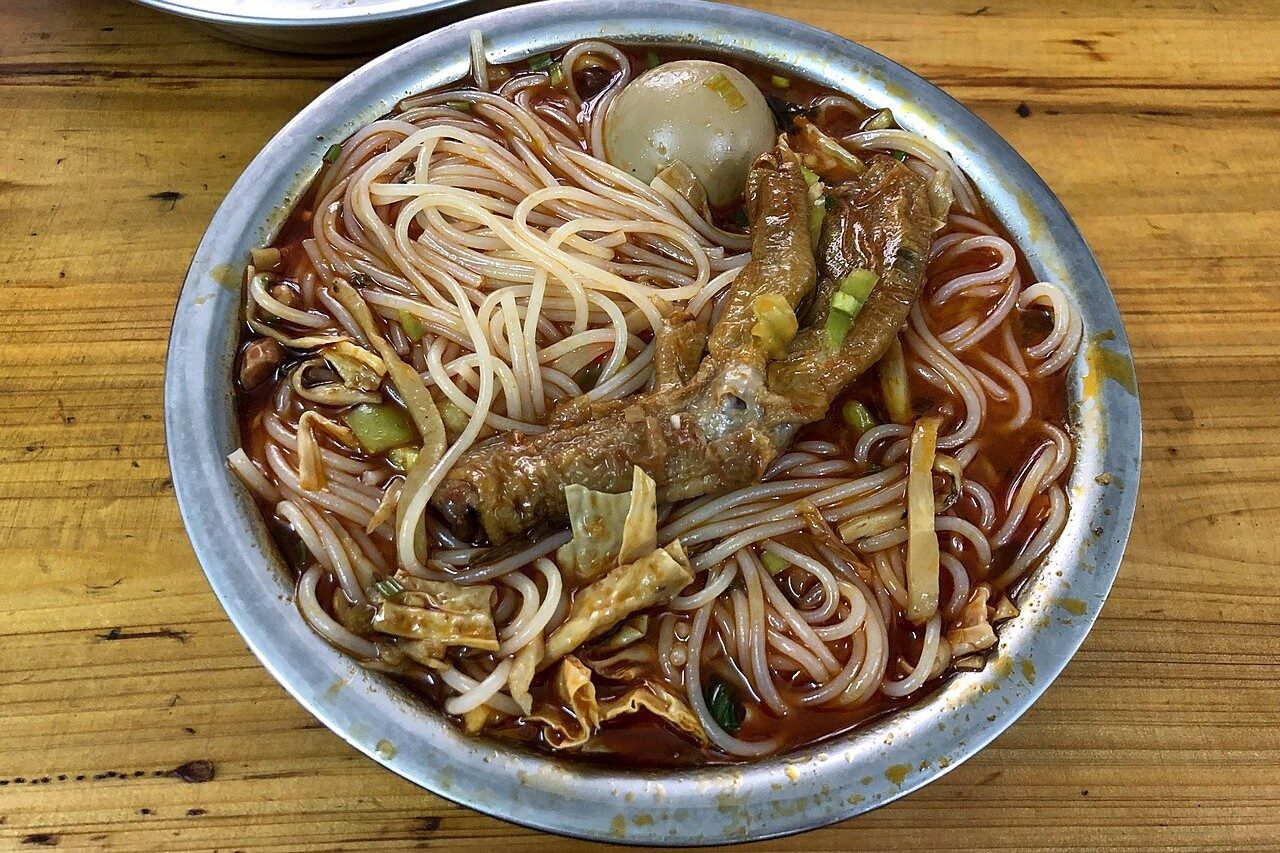
- Suan la fen: the same broth poured over sweet potato starch noodles as a meal in itself, sold on the street in Chongqing and Xi'an. The broth is already thick, so it clings to the noodles.
- The American-Chinese version (photographed): much more starch, less vinegar, and chilli oil over the top. The photo here is that kind. This recipe follows the mainland balance, where the sour side stands further forward.
- Vegetarian: leave the pork out, double the shiitake, and build the broth on kombu and dried mushroom. Mapo tofu makes the same move, using meat as an aroma rather than as a body.
- Hotter: add more white pepper. Chilli oil adds colour and fragrance, but the heat in this soup belongs to the pepper.
- Without the egg: it still works. What is left is body and sourness, and it reads much lighter.
Tips
- The dish is the order of the last three minutes. Starch, then egg, then vinegar and pepper. Swap any two and you have made something else. The three notes below are why.
- Why the starch goes in before the egg. Thickening a sauce records that swollen starch granules get between the egg proteins and raise the egg's setting temperature. Egg poured into a thickened broth therefore sets slowly, and the broth is heavy enough that it does not sink while it does. Poured into a clear broth it seizes where it lands and drops — which is what tteokguk is describing when it drizzles egg into the boiling soup "for a softer finish". That gives clouds, not threads.
- Slake the starch cold and let it boil once. The same guide's base rule: dry starch tipped into hot liquid gelatinises on the outside first and seals dry powder inside a lump.
- The vinegar goes in off the heat. Boiled, its aroma leaves and a flat sourness is all that stays. This looks like the opposite of collagen and time's "acid early", but the subject is different: there the acid has meat to work on, and here nothing in the pot is waiting to soften, so the acid's only job is flavour. Chilli con carne writes the same distinction from the bean side.
- The pepper is also last, for a different reason. Cacio e pepe notes that in a sauce with no fat phase the water is what carries pepper's aroma. This broth has almost no fat either, so the condition is the same — but unlike a pan of pasta it simmers for a while. The pepper therefore goes in where there is no time left for that aroma to leave again.
- Chilli and heat does not transfer whole. That page is about capsaicin, which does not cook off, so it says the surest control is keeping it out of the pot. The heat here is pepper's, and pepper can be added later. Tasting and then raising the heat is available in this dish.
- Season hard before the vinegar arrives. As balancing flavour puts it with its dials, sourness covers salt. Add salt after the vinegar and you are late: you end up with too much of both.
- Matching the cut is what sets the cooking time. Nothing in this pot needs to soften. Everything is done in minutes, so uneven shreds mean some of it raw and some of it collapsed.
- Wood ear is in the bowl for the sound, not the taste. Staying crisp after soaking is its whole job, and that crunch between soft tofu and fibrous bamboo shoot is the frame the broth hangs on.
The basics behind this dish
- Stocks and Broths: Clarity, Time, and Why You Do Not Salt ThemWhat separates a clear stock from a cloudy one is temperature, not ingredients. Why you start in cold water, how long each ingredient wants, and why salt comes later.
- Salt: When You Add It Matters More Than How MuchThe same amount of salt either draws water out or seasons all the way through, depending on when it goes in. Osmosis, seasoning in layers, and why salt types are not interchangeable by volume.
- Knife Skills: Grip, Cuts, and Why Size MattersHow you hold the knife matters more than how fast you cut. The pinch grip, the claw hand, and why uniform size is a cooking decision rather than a cosmetic one.
More of the same kind


More from this country


Sign in to edit.
AI-drafted, editor-reviewed · edits: 0 ·Edit history
https://cookiki.com/en/r/hot-and-sour-soup · cookiki · User contributions are licensed under CC BY-SA 4.0.