
Sakuramochi (Bean Paste in a Pink Crêpe and a Salted Cherry Leaf)
A Japanese wagashi: bean paste rolled in a thin pink wheat crêpe and wrapped again in a salted cherry leaf. Instead of a pinch of salt mixed into the paste, the salt sits in the leaf, so sweet and salt never mix and only meet in the mouth. Whether the leaf is eaten is up to whoever eats it; what the cook decides is how much salt is soaked out of the leaf first.
Ingredients
- Leaves and filling (8 pieces)
- salted cherry leaves · sakura-ba shiozuke, from a Japanese grocer; a fresh leaf does not give this aroma8
- smooth bean paste · bought koshi-an, or the paste from the monaka recipe pushed through a sieve200 g
- Crêpe batter
- glutinous rice flour10 g
- water110 ml
- plain (soft) flour60 g
- sugar15 g
- red food colouring · what clings to the tip of a toothpick; pale pink is the aim
- neutral oil · just enough to wipe over the pan
Steps
- ⏲ 15 min
Soak the salted cherry leaves in cold water for 15 minutes to draw out salt. Tear off a scrap of edge and taste it: lift them out when it is clearly salty but not bitter, and pat them dry. That soak sets the seasoning of the whole sweet.
Divide the bean paste into eight 25g pieces and roll each into a round log about 6cm long.
- ⏲ 15 min
Stir the water into the glutinous rice flour a little at a time until there are no lumps, then add the plain flour and sugar and whisk smooth. Colour it the palest pink and leave 15 minutes.
Set a non-stick pan over low heat and wipe it with an oiled paper towel. Pour in 1 tablespoon of batter and spread it with the back of the spoon into a long oval about 8 by 12cm.
- ⏲ 1 min 15 sec
Cook for just over a minute without turning, until the top has lost its shine and looks dry. Take it off before the underside colours.
Lay the crêpes out without stacking and cover them with a damp cloth so they do not dry. Cook the rest of the batter the same way.
With the smooth face that touched the pan on the outside, set a log of paste on each crêpe and roll it up. Wrap a cherry leaf around the outside.
- ⏲ 30 min
Cover with a cloth and leave at least 30 minutes, for the leaf's aroma to move into the crêpe.
Tips & Variations
Variations
- Kansai style (Dōmyōji): soaked glutinous rice coarsely cracked into dōmyōji-ko is steamed and wrapped round the paste, under the same leaf — a round shape with the grain showing, instead of a wheat crêpe. ko.wikipedia records the two styles, Kantō and Kansai.
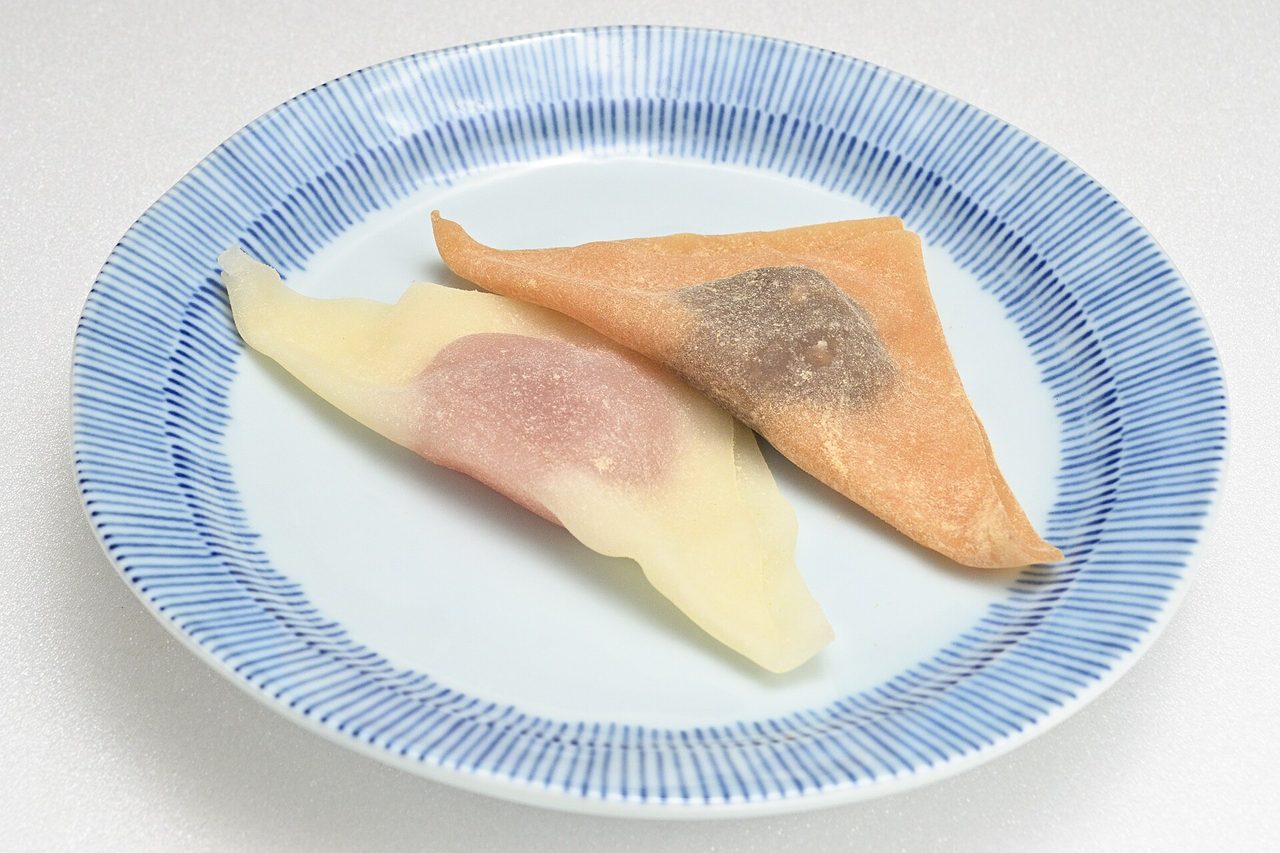
- The one in the photograph is the Kantō style (Chōmeiji): a pink crêpe rolled up, with the paste showing at both ends.
- Two leaves: some old shops on the Chōmeiji side wrap with several leaves. More leaf, more aroma and more salt.
- Uncoloured: leave out the colouring and the crêpe is white. It tastes the same.
- When it is eaten: it is sold all year, but the pink makes it the sweet of Hinamatsuri, on 3 March, when most of it is made.
Tips
- The salt is in the leaf, not in the paste. Monaka mixes a pinch of salt into its bean paste and says "It does not reduce the sweetness, it sharpens it." It also states the ceiling: "One pinch for 180g of sugar; more and the salt arrives first". Salt mixed in cannot go past that line. Sakuramochi takes the salt out of the paste and puts it in the leaf. There it stays separate from the sweet, so it can be far saltier than a pinch, and the two meet only in the mouth. ko.wikipedia describes the sweet in exactly those terms: the salt outside heightens the sweetness inside.
- And that dial belongs to the eater. Eat the leaf and the salt and the aroma come with it; peel it off and both go. Neither is the rule. It is the hand-over balancing flavour is about, a dial the cook leaves to the person eating, except that here it arrives as a layer of the sweet rather than as a seasoning set on the table.
- The cook's dial is the soak. Bought salted leaves vary a great deal, so the time is only a guide. Chew an edge of the leaf and decide. Soak too long and the aroma leaves with the salt.
- The cherry-leaf aroma only exists once the leaf is salted. A fresh leaf smells of very little. As it cures in salt its cells break down and coumarin, the compound behind that scent, is formed. The first thing salt and seasoning says salt does, pull water out of cells, is here what makes the aroma, which is why a fresh leaf is no substitute.
- Do not turn the crêpe, and do not let it colour. It has to bend softly around the paste. Take it off the moment the top looks dry: left until the underside browns, it dries and stiffens and cracks when you roll it. The little glutinous rice flour is there so it stays soft and pliable once cold.
- Why the thirty minutes. Eaten the moment it is wrapped, the aroma is all in the leaf. Given time it moves into the crêpe as well, so even the person who peels the leaf off is eating cherry leaf.
The basics behind this dish
- Eggs: Coagulation Temperatures and What They DecideWhite sets at 62°C, yolk at 68°C. Those two numbers explain scrambled eggs, boiled eggs, steamed custard and crème anglaise all at once.
- Why Sauces Split: Emulsions and Pan SaucesA cream sauce breaking and a carbonara scrambling are the same failure. Temperature and emulsifiers — plus how to bring a split sauce back.
- Knife Skills: Grip, Cuts, and Why Size MattersHow you hold the knife matters more than how fast you cut. The pinch grip, the claw hand, and why uniform size is a cooking decision rather than a cosmetic one.
More of the same kind


More from this country


Sign in to edit.
AI-drafted, editor-reviewed · edits: 0 ·Edit history
https://cookiki.com/en/r/sakuramochi · cookiki · User contributions are licensed under CC BY-SA 4.0.