
Photo: Voton · CC BY-SA 3.0
Goiabada (Guava Paste Firm Enough to Slice)
Brazil's guava paste. Guava is cooked, sieved and stirred down with sugar for the best part of an hour, and poured into a mould it cools into a block you cut with a knife. No gelatine and no agar go in: what sets it is the guava's own pectin. It began in colonial Brazil as a stand-in for quince marmelada, and eaten with a slice of Minas cheese the pair is called Romeo and Juliet.
Ingredients
- Goiabada (one 20x10cm mould)
- guavas · ripe, red-fleshed; frozen pulp works1 kg
- water200 ml
- sugar · about 60% of the weight of the sieved purée500 g
- To serve
- Minas cheese · or a mild fresh cheese: paneer, or pressed and drained cottage cheese
Steps
Wash the guavas, trim the ends and quarter them. Leave the skin on.
- ⏲ 10 min
Put the guavas and water in a pan, cover and cook 10 minutes until soft.
Blend smooth and push through a sieve to take out the seeds, which are hard enough to catch in your teeth. Weigh the purée.
Put the purée and sugar in a wide, heavy pan, bring to the boil over medium heat and then turn it down low. Stir constantly with a wooden spoon, scraping the bottom. It spits more as it thickens, so use a long spoon and cover your hand.
- ⏲ 50 min
Cook 40-60 minutes. It is done when a line drawn across the bottom with the spoon stays open for a moment and the whole mass comes away from the sides and moves as one.
Pour into a lined mould and level it. Cool at room temperature, then leave overnight to set.
Turn it out and cut 1cm slices. Serve each with a slice of cheese the same thickness.
Tips & Variations
Variations
- Cascão: part of the purée is left unsieved in small pieces for texture. It sets a little less firmly.
- Goiabada cremosa: stopped earlier, at the spoonable stage, and kept in a jar for spreading. The same thing, short of the slicing point.
- Romeo and Juliet: goiabada layered with Minas cheese. Sweet against salt, firm against soft, in one bite.
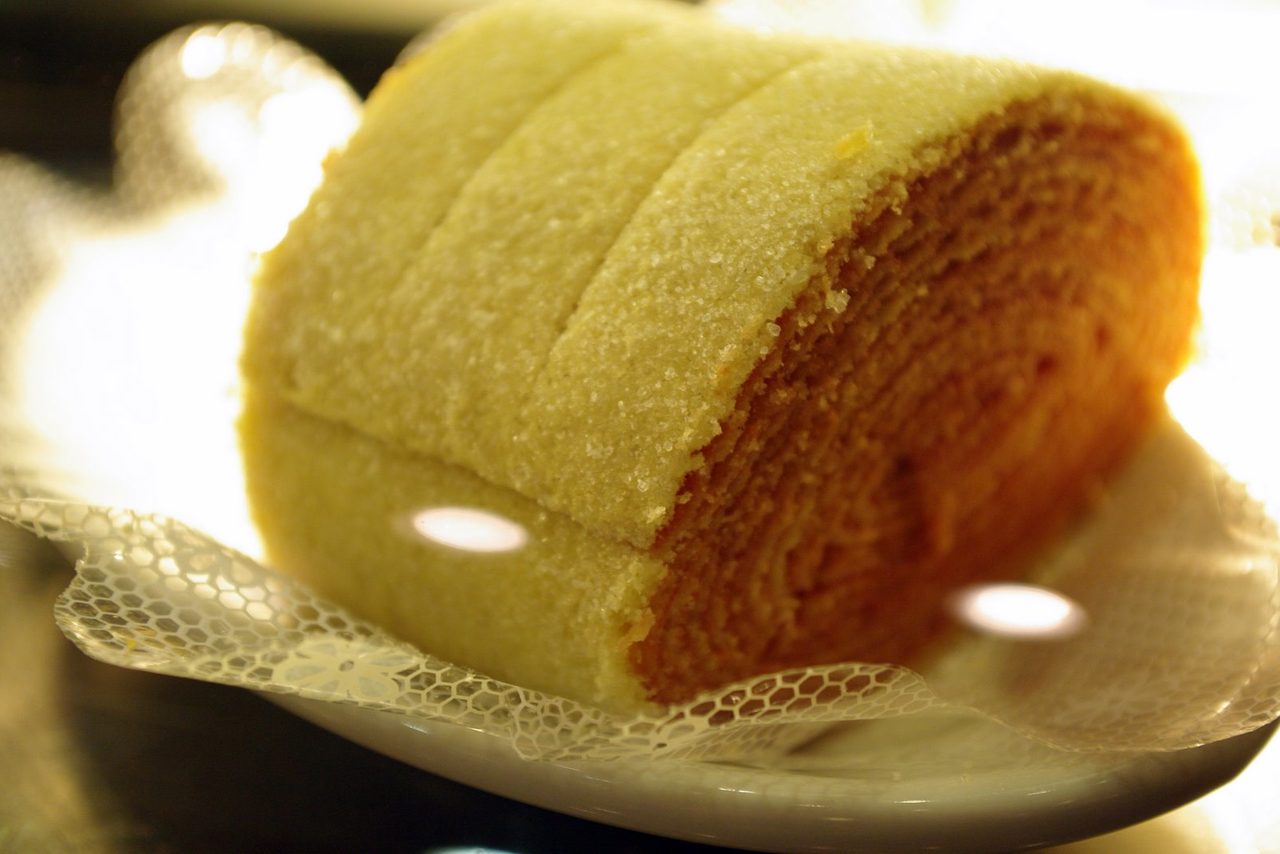
- Bolo de rolo: Pernambuco's roll cake, many very thin sheets of sponge rolled up with melted goiabada spread between them.
- Marmelada: what goiabada stood in for, quince paste. Made the same way.
Tips
- What sets it is the guava itself. No gelatine and no agar go in. Guava, like the quince this paste replaced, is rich in pectin, and once enough of its water is driven off with the sugar it sets on its own. It is the point Linzer torte makes about jam: "Half the reason redcurrant and raspberry are traditional is that they are high in pectin and set firm."
- In a bean, the same pectin does the opposite job. Braising warns that "Acid sets pectin firm", so a bean simmered with it never softens, and chili con carne and red red order their beans around that rule. There the pectin is inside a cell wall, and setting it stops a vegetable going soft. In goiabada the flesh is blended and sieved so the pectin is spread through the whole purée, and then it is set. The same substance, building rather than blocking.
- It is a jam taken as far as slicing. Pineapple cake sorts stiff fillings — "they differ in what makes the filling stiff — caramel, high-pectin jam, and here a vegetable cooked dry." All three sit inside pastry and borrow its shape. Goiabada takes the jam branch further, until it stands up without pastry and is cut with a knife.
- Judge it by the bottom of the pan, not the clock. Guavas differ in water and pectin, so it may take forty minutes or sixty. If the line from the spoon closes straight away, keep going. Stopped short, it slumps out of the mould; taken too far, it goes past firm to crumbly.
- It is not held the way a dried fruit is. Tklapi spreads its purée thin and dries it in the sun. Goiabada sets while still holding its water, which is why a cut face shines and why it has to be kept covered or the outside dries.
- Why the stirring never stops: the thicker it gets, the less the heat at the bottom can move upward, and the moment you stop, the bottom catches. A scorched note spreads through the whole batch.
The basics behind this dish
- Eggs: Coagulation Temperatures and What They DecideWhite sets at 62°C, yolk at 68°C. Those two numbers explain scrambled eggs, boiled eggs, steamed custard and crème anglaise all at once.
- Why Sauces Split: Emulsions and Pan SaucesA cream sauce breaking and a carbonara scrambling are the same failure. Temperature and emulsifiers — plus how to bring a split sauce back.
- Knife Skills: Grip, Cuts, and Why Size MattersHow you hold the knife matters more than how fast you cut. The pinch grip, the claw hand, and why uniform size is a cooking decision rather than a cosmetic one.
More of the same kind


More from this country


Sign in to edit.
AI-drafted, editor-reviewed · edits: 0 ·Edit history
https://cookiki.com/en/r/goiabada · cookiki · User contributions are licensed under CC BY-SA 4.0.