
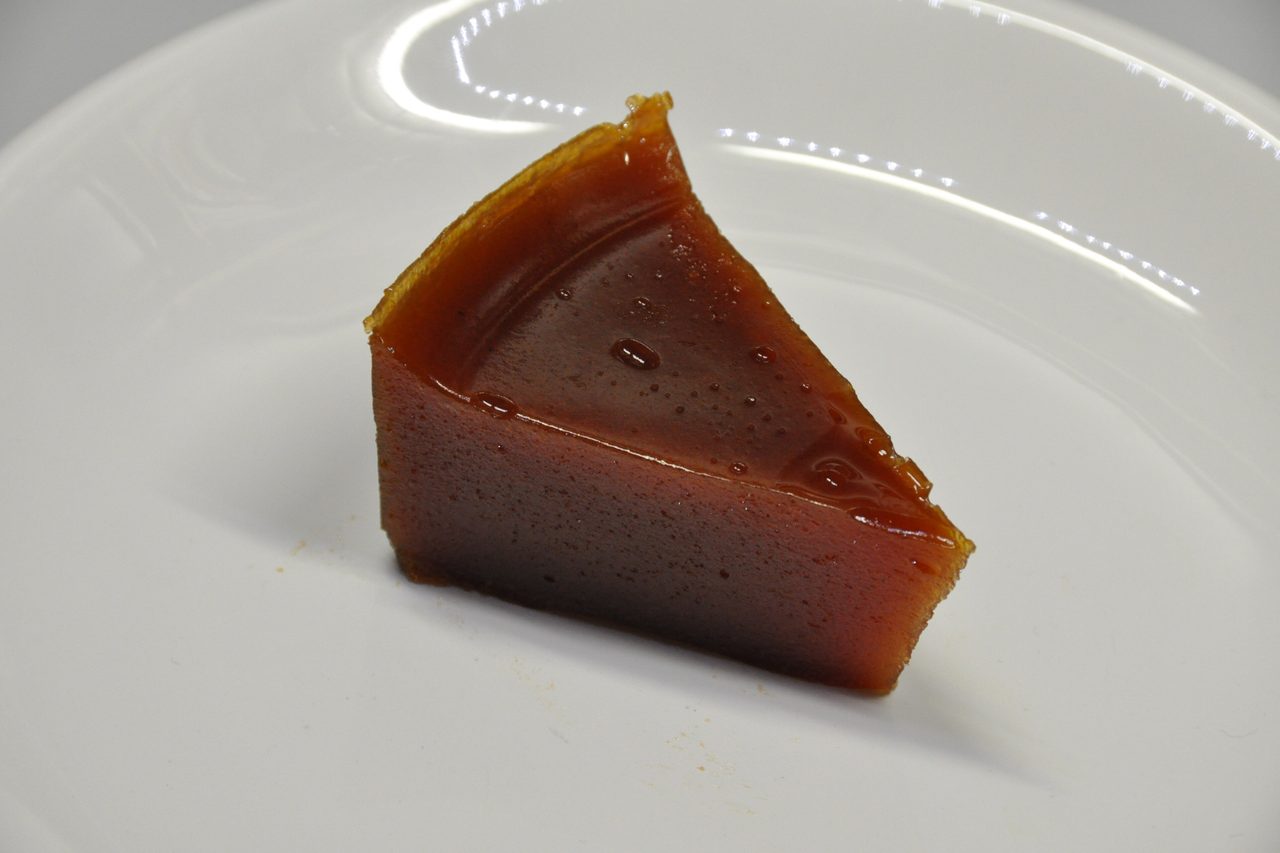
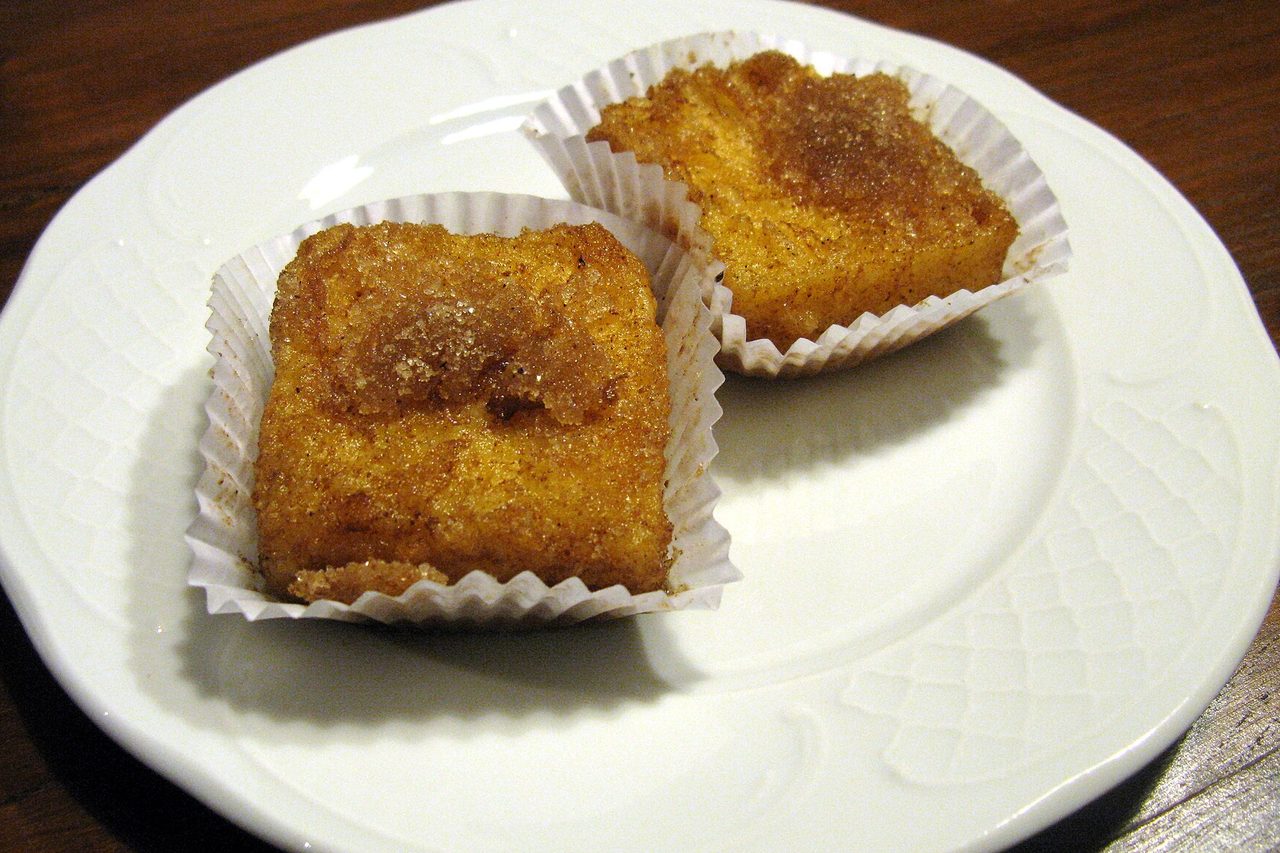
Photo: Juan Emilio Prades Bel · CC BY-SA 4.0
Cuajada (Rennet-Set Milk Pudding)
A dessert from northern Spain: sheep's milk warmed to about body heat, set with rennet in the small pots it is served in, and eaten with honey and walnuts. It is mozzarella stopped just before the knife: the milk is set the same way, but nothing cuts it to let the whey out, so the whey stays held in the gel and the result is a trembling pudding rather than a cheese. Pour it into the pots before it sets, and do not touch it while it does.
Ingredients
- sheep's milk · or whole cow's milk; not UHT1 L
- liquid rennet · strengths vary, so use the dose the label gives for 1L of milk5 drops
- cold water · to dilute the rennet1 tbsp
- sugar · optional1 tbsp
- To serve
- honey4 tbsp
- walnuts · roughly broken40 g
Steps
Set out four small pots (earthenware if you have them) at room temperature. Once it has set it cannot be moved, so it sets in the pot it is eaten from.
- ⏲ 7 min
Warm the milk over a low heat, stirring, to 32°C. Dissolve the sugar in it now if using. Do not go past that temperature.
- ⏲ 20 sec
Off the heat, pour in the rennet diluted in the cold water and stir up and down for 20 seconds only.
At once divide it between the four pots. Rennet starts knitting the milk within minutes, so do not hesitate here.
- ⏲ 45 min
Leave it 30-60 minutes without shaking or moving it. It has set when, tilted gently, the surface of one pot moves as a single piece.
- ⏲ 120 min
Carry the set pots carefully to the fridge and chill at least 2 hours.
Pour over the honey, scatter the walnuts and serve in the pots. Eat it with a spoon, from the top down.
Tips & Variations
Variations
- Sheep's milk or cow's: Korean Wikipedia says cuajada was traditionally made from sheep's milk but that today most of it is made in factories from cheaper cow's milk.
- What goes with it: honey or walnuts as a rule, sometimes sugar. It is also eaten for breakfast with fruit and honey, and warm milk is often poured over it.
- Cuajada in Latin America: it travelled to Spain's former colonies and is especially well known in El Salvador, Honduras and Nicaragua. The Portuguese-speaking world has coalhada, a name with the same meaning.
- To make a cheese instead: do not stop here, take a knife to it, and you are on mozzarella's path — "Cut a 2cm lattice right down to the base with a long knife."
- The cheeses that use what is thrown away: ricotta says of the three ways to set milk that "all three set the same protein, casein", and sets instead the whey all three discard; brunost boils that whey down. Cuajada is the opposite end: it neither discards the whey nor uses it separately, it keeps it inside the gel.
Tips
- It is mozzarella stopped at step four. Mozzarella sets milk with rennet, waits for the clean break, and then takes a knife to it — "Cut a 2cm lattice right down to the base with a long knife." After that, "Whey runs out of the cut faces and the pieces shrink and firm." Cuajada never gets the knife. With no cut face the whey has no way out, and the gel that set around it is the dessert.
- Douhua and tofu again. Douhua does the same thing with soy: "stop at this stage and it is douhua; ladle the curd into a mould and press the water out and it is tofu." Cuajada is the rennet version of douhua. Stop, and it is cuajada; cut and drain, and it is cheese.
- It sets in the pot it is eaten from. As douhua puts it, "a torn network does not rejoin." Set it in one big pan and spoon it out, and the network tears as you lift it and whey runs from the gaps — the spoon doing by accident what mozzarella's knife does on purpose. That is why the milk is divided the moment the rennet is in.
- Do not go past 32°C. It is mozzarella's figure: "32°C is where rennet works best; go past it and the curd tightens." Tightened here, the curd is a firm lump instead of a trembling pudding.
- UHT milk will not set. Mozzarella gives the reason: "At 135°C the whey proteins denature and coat the casein surface, so rennet cannot reach the spot it needs to cut." If it is still liquid after an hour, the milk is nearly always the cause.
- Leave it alone while it sets. Moving a pot, or tilting it to look, shakes a network that has started to form. Check once, at the end (dairy and heat).
The basics behind this dish
- Eggs: Coagulation Temperatures and What They DecideWhite sets at 62°C, yolk at 68°C. Those two numbers explain scrambled eggs, boiled eggs, steamed custard and crème anglaise all at once.
- Why Sauces Split: Emulsions and Pan SaucesA cream sauce breaking and a carbonara scrambling are the same failure. Temperature and emulsifiers — plus how to bring a split sauce back.
- Knife Skills: Grip, Cuts, and Why Size MattersHow you hold the knife matters more than how fast you cut. The pinch grip, the claw hand, and why uniform size is a cooking decision rather than a cosmetic one.
More of the same kind


More from this country


Sign in to edit.
AI-drafted, editor-reviewed · edits: 0 ·Edit history
https://cookiki.com/en/r/cuajada · cookiki · User contributions are licensed under CC BY-SA 4.0.