
Photo: pelican · CC BY-SA 2.0
Tandoori Chicken
Chicken marinated in spiced yogurt, then roasted hot so the edges char while the inside stays juicy — India's iconic grill. No tandoor oven needed; an ordinary oven or air fryer delivers that red, fragrant result at home.
Ingredients
- Chicken drumsticks · or thighs, skin removed8
- Lemon · juiced1
- Salt1 tsp
- Yogurt marinade
- Plain yogurt · thick1 cup
- Minced garlic1 tbsp
- Minced ginger1 tbsp
- Chili powder · or cayenne1 tbsp
- Garam masala1 tsp
- Turmeric0.5 tsp
- Cumin1 tsp
- Paprika · for color1 tbsp
- Salt1 tsp
- Oil1 tbsp
- To serve
- Onion · rings, optional0.5
- Lemon · wedges, optional1
- Cilantro · optional
Steps
- ⏲ 15 min
Skin the chicken and cut deep slashes into the flesh. Rub with the lemon juice and salt and rest 15 minutes.
- ⏲ 2 min
Mix all the marinade ingredients into a smooth paste.
- ⏲ 120 min
Coat the chicken with the marinade, working it into the slashes, and chill at least 2 hours (overnight is best).
- ⏲ 10 min
Heat the oven to 220C. Set a rack over a tray and lay the chicken on it.
- ⏲ 20 min
Roast 20 minutes, then flip, brush with the remaining marinade, and roast 15-20 minutes more until charred at the edges.
- ⏲ 3 min
Finish under the oven's highest heat (or broil) to lightly char the edges.
Serve hot with onion rings, lemon wedges, and cilantro.
Variations
- Air fryer: 200C for 20-25 minutes, turning once.
- Pan or grill: No oven? Sear it on a grill or in a pan until charred.
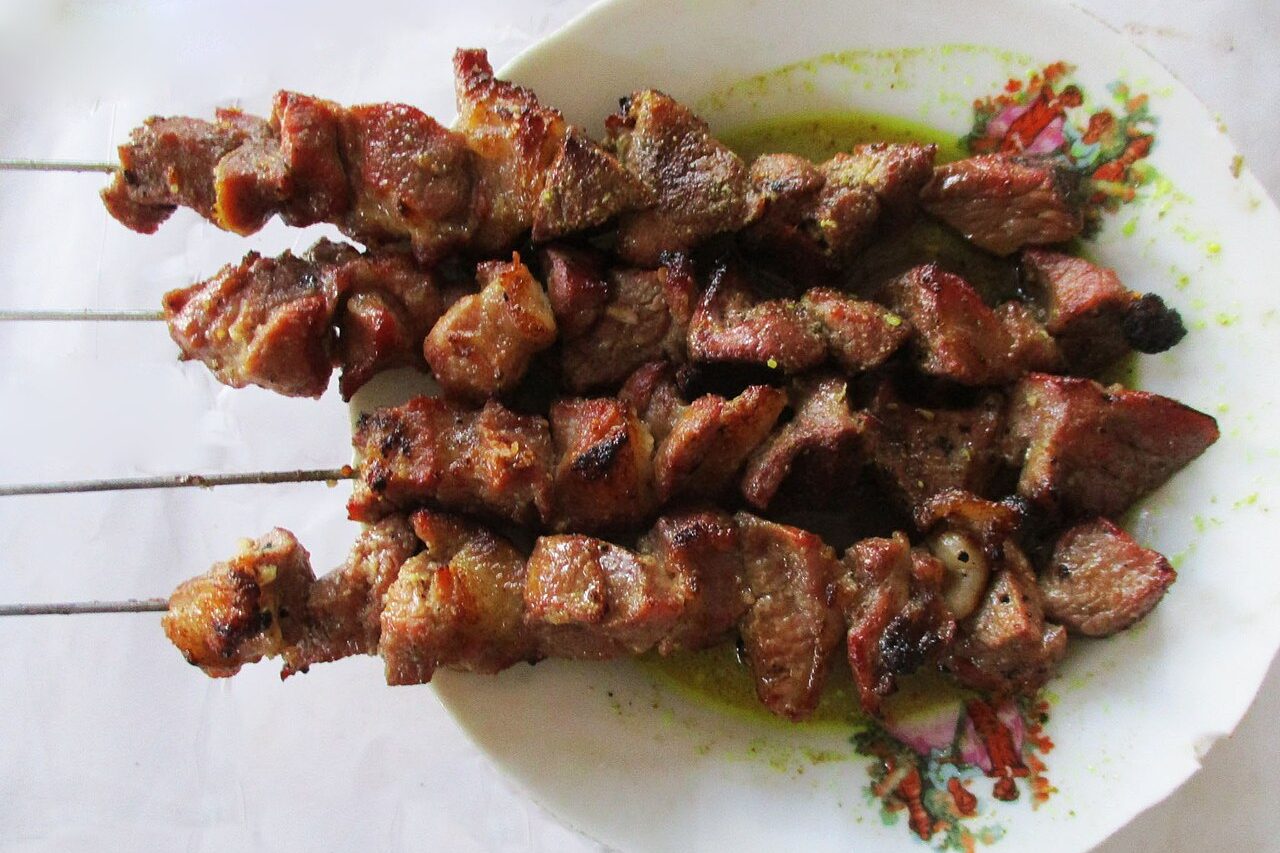
- Chicken tikka: Cube boneless chicken and thread onto skewers.
- Paneer tikka: Swap the chicken for paneer and vegetables.
Tips
- Cut deep slashes so the marinade penetrates and the meat cooks through.
- The red color comes from paprika — no artificial dye needed.
- A final high-heat broil mimics the smoky char of a real tandoor.
More detail and the reasons why (5)
- The final broil is not a finishing touch; it is the whole substitution. Naan describes the oven this dish is named after: against clay above 400°C "the underside cooks by conduction while the top cooks by radiant heat from the coals — both at once, in sixty to ninety seconds." The chicken is not slapped on the wall; it hangs on skewers in the coals' radiant heat and is charred outside and cooked through in ten to fifteen minutes. A domestic oven at 220°C has neither. What it does have is a heat source that is not air — as what your oven is doing puts it, used as a grill "the top element sears a surface by radiation alone". So the recipe splits a job the tandoor does all at once, in ten to fifteen minutes, into two: thirty-five minutes of hot air to cook the bird through, then a few minutes of radiation to make the surface.
- The paprika belongs to the same substitution. Inside a tandoor at around 400°C the yoghurt's lactose and protein colour the surface before the meat has time to dry, which is what the marinade tip below is describing. At 220°C that colour arrives far too slowly, and it is exactly where restaurants reach for dye. Paprika puts the colour in from the start, so the browning does not have to carry it alone.
- The rack over a tray is a condition of the marinade, not tidiness. What marinades do files this dish among the coatings that are meant to stay on rather than be patted dry like a wet marinade: what has to leave is only whatever would run. On a rack it drips away. Laid straight onto a tray the piece sits in the puddle and steams itself from below, undoing the surface you spent a night building.
- Skinning it first is on the same line. Skin is a barrier the marinade cannot cross and a barrier the radiant heat has to get through. With it gone the yoghurt sits directly on muscle and the browning happens on the coating itself. It also makes the acid timetable sharper than on a skin-on roast, since there is nothing between the lemon and the meat — which is why this dish sits on that guide's yoghurt row rather than its vinegar one.
- Marinate overnight for a deeper result — though what gets inside the meat is the salt, not the yoghurt. What the yoghurt does is cling to the surface and colour it, its lactose and protein feeding the Maillard reaction (what marinades do).
The basics behind this dish
- What Marinades Actually Do (and Do Not)A marinade penetrates one to three millimetres. Acid does not tenderise the way it is said to, and the only thing that really travels inward is salt.
- Grilling: Distance, Zones, and Flare-UpsOn a grill the heat is radiant, so distance is temperature. Why you build two zones, why a flare-up means you are already late, and why sugary marinades go on at the end.
- Browning and the Maillard ReactionMeat fails to brown for one of three reasons: it is wet, the pan is cool, or you put too much in at once. Plus how the brown film stuck to the pan becomes your sauce.
More of the same kind



More from this country


Sign in to edit.
Written with AI · how we check it · Edit history
https://cookiki.com/en/r/tandoori-chicken · cookiki · User contributions are licensed under CC BY-SA 4.0.