
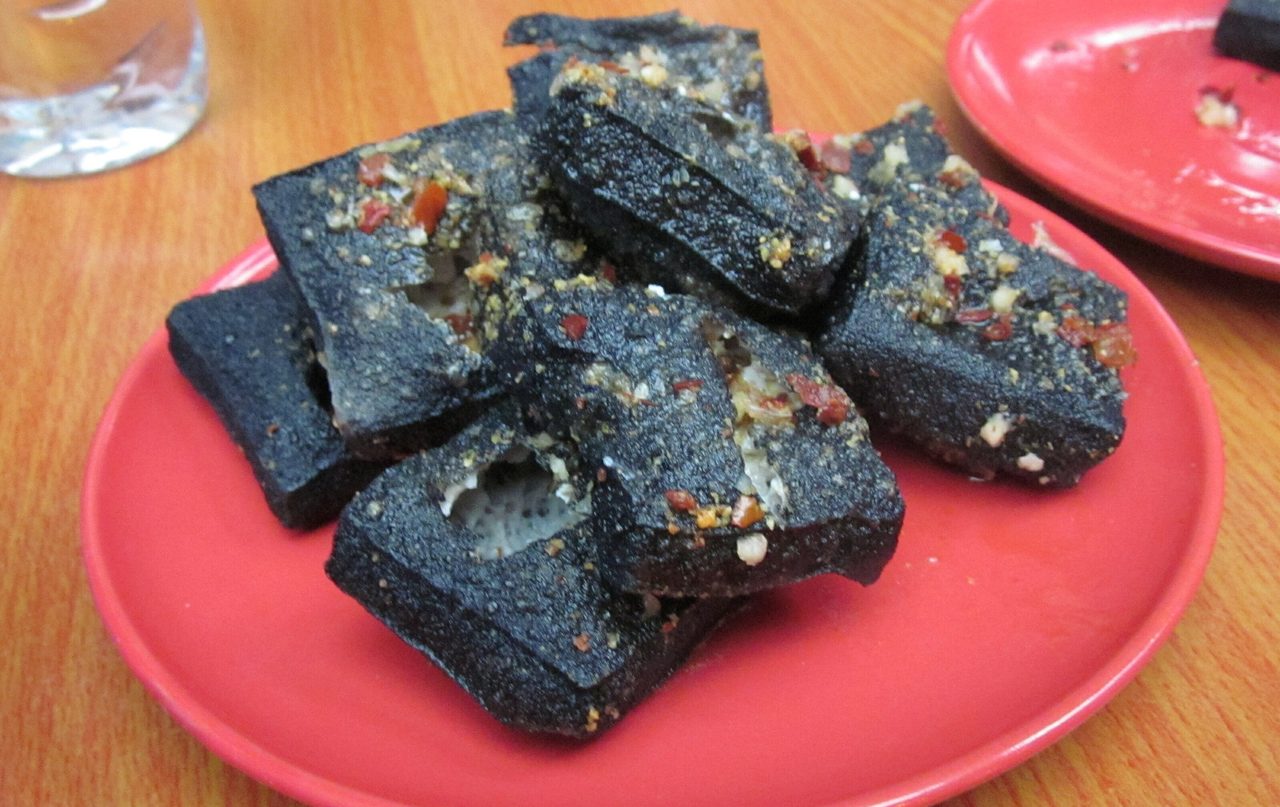
Photo: lazy fri13th · CC BY 2.0
Menbosha (Deep-Fried Shrimp Toast Cubes)
Chopped shrimp packed thickly between two squares of crustless white bread and deep-fried. A Chinese dish, brought to Korea by Shandong immigrants. The only hard part is oil temperature: too low and the bread drinks the oil, too high and the outside burns before the shrimp is cooked. Frying twice — low to cook, hot to crisp — is the answer.
Ingredients
- Makes 12 (serves 2-4)
- white bread · thin-sliced; crusts cut off and each slice quartered. Day-old bread is better6 slices
- Shrimp filling
- raw shrimp · peeled and deveined; if frozen, thaw fully and dry well300 g
- egg white · the binder. No yolk1
- potato starch · it holds the moisture in; cornflour works1 tbsp
- spring onion · white part, very finely chopped0.5 stalk
- ginger · grated0.5 tsp
- salt0.5 tsp
- white pepper · a better fit here than black pepper0.25 tsp
- sesame oil · stirred in last1 tsp
- rice wine · to take the edge off the shrimp1 tsp
- For frying
- neutral oil · high smoke point; deep enough to submerge the pieces1 L
- To serve
- sweet chilli sauce · or just salt and pepper. Optional4 tbsp
Steps
- ⏲ 30 min
Cut the crusts off the bread and quarter each slice. Spread the squares on a rack and leave them 30 minutes. Bread that has dried slightly at the surface takes up less oil — fresh, moist bread gives you the greasiest result.
Press the shrimp thoroughly dry with kitchen paper. Water left on them makes the oil spit and the filling fall away from the bread.
Chop the shrimp coarsely with a knife — half of it left in visible pieces, half finer. Blitzed in a processor it loses the bite of the shrimp entirely and reads like fishcake.
Mix the shrimp with the egg white, starch, spring onion, ginger, salt, white pepper and rice wine, stirring in one direction for about two minutes until it turns sticky. Stir in the sesame oil last. That stickiness is what stops it leaking out in the oil.
Pile the filling 1cm thick on one square and close it with another, pressing the edges together. Push any filling that squeezes out back in with a finger — filling on the outside comes off in the oil and dirties it.
Heat the oil to 160°C. Without a thermometer, drop in a scrap of bread: it should rise slowly with a steady stream of small bubbles. There is no batter here, so oil temperature is the only variable.
- ⏲ 3 min
Fry two or three at a time for 2-3 minutes. Stand each one on its four cut sides with tongs as well — those faces are cut crumb and stay pale and damp otherwise.
- ⏲ 1 min
Lift them out, bring the oil to 180°C, and return them for 30 seconds to a minute to colour. There is one reason for frying twice: done in a single hot fry, the outside burns while the shrimp inside is still raw.
Drain on a wire rack. On kitchen paper, steam is trapped underneath and that face goes soft. Cut in half or leave whole, and serve immediately with the sweet chilli sauce.
Tips & Variations
Variations
- Cantonese ha dor si (蝦多士): the filling goes on one slice, gets a scattering of sesame seeds, and is fried on that side only. It is the cha chaan teng standard and is cut into triangles. Not sandwiched, so the outside is far crisper and the filling thinner.
- The Korean-Chinese cube: what this recipe follows, and how ko.wikipedia describes it — filling between small squares of bread. This is the form Shandong immigrants brought over.
- A little pork fat in the filling: a tablespoon of fatback or lard makes it noticeably juicier. Restaurants commonly do this; shrimp alone dries out easily.
- In an air fryer: sprayed with oil, 190°C for 8-10 minutes. It colours, but there is no fried layer. Bread absorbing oil is the texture of this dish, so cutting the oil makes it a different food (deep-frying).
- Other than shrimp: white fish or chicken breast work, but bind less well, so increase the starch slightly. Shrimp's sweetness is half the dish, so a substitution costs a lot.
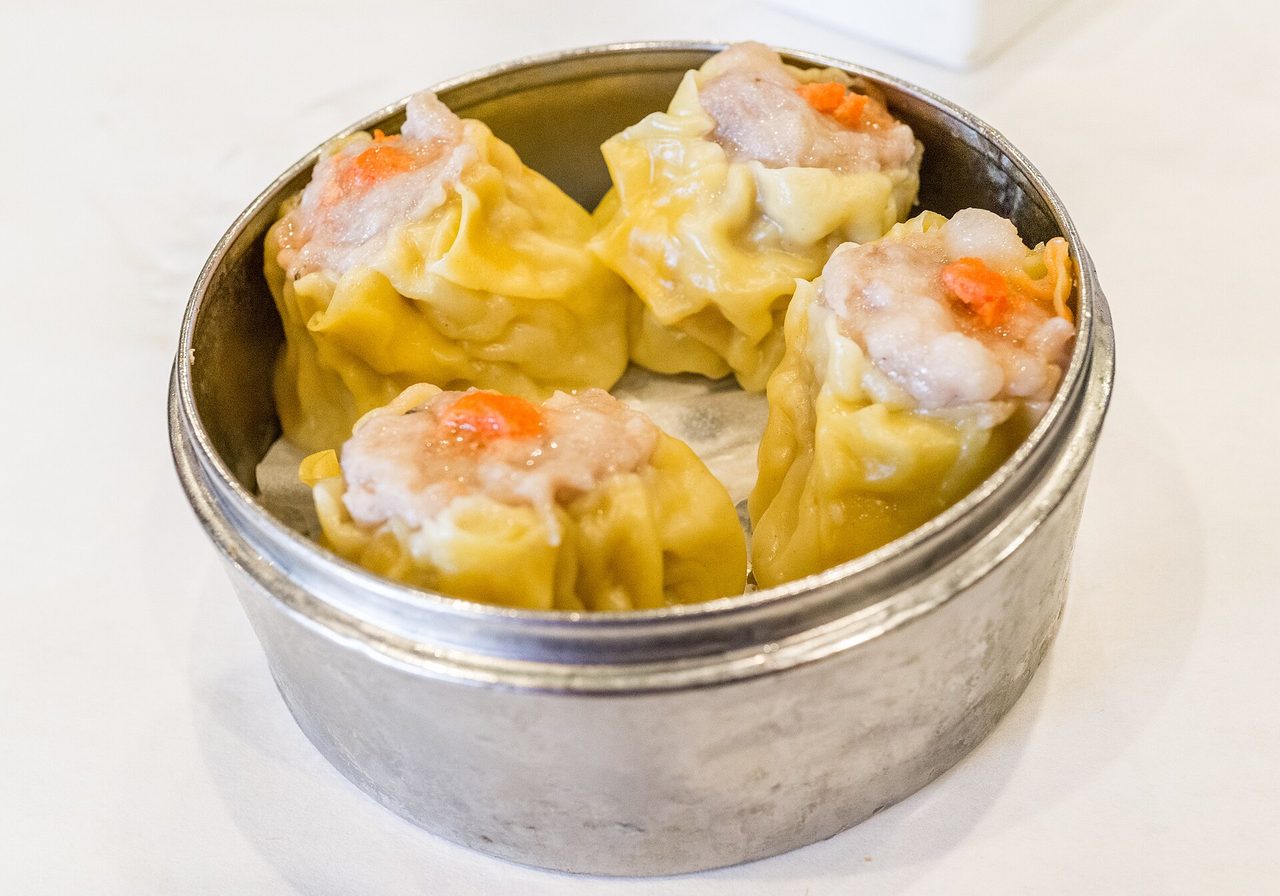
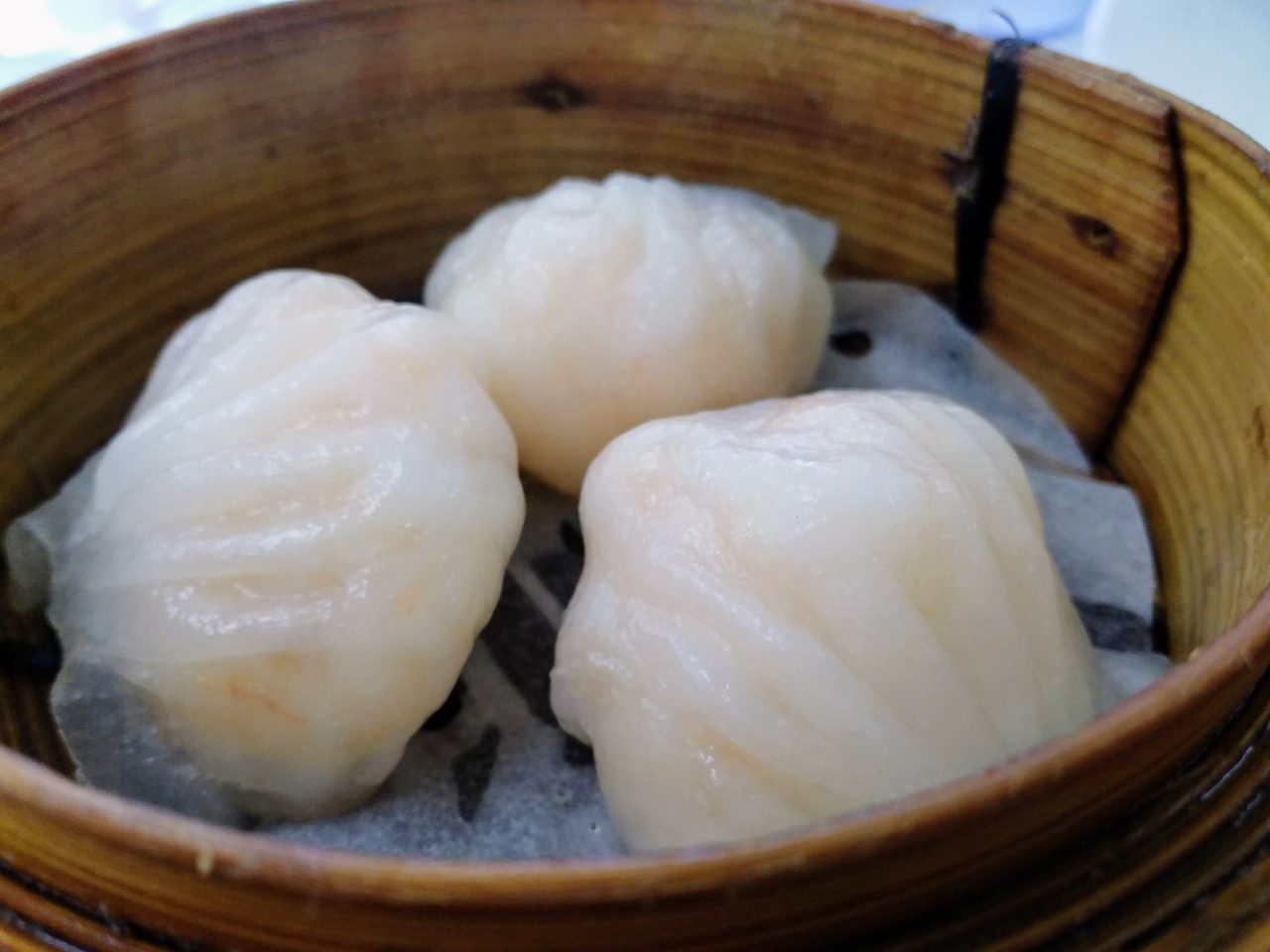
- Chinese frying and dim sum in the same family: tangsuyuk and guobaorou also build crispness by frying twice, and har gow and siu mai steam much the same shrimp filling. For Korean-Chinese cooking, jjajangmyeon and jjamppong are already here.
Tips
- Oil temperature is the whole dish. With no batter, temperature is the only variable you control. Below 150°C the bread drinks oil like a sponge and goes soggy; above 190°C the outside darkens before the shrimp inside is cooked. Frying at 160°C then 180°C is how you thread that gap (deep-frying, heat control).
- Day-old bread is better. Drier bread takes up less oil. With a fresh loaf, spread the squares out for half an hour or dry them a few minutes in a very low oven.
- Chop the shrimp coarsely, by knife. A processor breaks the protein down completely and you get fishcake texture. Mixing coarse and fine is the answer: the fine part binds, the coarse part gives you something to bite.
- Egg white only, no yolk. The white's protein sets in the heat and holds the filling together; the yolk is mostly fat and loosens it (cooking eggs).
- Stir in one direction to build stickiness. Salt helps the shrimp's muscle protein dissolve and the mixture turns tacky. Without that tack, the filling separates from the bread in the oil (salt and seasoning).
- Starch is there to hold moisture. One tablespoon is plenty; more and it turns rubbery (thickening sauces).
- Fry the sides standing up. This dish has four cut faces. Left flat, the top and bottom brown while the sides stay white bread, still holding oil (browning).
- Keep the filling off the outside. Shrimp squeezing out breaks away in the oil and burns, and those burnt bits stick to the next batch. Push it back in before you seal (wrapping and sealing).
- Drain on a rack. On kitchen paper, steam is trapped below and only the bottom face goes soft. That rule applies to frying generally.
- Use a high-smoke-point oil. You are taking it to 180°C, so no sesame or olive oil. Sesame oil belongs in the filling, one teaspoon, for aroma (cooking oils).
- Eat it at once. As it cools the bread reabsorbs oil and softens, and the contrast that makes the dish is gone. To reheat, use an air fryer or a 180°C oven for three or four minutes, not a microwave (serving temperature, reviving leftovers).
- They can be assembled and frozen. Freeze them raw and separated, then fry from frozen at 160°C for a little longer (freezing and thawing).
The basics behind this dish
- Knife Skills: Grip, Cuts, and Why Size MattersHow you hold the knife matters more than how fast you cut. The pinch grip, the claw hand, and why uniform size is a cooking decision rather than a cosmetic one.
- Salt: When You Add It Matters More Than How MuchThe same amount of salt either draws water out or seasons all the way through, depending on when it goes in. Osmosis, seasoning in layers, and why salt types are not interchangeable by volume.
- Heat Control: Preheating, Oil, and Reading the PanThe same ingredients become a different dish depending on pan temperature. When to add the oil, how to read heat by sound, and which dishes want low heat instead.
More of the same kind


More from this country


Sign in to edit.
AI-drafted, editor-reviewed · edits: 0 ·Edit history
https://cookiki.com/en/r/menbosha · cookiki · User contributions are licensed under CC BY-SA 4.0.