
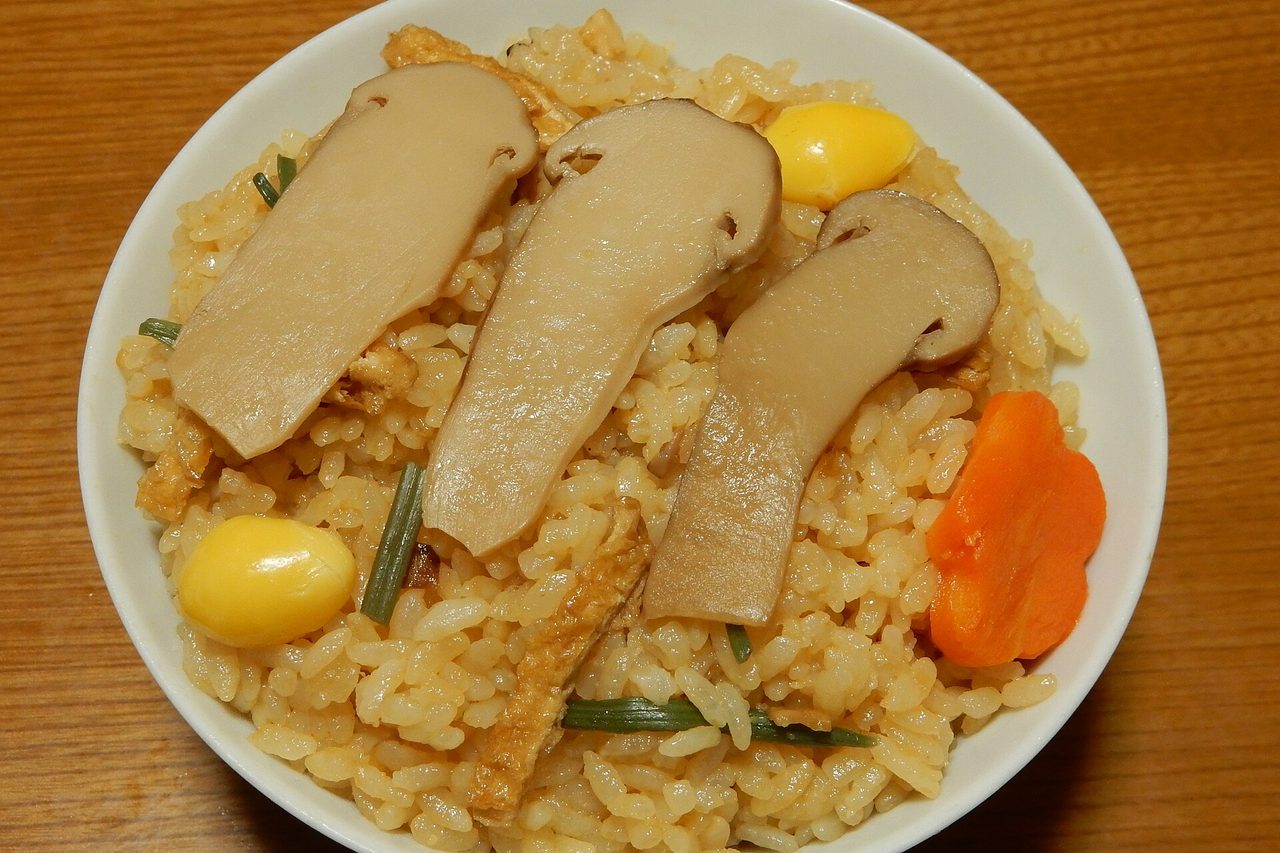
Photo: Chaojoker · CC BY-SA 3.0
Shirin Polo (Sweet Rice with Candied Orange Peel and a Tahdig Crust)
Iran's celebration rice: basmati boiled in plenty of salted water, drained, then steamed over oil, with orange peel and carrot candied in syrup, almonds and pistachios laid on top. The sweetness is only on the top, never in the pot, and the bottom of the pot holds a crust, the tahdig, built on purpose from the start. Because the rice was drained there is no free water at the bottom, so the oil there climbs to frying heat while the rice above it steams.
Ingredients
- Rice
- basmati rice400 g
- salt · 1 tbsp for the soaking water, 2 for the boiling water3 tbsp
- water · for boiling3 L
- Tahdig (the bottom)
- vegetable oil4 tbsp
- butter30 g
- plain yogurt3 tbsp
- saffron · steeped 20 minutes in 3 tbsp hot water, used in two halves1 pinch
- For the top
- oranges · peel only2
- carrot · cut into fine matchsticks1
- sugar100 g
- water · for the syrup150 ml
- cardamom pods · lightly crushed, optional3
- flaked almonds40 g
- pistachios · cut into slivers30 g
- raisins · optional30 g
- butter · for the nuts20 g
Steps
- ⏲ 60 min
Wash the rice in 3-4 changes of water until it runs clear, then soak it for 1 hour in lukewarm water with 1 tbsp salt.
- ⏲ 4 min
Cut away as much of the white pith from the inside of the orange peel as you can, and slice the peel into fine strips 3-4cm long. Boil for 2 minutes and throw the water away; boil again in fresh water for 2 minutes and throw that away too.
- ⏲ 8 min
Boil the sugar, 150ml water and the cardamom into a syrup, add the peel and carrot and simmer gently for 8 minutes. Stir in 1 tbsp of the saffron water and take it off the heat.
- ⏲ 7 min
Bring 3L water and 2 tbsp salt to a hard boil in a large pot, add the drained rice and boil 6-7 minutes. When a grain bitten through still shows a thin core, tip it into a sieve, discard the water and pour over a little lukewarm water.
Mix two ladles of the boiled rice with the yogurt and 1 tbsp of the saffron water. Heat 3 tbsp oil and the 30g butter in a heavy pot and press this rice evenly over the bottom, 1cm thick.
Heap the rest of the rice loosely into a cone on top, without pressing it. Poke 5-6 holes down to near the bottom with the handle of a spoon, and sprinkle over the last 1 tbsp oil and 3 tbsp water.
- ⏲ 10 min
Cover and leave over medium heat for 8-10 minutes, until the side of the pot sizzles and steam starts to rise.
- ⏲ 45 min
Wrap the lid in a cloth, put it back, turn the heat to its lowest and leave for 40-45 minutes. Do not open it in that time.
- ⏲ 2 min
Meanwhile fry the almonds and pistachios in the 20g butter for 1-2 minutes, add the raisins and fry 30 seconds more, until they swell.
- ⏲ 1 min
Turn off the heat and stand the pot on a cold damp cloth for 1 minute. Spoon the rice onto a platter and scatter the peel, carrot and nuts over it. Lift the tahdig off the bottom with a spatula, break it into pieces and lay them alongside.
Tips & Variations
Variations
- Morassa polo: the name means jewelled rice. ko.wikipedia calls shirin polo the simplified version of it. It adds more dried fruit in different colours: barberries, dried apricots, dates.
- The plate in the photograph: an Armenian sweet pilaf, topped with orange peel, almonds, pistachios and raisins and served without its tahdig. The raisins are in the ingredient list as an option for that reason.
- Tahdig of potato or thin bread: thin slices of potato or a sheet of thin bread such as lavash laid on the bottom instead of rice. It lifts out in one piece more easily than rice does.
- A rice for occasions: usual at weddings and birthdays; among Persian Jewish communities it goes with Purim and Passover, and in Ramadan with the iftar.
Tips
- A crust can be built only because the rice was drained. Steaming says of the boiled and drained chelow that "the steam then finishes the grain with no free water left to put anything back". Read from the bottom of the pot, the same sentence is why tahdig works. With no free water down there, the oil at the bottom is not held at the boiling point of water and climbs to frying heat. The rice above cooks in steam, and only the bottom centimetre fries, in the same pot. In an ordinary absorption pot the bottom stays near boiling for as long as any water is left.
- A crust you get and a crust you build. Iraqi dolma says to "raise the heat slightly for the last 10 minutes and the bottom potatoes brown into the dark crust", and paella's socarrat forms once the liquid has gone. Both come at the end of the cooking. A tahdig is laid down first and built for forty minutes, which is why the heat starts at medium and drops to its lowest once the pot sizzles.
- Yogurt and saffron in the bottom layer only. The yogurt glues the bottom grains into one sheet that lifts out without breaking, and brings protein and milk sugar with it, so that layer browns first. None goes in the rice above.
- The sugar never goes in the pot. What sugar does says of caramelisation: "Around 160C it breaks down into colour and bitter aromatics." Mix the sugar into the rice and some of it ends up in the bottom layer, forty minutes at frying heat, where it turns bitter before the crust is done. So the sweet things are candied separately and laid on the finished rice.
- The peel's water is thrown away twice. Soaking discards the water from dried chillies, "where bitterness and grit come out of the seeds and pith". The bitterness in the white pith of orange peel comes out into water the same way, so throwing the water away is throwing the bitterness away. Every further boil takes aroma out with it, which is why it stops at two.
- Why the lid is wrapped in a cloth. A cloth under the lid is the first fix steaming gives for condensation. Here the drips do not only make the top rice soggy; they run down through the rice and put water back at the bottom.
- The cone and the holes. The holes go down to near the bottom for the reason plov calls its chopstick holes steam channels, and the rice is heaped loosely into a cone rather than pressed so the steam has a way out.
- The boil is the chelow's. The rice under kabab koobideh is made the same way: "boil it in salted water to al dente, drain", then steamed. It stops at six or seven minutes because the steam finishes the rest, as it does when biryani drains at 70%.
The basics behind this dish
- Browning and the Maillard ReactionMeat fails to brown for one of three reasons: it is wet, the pan is cool, or you put too much in at once. Plus how the brown film stuck to the pan becomes your sauce.
- Cooking Meat: Temperature, Resting, and Cutting Against the GrainDoneness is a core temperature, not a number of minutes. What resting actually does, how to handle a thick cut, and why the direction you slice changes the texture.
- Knife Skills: Grip, Cuts, and Why Size MattersHow you hold the knife matters more than how fast you cut. The pinch grip, the claw hand, and why uniform size is a cooking decision rather than a cosmetic one.
More of the same kind


More from this country


Sign in to edit.
AI-drafted, editor-reviewed · edits: 0 ·Edit history
https://cookiki.com/en/r/shirin-polo · cookiki · User contributions are licensed under CC BY-SA 4.0.