
Photo: Edsel Little · CC BY-SA 2.0
Ghormeh Sabzi (Herb and Dried Lime Stew)
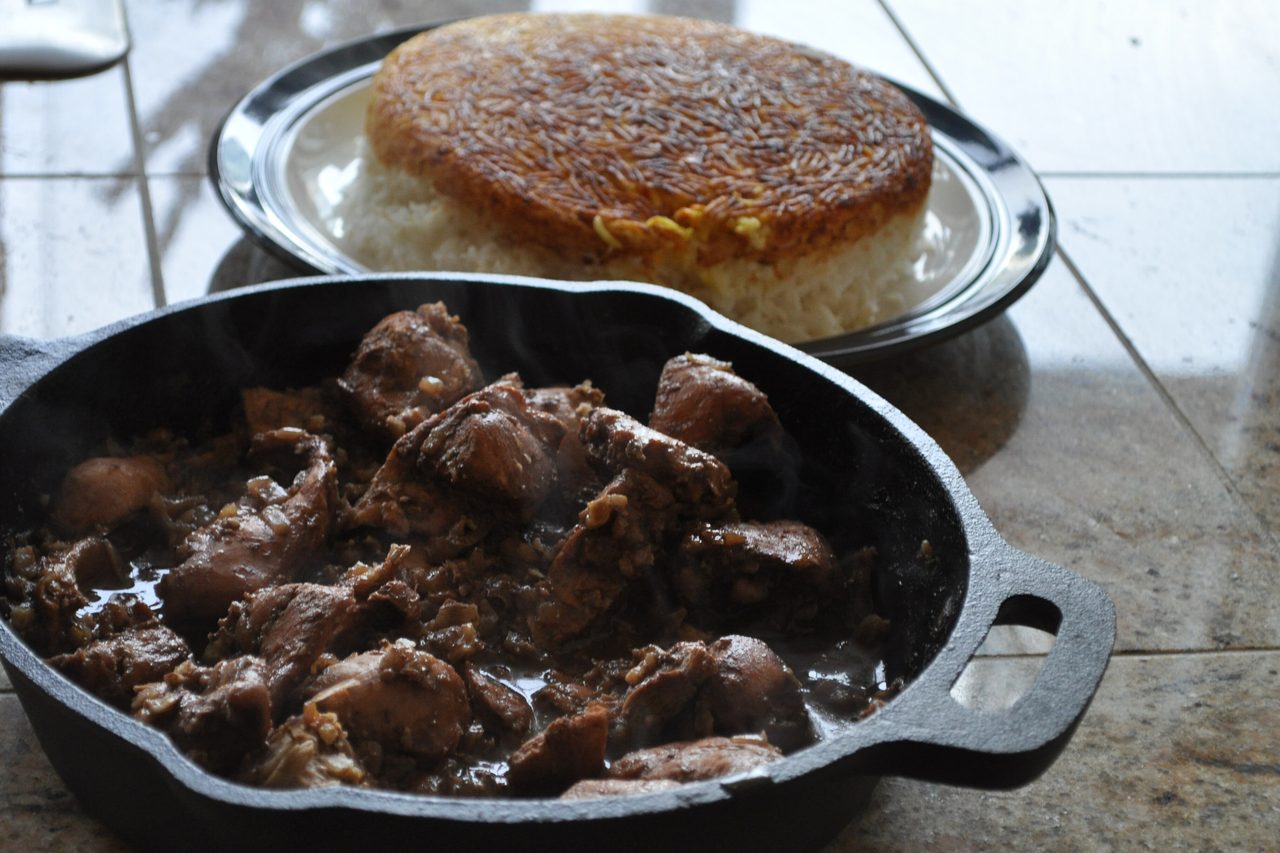
Iran's national dish: bunches of parsley, coriander, chives and fenugreek leaf fried for twenty-five minutes or more until they go dark, then simmered two hours with lamb, kidney beans and dried limes. It is the opposite of the usual rule that delicate herbs go in at the end. Here you cook them until the fresh green smell has gone entirely, because what is left underneath — deep and almost meaty — is the whole point of the dish.
Ingredients
- Herbs (all fresh)
- flat-leaf parsley · two big bunches, weighed after picking200 g
- coriander · one bunch100 g
- chives or spring onion greens · tareh in Iran100 g
- fenugreek leaf · shanbalileh; 3 tbsp if dried. Too much turns it bitter — keep to the quantity20 g
- oil · for frying the herbs; skimp and they scorch120 ml
- Stew
- lamb neck or shank · in 3cm dice; beef shin works too700 g
- onion · finely chopped1
- turmeric1 tsp
- kidney beans · dried, soaked overnight and pre-cooked; or a 400g tin150 g
- dried limes · limu omani; pierce each three or four times4
- water or stock800 ml
- salt2 tsp
- pepper0.5 tsp
- lemon juice · at the end, only if it needs it1 tbsp
Steps
Wash the herbs and dry them completely. Wet herbs steam rather than fry, and neither the colour nor the smell will change. Then chop them very fine.
- ⏲ 8 min
Soften the onion in oil for 8 minutes until translucent, add the turmeric and give it another 30 seconds (blooming spices).
Brown the meat in the same pot, season with salt and pepper, and lift it out.
- ⏲ 25 min
In a wide pan with 120ml of oil, fry all the chopped herbs over medium heat for 25 minutes. This is the whole dish. The volume drops to about a quarter, the bright green turns dark, almost black-green, and the fresh grassy smell goes and is replaced by something deep and savoury. Stir every minute or two — herbs caught on the base turn the whole pot bitter.
Return the meat, add the fried herbs and the water, and put in the pierced dried limes. They go in whole so they release slowly.
- ⏲ 120 min
Cover and simmer very gently for 2 hours, until the connective tissue in the meat has turned to gelatin (braising).
Add the pre-cooked kidney beans for the last 30 minutes. Put them in at the start and the acid from the dried limes stops them ever softening, however long you cook them (soaking).
Fish out the dried limes, press them against a spoon to get the juice out and discard the skins — left in, they turn bitter. Adjust the salt, and add lemon juice if it needs more sourness (balancing flavour).
It is done when a thin slick of green oil rises to the surface. Serve with plain rice.
Tips & Variations
Variations
- This dish is the opposite of the usual rule. Fresh herbs says delicate herbs — parsley, coriander and the rest — go in "off the heat, or in the last thirty seconds", because heat collapses them and drives their aroma off. That is right, and ghormeh sabzi makes that its aim. Twenty-five minutes in oil and the volatile grassy compounds are gone entirely, leaving what was underneath: something deep and almost meaty. The name means "fried greens".
- Even the guide's own exception is a different order of magnitude. It gives the holy basil in pad kra pao as the herb that "needs to be fried in oil for its aroma to appear at all." That is thirty seconds, and it brings out an aroma. This is twenty-five minutes, and it changes one. Same direction, very much further along it.
- Dried lime is not a substitute for lemon. Limu omani are limes boiled in brine and dried for weeks, so on top of sourness they carry bitterness and a fermented note. Swap in lemon and the acidity is similar but the dark finish that makes this dish itself is gone. If you cannot find them, lime juice with a little tamarind paste is closer than lemon.
- Fenugreek leaf is the signature. Parsley and coriander alone make a good herb stew, but not this one. It is also the one ingredient that turns the pot bitter if you are generous — about 5% of the herb weight is the ceiling.
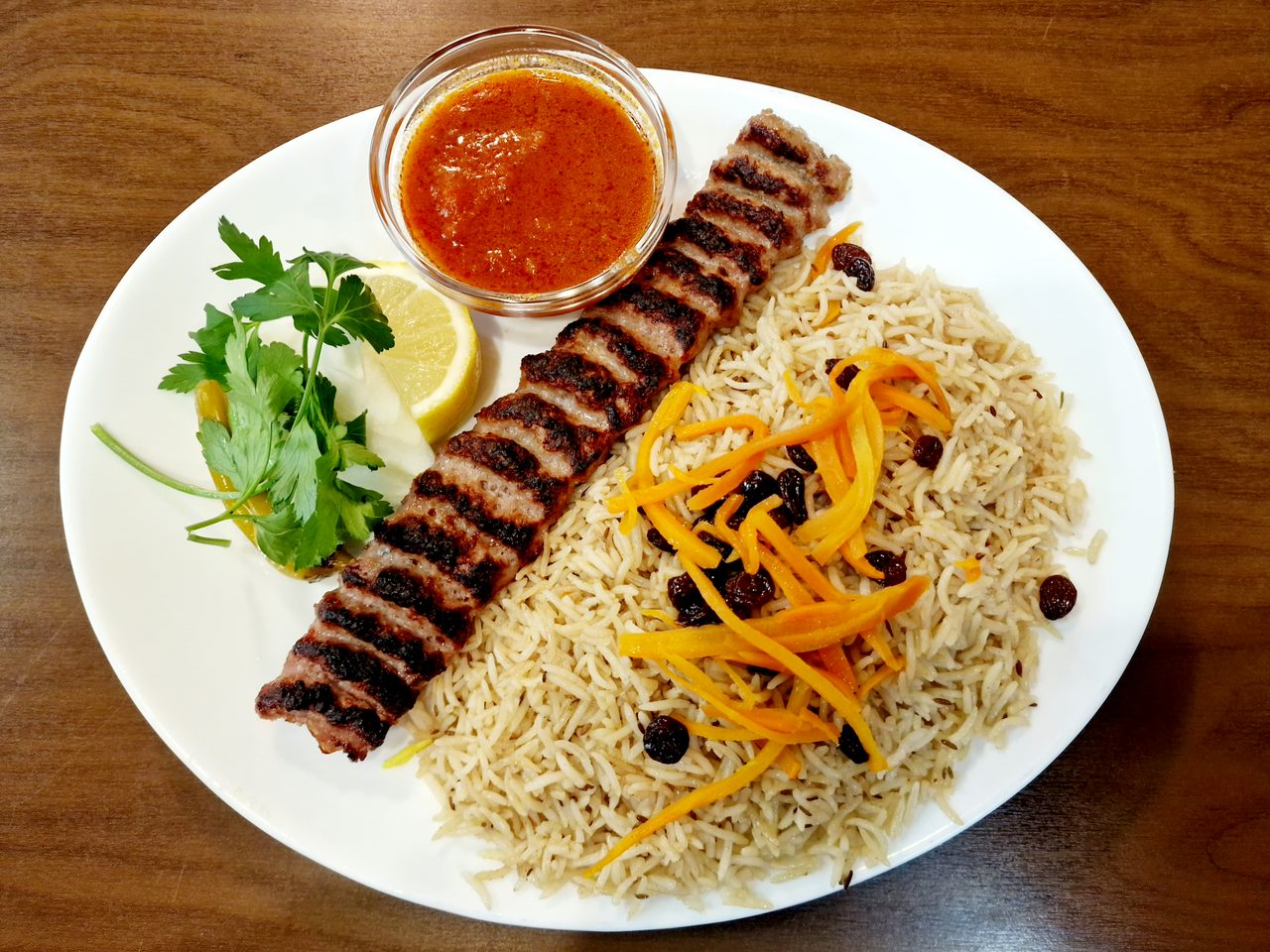
- With kabab koobideh it makes the two poles of Iranian cooking: that one is charcoal and meat, this one is time and herbs.
- Against rogan josh: both are lamb stews, but Kashmir goes through spices and Iran through herbs. Spices are bloomed in fat and herbs are fried in it — the same move, opposite colours at the end.
- Vegetarian: leave the meat out and double the beans. It is common in Iran too.
Tips
- Get the herbs completely dry. Spin them, then spread them on a cloth for half an hour. Wet, they spend the twenty-five minutes steaming and never change colour.
- Do not skimp on the oil. 120ml for 400g of herbs looks like a lot, but they take it up as they fry and give it back at the end as a green slick on the surface. That slick is the sign the dish is done.
- Keep to the twenty-five minutes. Stop at ten and it is still green and tastes like a grass stew. The measure is the colour going dark, so watch the colour and the smell rather than the clock.
- Keep stirring. One patch caught on the base makes the whole pot bitter. Medium heat or lower, and scrape the bottom every minute or two.
- Weigh the fenugreek. When this dish comes out bitter it is almost always because the fenugreek went in by eye.
- Pierce the dried limes. Whole and unpierced, the skins are hard enough that almost nothing comes out of them. And take them out at the end — left in, they turn bitter.
- Cook the beans separately and add them late. In an acidic liquid the pectin in beans never softens, so they stay hard no matter how long you simmer. That is the acid, not under-soaking.
- It is better the next day, once the herbs and the lime settle. Plenty of Iranian households make it the day before.
- If it is thin, reduce it uncovered. No starch — the body comes from the herbs and the beans.
The basics behind this dish
- Fresh Herbs: Hardy, Delicate, and When to Add ThemAroma is volatile, so timing is the whole game. What separates a hardy herb from a delicate one, why the stems are worth more than you think, and why basil should never meet a knife.
- Browning and the Maillard ReactionMeat fails to brown for one of three reasons: it is wet, the pan is cool, or you put too much in at once. Plus how the brown film stuck to the pan becomes your sauce.
- Cooking Meat: Temperature, Resting, and Cutting Against the GrainDoneness is a core temperature, not a number of minutes. What resting actually does, how to handle a thick cut, and why the direction you slice changes the texture.
More of the same kind


More from this country


Sign in to edit.
AI-drafted, editor-reviewed · edits: 0 ·Edit history
https://cookiki.com/en/r/ghormeh-sabzi · cookiki · User contributions are licensed under CC BY-SA 4.0.