
Photo: StewartMcDowall · Public domain
Abgoosht (Lamb and Chickpea Broth, Two Courses)
The Iranian lamb stew that comes out of one pot as two separate dishes. When it is done the broth is poured off and eaten first with bread torn into it, and the meat, chickpeas and potato left in the pot are pounded with a pestle into a thick paste and served as the second course. The second dish is made by crushing the first, and the whole technique is in that moment: keep the poured-off broth hot, and pound what is left of it dry. Any liquid still in there and you get porridge instead of a paste.
Ingredients
- The pot (serves 4)
- lamb neck or shank · in large pieces, bone in600 g
- a lamb shin bone · if you can get one; it makes the broth1
- chickpeas · soaked overnight100 g
- white beans · soaked overnight100 g
- onions · one whole, one roughly chopped2
- potatoes · large; they go in late2
- tomatoes · or 2 tbsp tomato paste2
- dried limes · limu omani, pierced2
- turmeric1 tsp
- water2 L
- salt and pepper · added after the beans are tender1 to taste
- To serve
- flatbread · lavash or sangak, torn for the broth4 sheets
- raw onion · in wedges1
- pickled vegetables · torshi4 tbsp
Steps
- ⏲ 15 min
Put the soaked beans, lamb, shin bone, whole onion and turmeric into 2L of water and bring it up. Skim the scum off and throw it away — this broth is served as the first dish, and once it is cloudy there is no going back.
- ⏲ 120 min
Drop the heat and simmer very gently for two hours. No salt yet, and no tomato yet either: soaking explains that beans will not soften in an acidic liquid.
- ⏲ 40 min
Once the beans crush between your fingers, add the chopped onion, tomatoes, dried limes and potatoes and give it 40 minutes more. Season with salt and pepper now.
- ⏲ 5 min
It is done when a chopstick goes straight through the potato. Fish out the bone, the whole onion and the dried limes — left in, the limes turn bitter.
- ⏲ 5 min
Pour off the broth into a bowl and cover it to keep it hot. Let it cool here and one of your two dishes arrives lukewarm. That broth is the first course, eaten with bread torn into it by hand.
- ⏲ 15 min
Pound what is left in the pot while it is dry. Any broth still in there and you get porridge rather than a paste. Pull the meat off the bone and pound that in with it.
- ⏲ 10 min
Pound 5 to 10 minutes, until it is smooth and the fibres have disappeared entirely — a spoonful should hold its shape. Spread it on a plate and press a hollow in the middle.
- ⏲ 5 min
Serve the broth and bread first, then the paste with raw onion, pickles and the rest of the bread.
Tips & Variations
Variations
- Dizi: served in the single-portion stone crock it was cooked in, which in Iran is used almost interchangeably with the name abgoosht. The pestle (goosht-koob) arrives with the crock.
- Tilit: the name of the first course. Bread is torn in and pushed right under the broth to soak, then eaten with a spoon. The drier the bread, the better it works.
- Bozbash and piti: the same structure spread into the Caucasus and Central Asia — Azerbaijan's piti is the best-known — with different beans and spicing.
- Without the meat: it works on beans and potato alone, but the pounded paste binds much less well and crumbles.
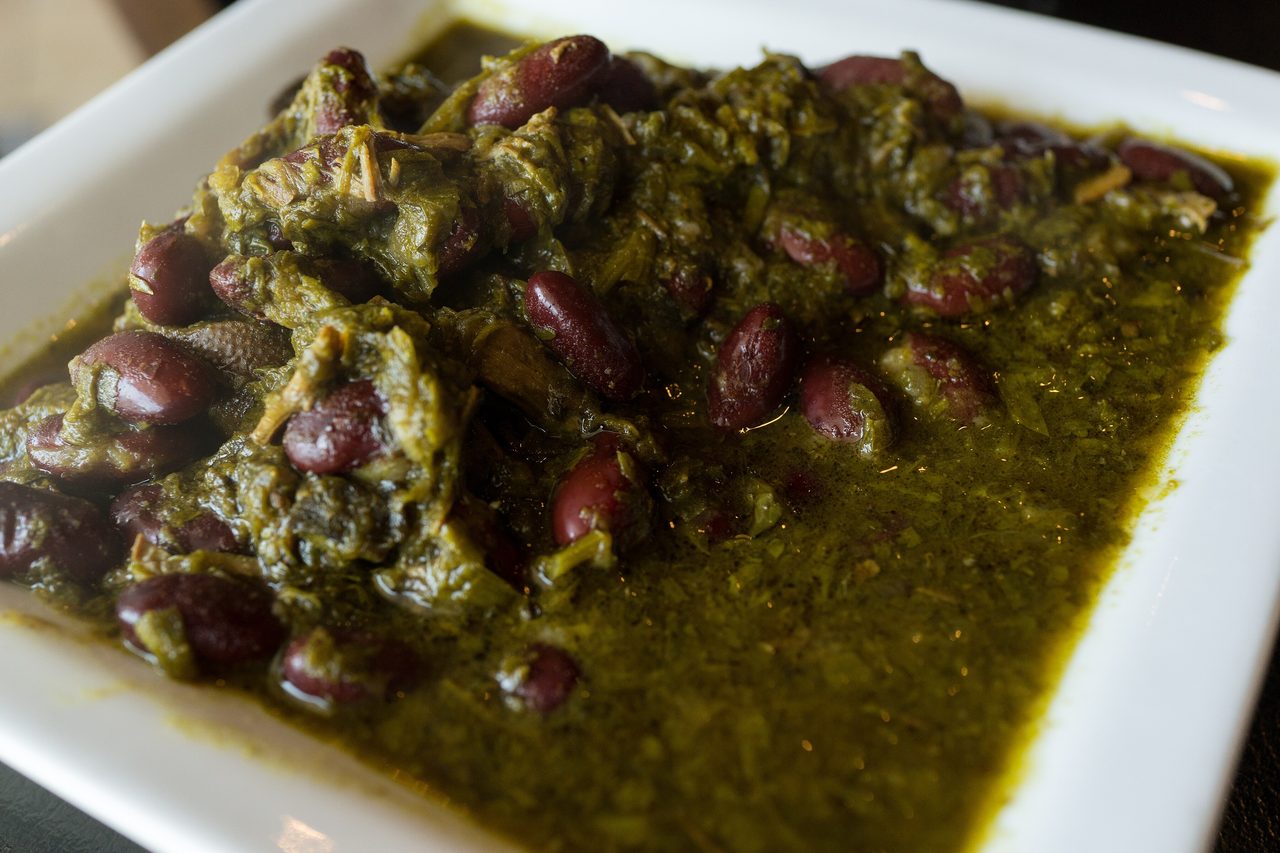
- Against fesenjan and ghormeh sabzi: three Iranian stews thickened by three different things — ground walnuts, long-fried herbs, and here nothing added at all, only the cooked ingredients crushed.
Tips
- Two dishes out of one pot is the structure of the recipe. Pot-au-feu also eats both its broth and its meat, but it serves the lifted-out meat as it is. Abgoosht pounds what is left into something else. The second dish is made by crushing the first.
- Pound it dry. Left with broth in it, the pounding just mixes the two into porridge. Pour the broth right off, including what has pooled at the base, before you start — then add it back a spoonful at a time if the paste is too stiff.
- Pav bhaji mashes for a different reason. There the pressing happens while it cooks, to open new surface and drive water off. Here it happens off the heat, after everything is done, to destroy the fibre. Same tool, different moment, different purpose.
- Salt after the beans are tender. Soaking actually corrects the old rule and says salt helps beans soften — but acid does not. Put the tomato in at the start and the beans are still firm two hours later.
- Take the dried limes out. Limu omani is the ingredient fesenjan explains: sourness with bitterness and a fermented note behind it. Left in too long, only the bitterness is left.
- Keep the broth hot. The pounding takes ten minutes, and if the broth cools in that time the first course arrives lukewarm. Lid on, or over the lowest possible heat (serving temperature).
- The bone is what makes the broth. Lean meat alone gives you no body after two hours. One shin bone gives up its gelatin, and that gelatin is also what helps the paste hold together at the end.
The basics behind this dish
- Salt: When You Add It Matters More Than How MuchThe same amount of salt either draws water out or seasons all the way through, depending on when it goes in. Osmosis, seasoning in layers, and why salt types are not interchangeable by volume.
- Stocks and Broths: Clarity, Time, and Why You Do Not Salt ThemWhat separates a clear stock from a cloudy one is temperature, not ingredients. Why you start in cold water, how long each ingredient wants, and why salt comes later.
- Braising: Collagen, Time, and Why It Cannot Be RushedTough cuts turn tender not because the muscle relaxes but because collagen becomes gelatin — and that conversion needs time, not more heat.
More of the same kind


More from this country


Sign in to edit.
AI-drafted, editor-reviewed · edits: 0 ·Edit history
https://cookiki.com/en/r/abgoosht · cookiki · User contributions are licensed under CC BY-SA 4.0.