
Photo: Popo le Chien · CC0
Tanghulu (Fruit Skewers in a Hard Sugar Shell)
Skewered fruit rolled in sugar syrup that sets glass-hard — Chinese street food. Two things have to be right, the syrup temperature and how dry the fruit is, and failure is almost always one of them.
Ingredients
- 6 skewers
- strawberries · medium; washed and dried completely12
- mandarins · peeled, segments left whole, patted dry2
- grapes · seedless, skin on12
- Sugar syrup
- white sugar · twice the weight of the water200 g
- water100 ml
- glucose syrup · it stops the sugar recrystallising; corn syrup or oligosaccharide syrup also work1 tbsp
- Equipment
- bamboo skewers6
- sugar thermometer · or use the cold-water test instead1
- parchment paper · to set them on. Do not use iced water as needed
Steps
- ⏲ 20 min
Wash the fruit, pat it dry, and leave it 20 minutes at room temperature to dry completely. A single drop of water is the commonest way this fails — syrup will not stick where the water is, and that water drops the syrup temperature enough to leave the area around it tacky. Do not use fruit straight from the fridge; it condenses.
Thread three or four pieces per skewer, with small gaps so syrup does not pool between them. Lay out parchment or a silicone mat to set them on before you start.
Put the sugar, water and syrup in a pan over medium heat and do not stir. Stirring after the sugar dissolves seeds crystals and the syrup sets cloudy white. Swirl the pan if you must move it.
- ⏲ 10 min
Boil to 150-155°C, the hard-crack stage — usually 8 to 10 minutes. With no thermometer, drop a little syrup into cold water and see whether it shatters with a click; if it stretches, it is not there yet. If the colour has started to turn yellow you have gone past it, and caramel bitterness comes with it.
Take it off the heat. Tilt the pan and roll each skewer to coat it thinly. A thick shell hurts to bite and buries the fruit. If the syrup starts to stiffen, put it back on the lowest heat for a few seconds.
- ⏲ 2 min
Stand them on the parchment and let them set for 1 to 2 minutes. Do not dip them in iced water — it sets faster and leaves the surface wet, so it turns tacky quickly and goes white and patchy.
Eat them immediately. Sugar pulls moisture out of the air, so the shell is tacky within half an hour to an hour. There is no way to store them.
Tips & Variations
Variations
- The original is hawthorn: bingtanghulu (冰糖葫芦), a Beijing winter snack, uses hawthorn fruit — very sour, high in pectin and firm, so the contrast against a glass-hard sweet shell is the whole structure of the thing. The form that went viral in Korea in 2023 moved to strawberries, mandarins and grapes, which stacks sweetness on sweetness.
- One fruit per skewer: different fruits hold different amounts of water and differ in size, so they set at different rates. Mixed on one skewer, something will end up tacky or over-coated.
- Fruit that works: strawberries, grapes, mandarin segments, cherry tomatoes, pineapple (dried very thoroughly).
- Fruit that does not: watermelon, peach, kiwi — wet, and wet at the surface. Anything with a cut face keeps weeping from it.
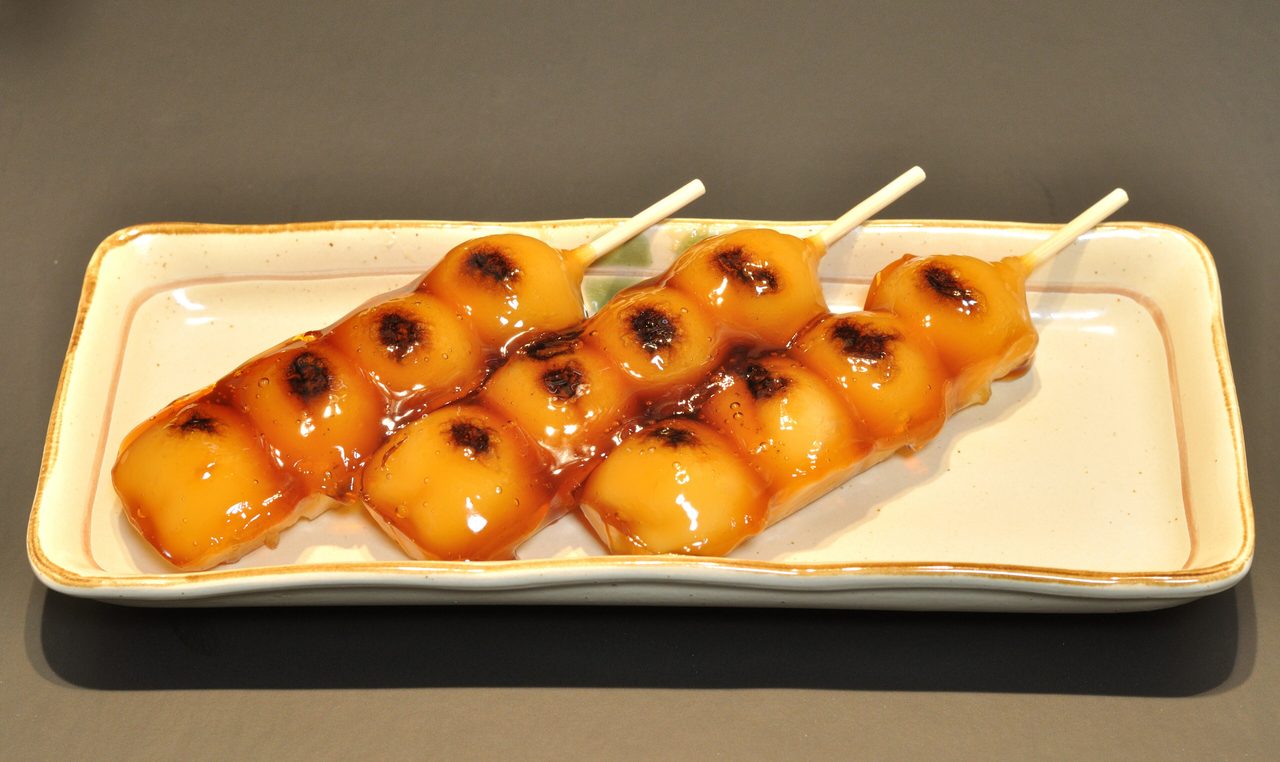
- Nuts and rice cakes: almonds, or rice dumplings like dango, get the same treatment and are much easier because there is no water in the way.
- Japanese daigaku-imo: fried sweet potato in a syrup from the same family, but taken to a lower temperature — below hard crack — so it stays chewy rather than brittle.
Tips
- Temperature is everything. Below 145°C it will not set and sticks to your teeth. Past 160°C caramelisation starts, with colour and bitterness. Hitting the narrow 150-155°C band is the only real technique here, and a sugar thermometer changes the success rate more than anything else (what sugar does).
- The cold-water test replaces the thermometer. A drop of syrup that pulls into threads is not there yet (soft ball to soft crack); one that snaps cleanly when you bend it is hard crack. Keep the bowl of water beside the pan.
- A tablespoon of glucose syrup stops recrystallisation. Pure sugar and water reverts to crystals as it cools, going white and crumbly. Glucose, corn syrup or oligosaccharide syrup interferes with sugar molecules lining up in order, so it sets clear. A few drops of lemon juice do the same job.
- Do not stir. Stirring after the sugar has dissolved seeds crystals. Washing sugar off the pan wall with a wet brush is the classic precaution.
- The fruit has to be dry and at room temperature. This is the second rule and it carries the same weight as the first. Refrigerated fruit condenses, and that water cools the syrup locally into a tacky patch.
- Coat it thin. A thick shell does not shatter like glass, it feels like it will break a tooth. One roll through the tilted pan is about right.
- Do not dip them in iced water. It shows up constantly in Korean videos, and it leaves water on the surface: faster to absorb moisture, and it goes white and patchy. Standing them on parchment to set in air is better.
- This is eat-it-now food. Sugar is hygroscopic, so the shell is tacky within half an hour to an hour. The fridge is the worst place for it — condensation is immediate (serving temperature).
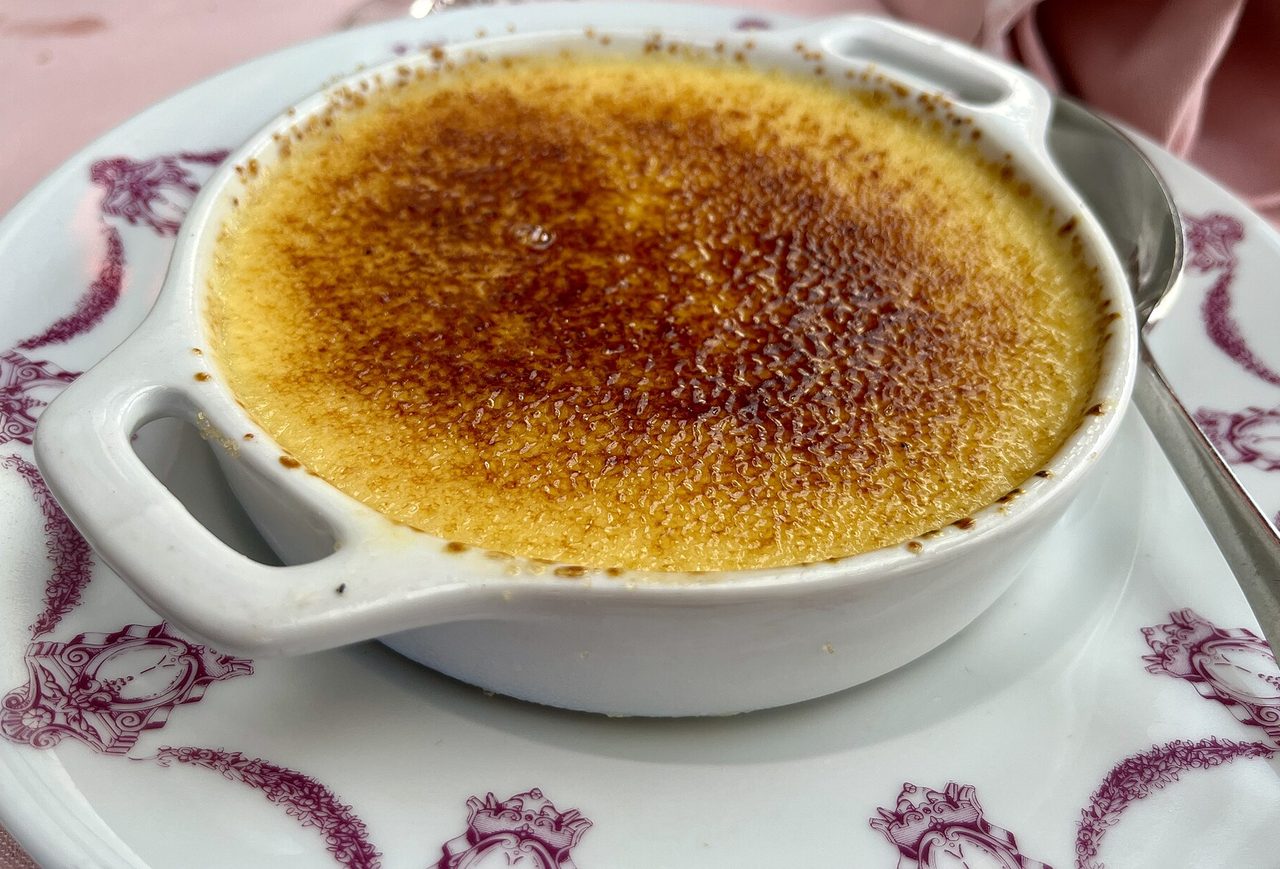
- It is not caramel. The shell on crème brûlée is caramelisation — burnt sugar — while tanghulu stops before that, leaving clear sugar glass. That is why one is transparent and the other brown (browning).
- Respect the burn risk. Syrup at 155°C is more dangerous than frying oil: it is viscous, so it clings to skin and keeps burning. This is not a job to do with children, or with bare forearms.
- Deal with the leftover syrup before it sets. Set hard in the pan it is difficult to remove; add water and bring it to the boil and it dissolves.
The basics behind this dish
- Eggs: Coagulation Temperatures and What They DecideWhite sets at 62°C, yolk at 68°C. Those two numbers explain scrambled eggs, boiled eggs, steamed custard and crème anglaise all at once.
- Why Sauces Split: Emulsions and Pan SaucesA cream sauce breaking and a carbonara scrambling are the same failure. Temperature and emulsifiers — plus how to bring a split sauce back.
- Knife Skills: Grip, Cuts, and Why Size MattersHow you hold the knife matters more than how fast you cut. The pinch grip, the claw hand, and why uniform size is a cooking decision rather than a cosmetic one.
More of the same kind


More from this country


Sign in to edit.
AI-drafted, editor-reviewed · edits: 0 ·Edit history
https://cookiki.com/en/r/tanghulu · cookiki · User contributions are licensed under CC BY-SA 4.0.