
Photo: Terendo · Public domain
Seada (Fried Cheese Pastry with Honey)
A fried Sardinian sweet: a disc of fresh, sour cheese sealed between two thin sheets of semolina and lard pastry, fried and covered with warm honey. The cheese has to be acid enough to stretch when it is heated.
Ingredients
- Pastry
- fine semolina (durum wheat)250 g
- lard25 g
- lukewarm water120 ml
- salt1 pinch
- Filling
- fresh unbrined cheese · fresh Sardinian pecorino, or fresh mozzarella curd300 g
- lemon zest · finely grated1 lemon
- milk2 tbsp
- Frying and finishing
- oil for frying1 L
- honey120 g
Steps
Dip a piece of the cheese briefly in hot water and pull it. If it stretches into strands, it is ready. If it crumbles or snaps, leave it at room temperature a few more hours to sour and test again.
- ⏲ 40 min
Rub the semolina, salt and lard together, add the water a little at a time and knead 10 minutes to a smooth dough. Cover and rest 30 minutes.
- ⏲ 10 min
Chop the cheese, melt it over low heat in a small pan with the milk and stir in the lemon zest. Shape into four discs 12cm across and 8mm thick and let them cool.
- ⏲ 15 min
Roll the dough 1-2mm thin. Set a cheese disc on one sheet and lay another over it. Press round the cheese with your fingers to push the air out, then cut round it leaving a 5mm margin and seal the edge firmly.
- ⏲ 4 min
Heat the oil to 170°C and fry one at a time. Do not turn it: spoon oil over the top for 3-4 minutes until golden. Lift it out carefully so the pastry is not pierced.
- ⏲ 1 min
Warm the honey in a small pan until runny, pour it over and serve at once.
Variations
- With raw cheese ("a sa mandrona"). Grate or chop the cheese coarsely, mix in the lemon zest and fill without melting it. In Sardinian the name means "the lazy way".
- Sugar instead of honey. Sprinkle with sugar if there is no honey.
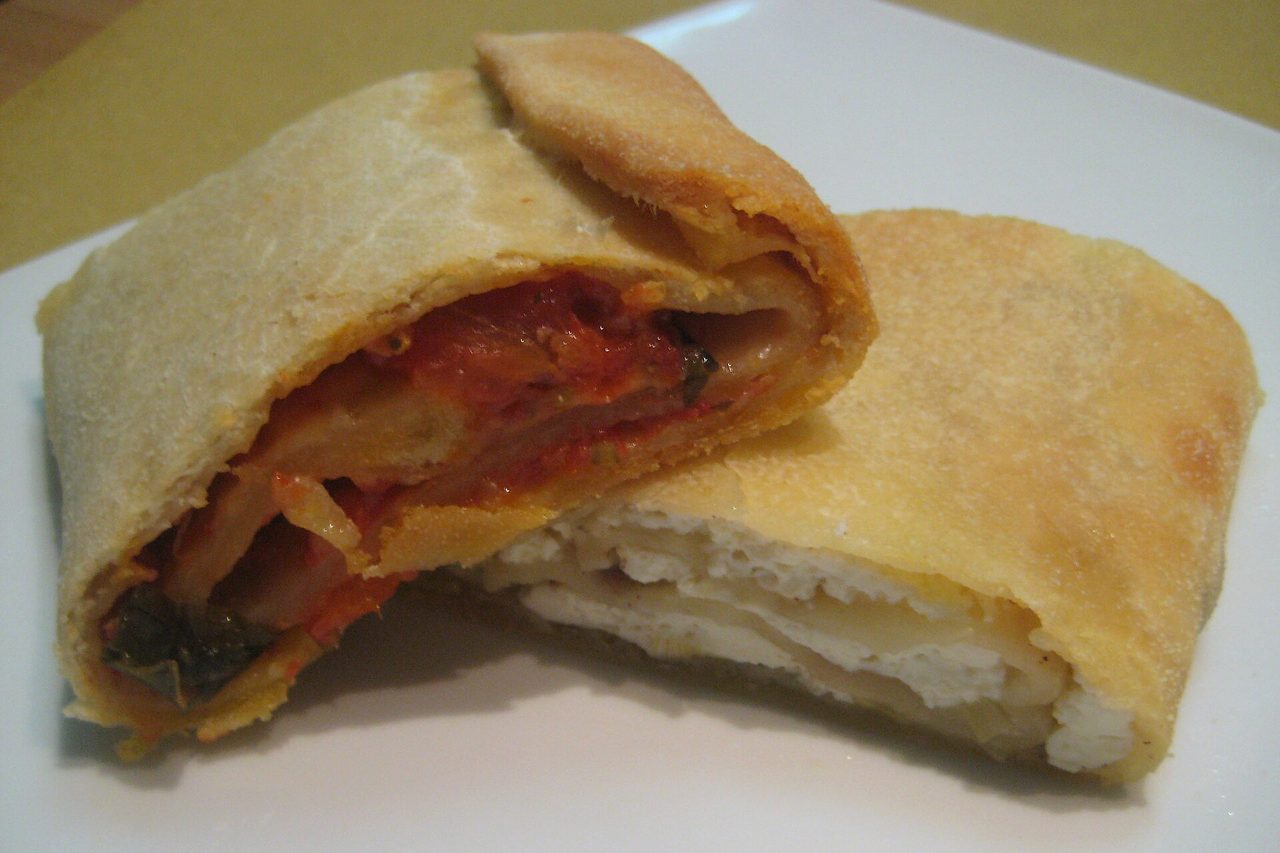
- The photograph on this page shows a seada before the honey.
Tips
- Use a fresh cheese that has not been brined.
- Press the air out round the cheese before sealing.
- Spoon oil over the top rather than turning it.
- Eat it as soon as the honey goes on. As it cools the filling sets again.
More detail and the reasons why (2)
- Why the cheese has to stretch. Italian Wikipedia says the filling is a fresh sour cheese, and that cow's cheese is soured by leaving it at room temperature without brining it: "it is acid enough when, heated, it stretches". That is the test mozzarella takes as its doneness, where "Stretching only works in the narrow band between them". Cheese in that band melts into one sheet inside the pastry.
- One hole ruins it. The same article prefers basting the top to turning the seada, and warns that a pierced pastry lets oil in or melted cheese out. With a molten filling, a split pastry simply empties into the oil (deep frying).
The basics behind this dish
- Eggs: Coagulation Temperatures and What They DecideWhite sets at 62°C, yolk at 68°C. Those two numbers explain scrambled eggs, boiled eggs, steamed custard and crème anglaise all at once.
- Why Sauces Split: Emulsions and Pan SaucesA cream sauce breaking and a carbonara scrambling are the same failure. Temperature and emulsifiers — plus how to bring a split sauce back.
- Knife Skills: Grip, Cuts, and Why Size MattersHow you hold the knife matters more than how fast you cut. The pinch grip, the claw hand, and why uniform size is a cooking decision rather than a cosmetic one.
More of the same kind


More from this country


Sign in to edit.
Written with AI · how we check it · Edit history
https://cookiki.com/en/r/seada · cookiki · User contributions are licensed under CC BY-SA 4.0.