
Photo: Obsidian Soul · CC0
Sapin-Sapin (Layered Steamed Glutinous Rice Cake)
A Filipino steamed cake: a batter of glutinous rice flour, coconut milk and sugar split three ways, coloured purple, white and yellow, and steamed one layer at a time, each set before the next is poured on. The Tagalog name means "layered". It is topped with latik, the toasted curds of coconut milk.
Ingredients
- Batter
- glutinous rice flour300 g
- coconut milk600 ml
- sugar200 g
- water100 ml
- salt0.5 tsp
- Colour and flavour
- ube halaya (purple yam jam) · or 1 tsp ube flavouring3 tbsp
- jackfruit · finely chopped60 g
- yellow food colouring · optional2 drops
- Latik
- coconut cream400 ml
- neutral oil · for the tin1 tsp
Steps
- ⏲ 30 min
Make the latik first. Simmer the coconut cream in a pan over medium-low heat, stirring, until the oil separates and the curds turn brown. Strain and keep the curds.
Mix the glutinous rice flour, coconut milk, sugar, water and salt to a smooth batter.
Divide it by weight into three. Stir the ube halaya into one, the jackfruit and colouring into another, and leave the third white.
Oil a 20cm round tin and set it in a steamer over boiling water (steaming).
- ⏲ 20 min
Pour in the purple batter, cover and steam 20 minutes. When the centre no longer sticks to a fingertip, pour the next layer.
- ⏲ 20 min
Pour the white batter on top and steam 20 minutes.
- ⏲ 25 min
Pour the yellow batter and steam 25 minutes, until the top is translucent and does not stick when pressed.
Cool completely in the tin, cut with an oiled knife and scatter the latik over the top.
Variations
- Thinner layers. Split the batter four or five ways and steam each layer 10-12 minutes.
- Grated coconut instead of latik. Top with freshly grated coconut.
- More ube. Use more ube halaya and pour a thicker purple layer.
Tips
- Let each layer set before pouring the next. If it has not set, the colours run together.
- Cool it completely in the tin before cutting. Warm, it sticks to the knife.
- Oil the knife.
- Divide the batter by weight. The layers come out even.
- Ube is the purple yam that also goes into halo-halo. Ube halaya is that yam cooked down into a jam, so it gives colour and flavour at once.
More detail and the reasons why (1)
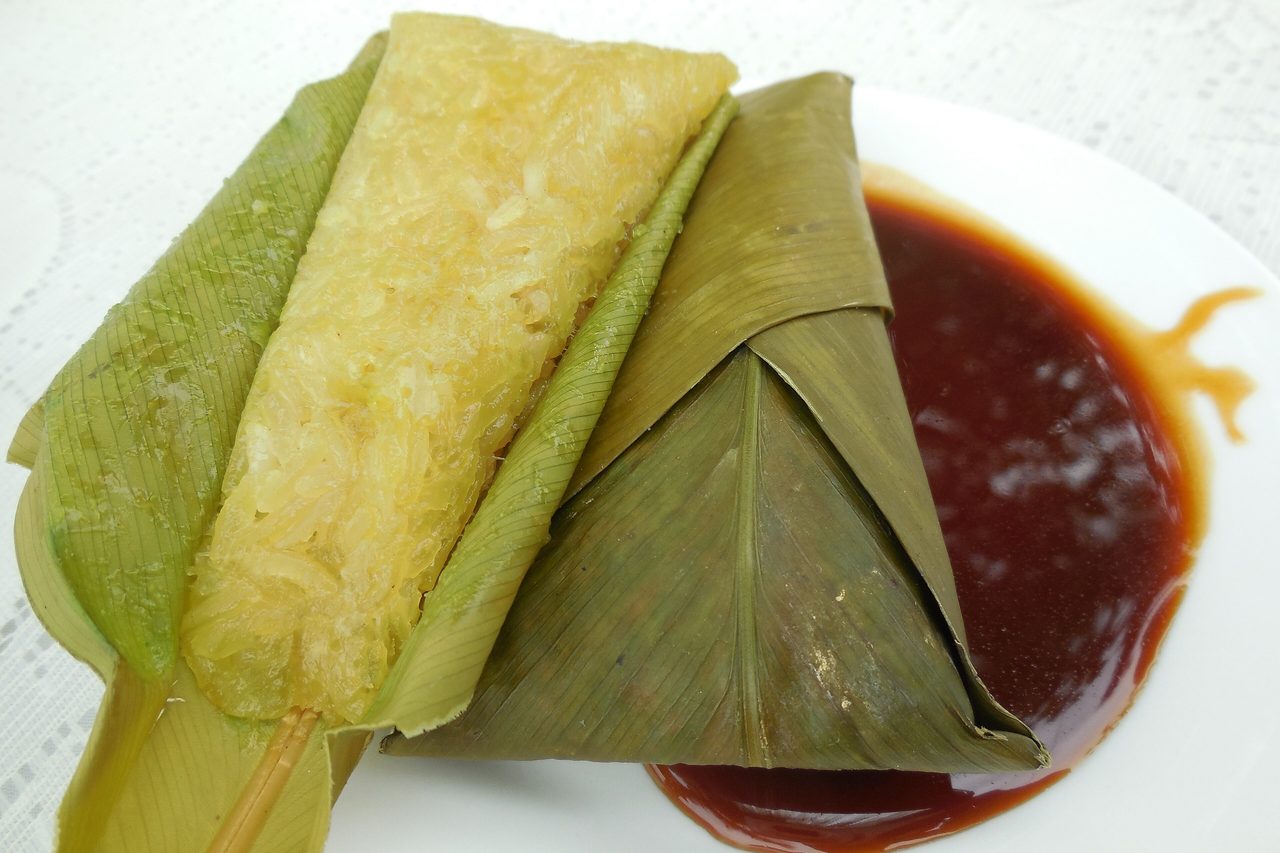
- Glutinous rice is why the layers hold together. The new batter cooks into the surface of the layer below, and the two set as one sticky mass, so the cake does not split along its lines. Kutsinta steams one batter in one go and gets its chew from lye water; sapin-sapin gets it from the glutinous flour itself. The same rice in suman is soaked whole, tossed with coconut milk and boiled in a leaf.
The basics behind this dish
- Eggs: Coagulation Temperatures and What They DecideWhite sets at 62°C, yolk at 68°C. Those two numbers explain scrambled eggs, boiled eggs, steamed custard and crème anglaise all at once.
- Why Sauces Split: Emulsions and Pan SaucesA cream sauce breaking and a carbonara scrambling are the same failure. Temperature and emulsifiers — plus how to bring a split sauce back.
- Knife Skills: Grip, Cuts, and Why Size MattersHow you hold the knife matters more than how fast you cut. The pinch grip, the claw hand, and why uniform size is a cooking decision rather than a cosmetic one.
More of the same kind



More from this country


Sign in to edit.
Written with AI · how we check it · Edit history
https://cookiki.com/en/r/sapin-sapin · cookiki · User contributions are licensed under CC BY-SA 4.0.