
Dango (Mitarashi Dango: Grilled Rice Dumplings in Soy Glaze)
Rice flour mixed with boiling water, boiled into dumplings, skewered, grilled and glazed with soy. The ratio of non-glutinous to glutinous flour decides the bite — all glutinous and what you have made is mochi, not dango.
Ingredients
- 6 skewers (24 dumplings)
- joshinko (non-glutinous rice flour) · this is what gives the bite; finely milled plain rice flour otherwise120 g
- shiratamako (glutinous rice flour) · this is what gives the chew. The ratio is 6:480 g
- sugar · for the dough; it slows the staling a little1 tbsp
- boiling water · it has to be boiling. Add it gradually and judge by feel160 ml
- Mitarashi glaze
- soy sauce2 tbsp
- sugar · some dark sugar deepens the colour3 tbsp
- mirin · for the gloss1 tbsp
- water100 ml
- potato starch · slaked in the same volume of water1 tbsp
- Equipment
- bamboo skewers · short ones; soak them so they do not burn6
Steps
Mix the two flours and the sugar in a bowl. Pour in the boiling water a little at a time, stirring with chopsticks to bring it together, then knead once it is cool enough to handle. Aim for the softness of an earlobe. Rice flour has no gluten, so gelatinising the starch with boiling water is the only thing binding it — mixed with cold water it stays crumbly no matter how long you work it.
- ⏲ 10 min
Wrap the dough and rest it 10 minutes so the moisture distributes and it stops cracking.
Divide into 24 and roll into 2cm balls. Slightly damp hands stop them cracking. Keep them the same size — different sizes cook in different times.
- ⏲ 3 min
Drop them into boiling water. Once they float, give them 3 minutes more. Floating only means they have started to cook, not that the centres are done.
Lift them into cold water, rinse and drain. That washes off the surface starch so they do not stick together, and stops the cooking dead.
Thread four onto each skewer. Use the soaked bamboo skewers, and push gently — forced, the dumplings split.
- ⏲ 3 min
Make the glaze. Bring the soy, sugar, mirin and water to the boil, add the slaked starch and stir 3 minutes to thicken. It thickens further as it cools, so stop while it is still slightly loose — just coating the back of a spoon.
- ⏲ 4 min
Grill or dry-pan the skewers with no glaze on them — about 2 minutes a side, 4 minutes in all, until brown spots appear. That grilled smell is half of what mitarashi dango is.
- ⏲ 30 sec
Turn the heat down, brush the glaze on and give it 30 seconds more. Glazed before grilling, the sugar burns and turns bitter.
Spoon the remaining glaze over and serve at once. They harden as they cool, so this is food you eat where it was made.
Tips & Variations
Variations
- Anko dango: topped with sweet red bean paste instead of glaze, and normally left unglazed and ungrilled.
- Goma dango: coated in black sesame paste or crushed sesame. Sesame aroma is heat-sensitive, so it goes on at the end.
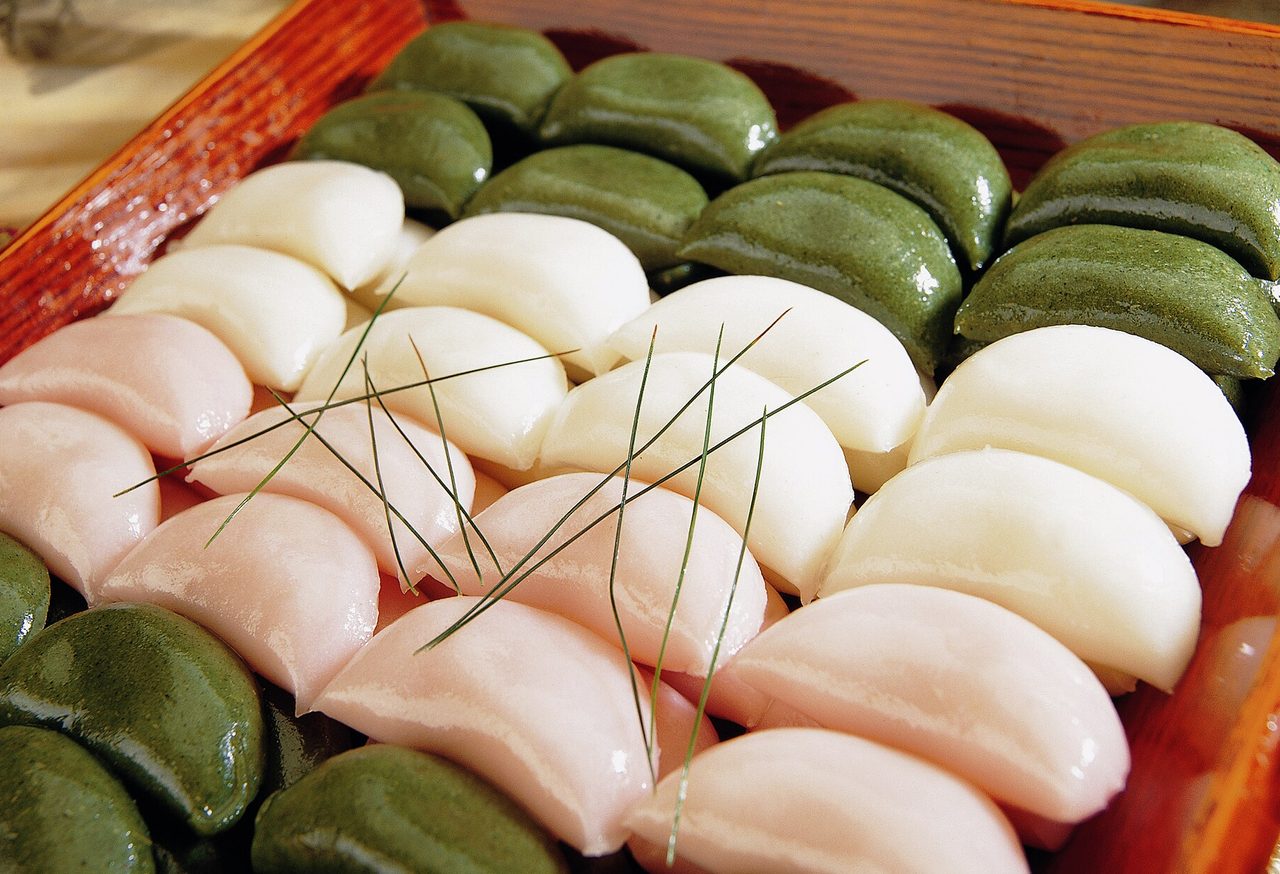
- Sanshoku (hanami) dango: pink, white and green on one skewer, for cherry-blossom viewing. Coloured with strawberry powder and matcha, eaten plain with no glaze — same dough, but ungrilled, so the surface stays smooth.
- Kusa dango: mugwort worked into the dough. The same plant Korean mugwort rice cake uses, with a different flour blend.
- Why mitarashi skewers often hold five: the name is said to come from the Mitarashi festival at Shimogamo Shrine in Kyoto, where the skewer carried five dumplings with the top one set apart from the other four, standing for a head and four limbs. Shops and regions now use anywhere from three to five.
- All glutinous flour puts you in mochi territory: far stretchier, with none of the resistance that makes it dango. All non-glutinous flour goes the other way — firm and prone to cracking. 6:4 is the practical middle.
- How it differs from songpyeon: songpyeon also mixes non-glutinous rice flour with boiling water, but it is steamed, filled, and never glazed. The dough principle is identical and everything after it differs.
Tips
- The two rice flours are the whole dish. Joshinko (non-glutinous) supplies the bite, shiratamako (glutinous) the chew. The commonest failure is using only glutinous flour, which gives you mochi. Start at 6:4 and adjust.
- Cold water will not make this dough. Wheat dough is held together by gluten; rice flour has none at all. The tack created when boiling water gelatinises the starch is the only adhesive there is — the exact inverse of the case described in dough and gluten.
- Floating is the start, not the finish. Rising to the surface only means the density dropped. Three more minutes cooks the centre; cutting one open is the reliable check.
- The cold rinse is about sticking. Washing the surface starch off keeps them separate and makes them easy to skewer — the same reason noodles get rinsed (cooking noodles).
- The glaze thickens as it cools. Reduce it to the consistency you want in the pan and it will be jelly on the plate. Stop when it just coats the back of a spoon (thickening a sauce).
- Grill first, glaze second, and never the reverse. Sugar starts burning around 150°C and a grilling surface is far hotter. Grill, then brush in the last thirty seconds — exactly the rule that governs the tare on yakitori and the sauce on teriyaki chicken (grilling, what sugar does).
- Aim for brown spots, not even browning. Those scattered scorch marks are where the Maillard aroma comes from, and they give the glaze's sweetness something to work against (browning).
- They harden within hours. Rice starch retrogrades, and the fridge is the worst place for it because that is the band where it happens fastest (serving temperature). The same problem as the rice cake in tteokguk and in songpyeon.
- Hardened dumplings come back. Above about 60°C the starch crystals melt again: a moment in a pan or a few minutes in a steamer softens them (steaming).
- Freeze them boiled, not refrigerated. Freeze them separated, before skewering, then bag them (freezing and thawing).
- Soak the skewers. Thirty minutes is enough; skip it and the bamboo burns before the dumplings colour.
The basics behind this dish
- Eggs: Coagulation Temperatures and What They DecideWhite sets at 62°C, yolk at 68°C. Those two numbers explain scrambled eggs, boiled eggs, steamed custard and crème anglaise all at once.
- Why Sauces Split: Emulsions and Pan SaucesA cream sauce breaking and a carbonara scrambling are the same failure. Temperature and emulsifiers — plus how to bring a split sauce back.
- Knife Skills: Grip, Cuts, and Why Size MattersHow you hold the knife matters more than how fast you cut. The pinch grip, the claw hand, and why uniform size is a cooking decision rather than a cosmetic one.
More of the same kind



More from this country


Sign in to edit.
AI-drafted, editor-reviewed · edits: 0 ·Edit history
https://cookiki.com/en/r/dango · cookiki · User contributions are licensed under CC BY-SA 4.0.