
Photo: Mayurbhandari · CC BY-SA 4.0
Batata Vada (Spiced Potato Balls in Chickpea Batter)
Maharashtra street food: boiled potato folded through a tadka of mustard seed, turmeric, ginger and green chilli, rolled into balls, dipped in a chickpea-flour batter and deep-fried. Wheat batters are under-mixed on purpose; this one is beaten hard for the opposite reason — besan builds no gluten to toughen, and the air beaten into it is what makes the shell light. Same filling as a samosa, opposite oil temperature.
Ingredients
- The filling
- potatoes · floury, boiled in their skins600 g
- neutral oil2 tbsp
- black mustard seeds1 tsp
- asafoetida · if you have it1 pinch
- curry leaves10
- green chillies · finely chopped2
- ginger · grated15 g
- garlic · grated3 cloves
- turmeric0.5 tsp
- salt1 tsp
- lemon juice1 tbsp
- coriander leaves · choppeda handful
- The batter
- besan (chickpea flour)150 g
- water · cold170 ml
- turmeric0.25 tsp
- chilli powder0.5 tsp
- salt0.5 tsp
- bicarbonate of soda · optional; see Tips1 pinch
- To fry
- neutral oil · groundnut or sunflower1 L
Steps
- ⏲ 30 min
Boil the potatoes in their skins, peel them hot and crush them coarsely by hand. A masher works the starch and turns them pasty.
- ⏲ 1 min 30 sec
Heat the oil and add the mustard seeds. When they pop, add the asafoetida, curry leaves, chilli, ginger and garlic for 30 seconds, then the turmeric.
- ⏲ 20 min
Off the heat, fold in the crushed potato, salt, lemon juice and coriander. Cool it completely — battered warm, the steam from inside bursts the shell.
- ⏲ 5 min
Divide the cold filling into 12 and roll each tightly into a ball. No cracks.
- ⏲ 2 min
Mix the besan with turmeric, chilli and salt, add the cold water gradually — then beat it hard for two minutes with a whisk. It pales and rises.
- ⏲ 1 min
It should coat the back of a spoon and run off slowly. Too thick gives a heavy shell; too thin slides off.
- ⏲ 5 min
Bring the oil to 180°C. A drop of batter should come straight back up rather than sinking to the bottom.
- ⏲ 1 min
Roll each ball in the batter until covered and lower it in. Three or four at a time at most, or the oil drops.
- ⏲ 4 min
Fry 3-4 minutes, turning, to a pale gold. Deep brown is overdone — the filling is already cooked, so only the shell needs the oil.
- ⏲ 2 min
Drain on a rack. Serve hot with green chutney and dry garlic chutney.
Tips & Variations
Variations
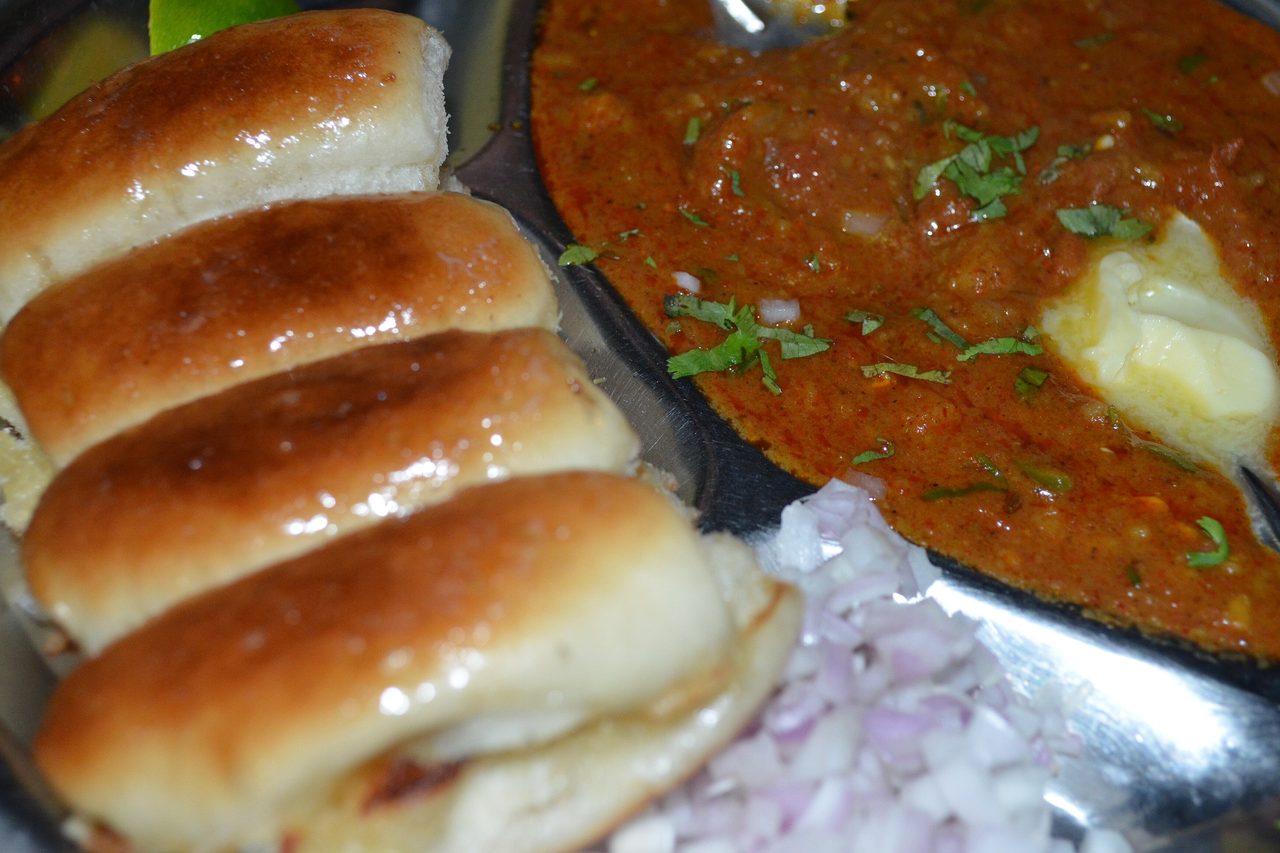
- Vada pav: the vada, straight from the oil, in a split pav with dry garlic chutney — Mumbai's own snack. The bread is what the Portuguese left behind, which is why it is a soft fermented roll rather than an Indian flatbread.
- Bonda: South India calls much the same thing a bonda, sometimes with coconut or cashew in the filling.
- Other fillings: crushed peas, or a whole boiled egg wrapped in the potato. Either way the condition is the same — it has to be dry.
- Air fryer: 200°C for 12 minutes. The shell is not as light, because the air story below only finishes in oil.
- Beside samosa: practically the same filling, a different shell. That one difference reverses the oil temperature — see below.
Tips
- This is the batter you beat hard. Deep frying says a wet batter must be deliberately under-mixed, because mixing develops gluten into a chewy jacket — and files this batter as the one where that premise is absent. As farinata puts it about the same flour, chickpea flour has more protein than wheat and forms no gluten whatever, because pulse proteins are storage globulins that cannot link up. So "mix less" means nothing, and what does the work is the air you beat in. Two minutes of whisking visibly pales the batter; that is the air.
- The oil has to be hot, and that is the reverse of samosa. That page says starting in barely-warm oil "is the whole technique", because a pastry has to cook through before it colours. A batter has the opposite problem: if it does not set on contact it slides off the ball. Same potato, different shell, opposite temperature.
- Cool the filling completely. Steam out of warm potato has nowhere to go and pushes the shell apart. Samosa gives the same instruction for the same reason.
- Crush by hand, never with a masher. Crushed cells release starch, the filling turns gluey, and it fries heavy. Coarse lumps are what make it crumble in the mouth.
- A pinch of bicarbonate, no more. A little makes the batter puff and lighten; too much tastes of soap and drinks oil. Besan carries saponins and foams a bit in water on its own — that foam does not need skimming here.
- Mustard seeds open only by popping. Straight out of blooming spices — and note the difference from rasam, which pours the same tadka over the top at the end while this one folds it through the potato.
- Pull them at pale gold. The filling is already-cooked potato, so frying has nothing to cook; its only job is to set the shell. Taken to a deep brown, the besan turns bitter.
The basics behind this dish
- Deep Frying: Temperature, Batter, and the Second FryFrying is not cooking in oil so much as trading the food's water for it. Two temperatures, what each kind of coating is for, and why the second fry exists.
- Dough and Gluten: When to Build It and When to Avoid ItThe same flour and water becomes a dumpling wrapper or a tender pancake. The difference is whether you built gluten or avoided it — and kneading and resting do different jobs.
- Knife Skills: Grip, Cuts, and Why Size MattersHow you hold the knife matters more than how fast you cut. The pinch grip, the claw hand, and why uniform size is a cooking decision rather than a cosmetic one.
More of the same kind


More from this country


Sign in to edit.
AI-drafted, editor-reviewed · edits: 0 ·Edit history
https://cookiki.com/en/r/batata-vada · cookiki · User contributions are licensed under CC BY-SA 4.0.