
Photo: Priyam1307 · CC BY-SA 4.0
Barfi (Reduced-Milk Fudge)
The Indian sweet made by stirring milk down for hours and then setting it. Every sugar confection on this site so far works at stopping crystals from forming — lokum with invert sugar, nougat with glucose and honey, tanghulu by driving out all the water. Barfi wants crystals, and wants them very small. How you stir it as it cools decides how big they get, and that size is the texture of the sweet.
Ingredients
- To make the khoya (or 400g shop-bought)
- whole milk · low-fat will not do2 L
- The barfi
- caster sugar150 g
- water50 ml
- ghee2 tbsp
- ground cardamom0.5 tsp
- salt1 pinch
- To finish (optional)
- pistachios · slivered2 tbsp
- almonds · slivered2 tbsp
- edible silver leaf · vark; not essential1 sheet
- For the variations
- ground cashews · in place of khoya, for kaju katli200 g
- desiccated coconut · for coconut barfi150 g
Steps
- ⏲ 120 min
Make the khoya. Pour the 2L of milk into a wide heavy pan over medium heat and reduce it, scraping the base constantly, until it is down to about a fifth of its volume — an hour and a half to two hours. Drop the heat when it starts to catch, but do not stop stirring.
- ⏲ 10 min
It is ready when the mass pulls away from the sides in one lump and the colour has gone from milk-white to pale beige. That colour is lactose and milk protein browning together, and it is why khoya tastes of caramel and nuts rather than of milk.
- ⏲ 7 min
In another pan boil the sugar and water to a syrup without stirring — to the one-thread stage, about 112-115°C. Stir it and a spoon drags crystals off the pan wall into the syrup, where they set it early.
- ⏲ 7 min
Turn the heat very low, stir the khoya into the syrup, add the ghee, cardamom and salt, and keep going 5-7 minutes until the mass comes cleanly away from the pan.
- ⏲ 4 min
This is the whole sweet. Off the heat, and while it is still hot, work it with the spatula — pressing and rubbing rather than folding — for three or four minutes. That working throws the sugar out as very small crystals, and their smallness is what gives the smooth bite. Left alone, large crystals grow and it eats like sand.
- ⏲ 5 min
Tip it into a tray greased with ghee, spread it 1-1.5cm thick, and press the slivered nuts into the surface.
- ⏲ 3 min
Score it while it is still warm. Once cold a knife will not cut it, it breaks. Mark out diamonds or squares now.
- ⏲ 10 min
Leave two hours at room temperature and snap along the scores. Airtight at room temperature, a week. The fridge makes it hard and spoils the texture.
Tips & Variations
Variations
- Kaju katli: ground cashews in place of khoya. It is the best-selling kind in India and it is far quicker, since no milk has to be reduced — but half of this page disappears with it.
- Coconut barfi: desiccated coconut alongside the khoya. The fibre physically gets in the way of the crystals, which gives a softer bite.
- Pista, chocolate and besan barfi: ground pistachio, cocoa, or roasted gram flour. The besan version needs its own roasting stage first.
- Vark (edible silver leaf): what Indian sweet shops lay on top. It contributes nothing to the flavour and the sweet is the same without it.
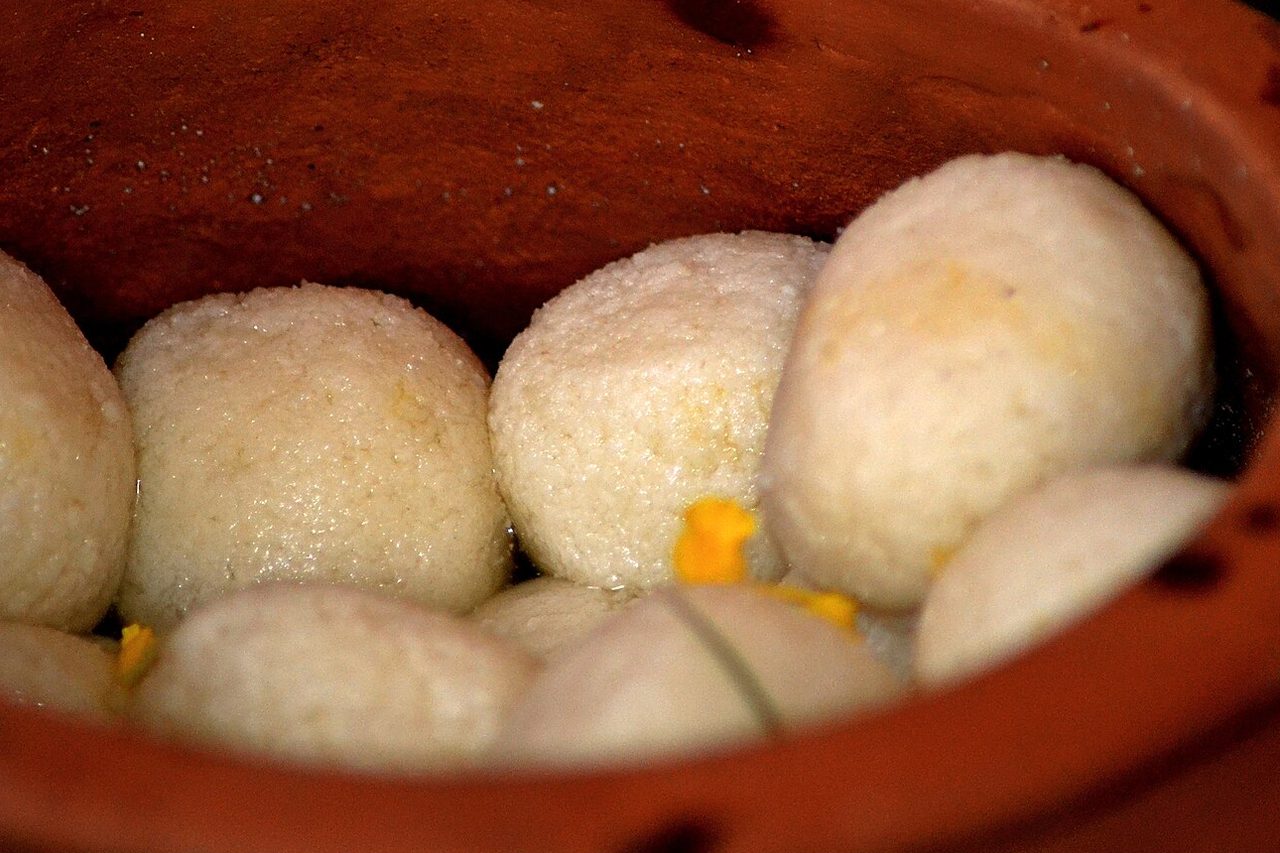
- The exact opposite operation to rasgulla. That one breaks milk with acid and lifts the curd out; this throws nothing away and drives the water off over hours. Same milk, opposite direction — and the rasmalai named in that page's variations is steeped in exactly this khoya.
- Diwali and festivals: barfi is in almost every box of mithai.
Tips
- It is the reverse of every other sugar confection here. Lokum uses invert sugar to stop crystals growing, nougat uses glucose and honey for the same job, and tanghulu drives sugar to 155°C and sets it as crystal-free glass. Barfi wants crystals. It wants them very small, and what decides their size is how you stir it as it cools.
- So the stirring rule reverses twice inside one recipe. While the syrup boils, do not stir at all — a spoon drags crystals off the pan wall and they seed it. Once it is off the heat, keep stirring — you are making a great many tiny seeds at once so no large crystal gets the room to grow. Lokum also reverses its own rule mid-recipe, for a different reason.
- Reducing milk is not concentration, it is change. Dairy and heat mentions evaporated milk in one clause as "already heat-concentrated, its proteins stabilised", and moves on. Two hours does more than that: lactose and milk protein react with each other (browning and the Maillard reaction) and the colour and smell change completely. Khoya is not strong milk, it is a different ingredient.
- Wide pan, heavy base. In a tall narrow pot there is no surface for the water to leave from and two hours becomes three; in a thin pan the base scorches first.
- Low-fat milk will not do. The fat is what gets between the crystals and keeps it tender. Reduce the same weight without it and you get something hard and coarse.
- Score it warm. The same reason as the caramel on Dobos torte, with a much more generous window here — about ten minutes rather than thirty seconds.
- Not in the fridge. It hardens and the surface takes up moisture. Room temperature is right for the reason yōkan keeps at room temperature: the sugar is doing the preserving.
The basics behind this dish
- What Sugar Does Besides SweetenCutting the sugar does not just cut sweetness. Colour, moisture, structure, and the counterweight to salt and acid — which is why savoury dishes call for it too.
- Dairy and Heat: Why Cream Splits and Butter BurnsThe temperature butter burns at, the conditions that split cream, the order yoghurt goes in. Dairy fails under heat in a small number of specific ways, so avoiding them is specific too.
- Eggs: Coagulation Temperatures and What They DecideWhite sets at 62°C, yolk at 68°C. Those two numbers explain scrambled eggs, boiled eggs, steamed custard and crème anglaise all at once.
More of the same kind


More from this country


Sign in to edit.
AI-drafted, editor-reviewed · edits: 0 ·Edit history
https://cookiki.com/en/r/barfi · cookiki · User contributions are licensed under CC BY-SA 4.0.