
Photo: Robert Kindermann · CC BY-SA 2.5
Taramosalata (Cured Roe Whipped with Oil and Bread)
A Greek meze: salt-cured fish roe beaten with soaked bread, olive oil and lemon into a pale emulsion. It is a mayonnaise built in the opposite order — the emulsifier has already been cured for weeks, so the seasoning arrives before the cook does and the adjustment is made by diluting rather than by salting. Traditionally eaten on Clean Monday, the first day of the Orthodox Lent.
Ingredients
- The base
- tarama (salt-cured cod roe) · or 100g mentaiko; see Tips100 g
- white bread · crusts off, day-old crumb only120 g
- water · to soak the bread100 ml
- olive oil · mild; all extra-virgin turns bitter150 ml
- lemon juice3 tbsp
- onion juice · grated, juice only1 tsp
- To serve
- olives8
- cucumber and tomatoto taste
- pita bread2
Steps
- ⏲ 10 min
Rinse the tarama in a sieve under cold water for 30 seconds. If it is very salty, soak it 10 minutes and squeeze it out. This is the only chance you get to set the seasoning.
- ⏲ 2 min
Soak the bread crumb in the water, then wring it out hard by hand. Water left in it stops the oil taking later.
- ⏲ 1 min
Blend the roe, the squeezed bread and the onion juice for a minute, to a smooth paste.
- ⏲ 4 min
With the machine running, pour the olive oil in in a thread. Tipped in at once the emulsion never forms and the oil sits on top.
- ⏲ 1 min
Add the lemon juice in two goes along the way. Too stiff means it wants lemon; too loose means it wants oil.
- ⏲ 2 min
Taste. If it is too salty you add bread, not less salt — another 20g of crumb with 20ml of oil, and blend again.
- ⏲ 60 min
Chill at least an hour to firm up. Serve with a last drizzle of oil, the olives, and pita.
Tips & Variations
Variations
- With potato: 120g of boiled, riced potato instead of the bread. Heavier, smoother and gluten-free, and common in Greece too.
- The colour: the bright pink kind, as in the photograph, is commercial and dyed. Made at home from cured cod roe it comes out closer to cream. Pale is not a fault.
- Other roe: grey mullet roe makes a much deeper, much more expensive version. Made with mentaiko it drifts towards Japanese tarako salad, which is a different dish built on mayonnaise.
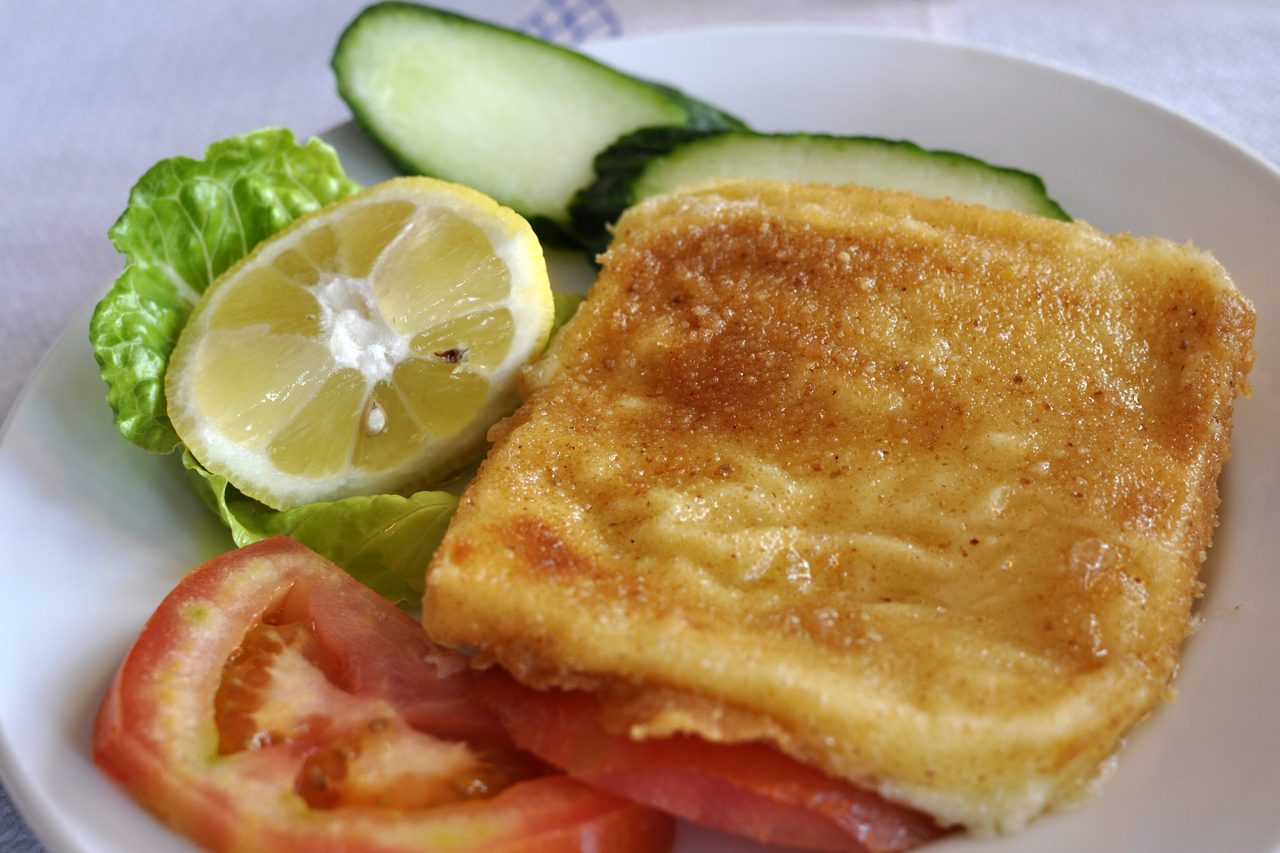
- The meze table: served alongside tzatziki and saganaki is the standard arrangement.
- Clean Monday: eaten on the first day of Lent, which is why there is no meat and no dairy in it. Getting this much body out of oil, bread and roe alone is the point.
Tips
- The whole dish follows from an emulsifier that is already seasoned. Why sauces split puts egg yolk lecithin first among emulsifiers. Fish roe is egg and belongs in that entry — except that this egg has spent weeks in salt. A mayonnaise is seasoned after it is made; taramosalata starts with its seasoning already fixed. So the adjustment only runs one way: too salty is corrected with more bread and oil, never with less salt (salt and seasoning).
- The bread is not bulk, it is a second emulsifier. The same guide lists starch separately, as the one that "physically traps the droplets". Here lecithin and starch work in the same bowl at once, which is why a bread-less tarama mousse splits far more readily and this keeps overnight. It is also why the bread is wrung out hard: water left in it means the starch holds water instead of oil.
- Add the oil in a thread, as anywhere else. If it splits it can be rescued: start again in a clean bowl with a tablespoon of the roe and beat the broken mixture into it a little at a time.
- All extra-virgin turns it bitter. A hard blender blade bursts the olive oil's polyphenols and the bitterness comes forward. Build the emulsion on a mild oil and pour the good one over at the end (cooking oils).
- Tzatziki has the opposite problem. There the entire job is getting water out of the cucumber; here water is put into the bread and then wrung back out. Two meze from the same table, handling moisture in opposite directions.
- Compare the allioli on patatas bravas. That page concedes garlic is a weak emulsifier and notes that adding egg makes it stable "at the cost of tasting of egg rather than of garlic". Taramosalata never faces that trade: the roe is the emulsifier and the flavour at the same time.
- The same class of ingredient as ganjang-gejang. Both set roe with salt or soy rather than with heat. That one spoons it out of the shell; this one grinds it and feeds it oil.
- It is better the next day. The salt evens out and the raw onion edge goes. It also takes up fridge smells readily, so keep it covered.
The basics behind this dish
- Balancing Flavour: Salt, Acid, Sweet, Fat, HeatWhen something tastes like it is missing something, it is usually salt or acid. Five dials, the order to turn them, and how to taste properly.
- Knife Skills: Grip, Cuts, and Why Size MattersHow you hold the knife matters more than how fast you cut. The pinch grip, the claw hand, and why uniform size is a cooking decision rather than a cosmetic one.
- Heat Control: Preheating, Oil, and Reading the PanThe same ingredients become a different dish depending on pan temperature. When to add the oil, how to read heat by sound, and which dishes want low heat instead.
More of the same kind


More from this country


Sign in to edit.
AI-drafted, editor-reviewed · edits: 0 ·Edit history
https://cookiki.com/en/r/taramasalata · cookiki · User contributions are licensed under CC BY-SA 4.0.