
Photo: Yunseul1118 · CC BY-SA 4.0
Huiguorou (Twice-Cooked Pork Belly with Bean Paste)
Pork belly boiled whole, chilled, sliced thin and returned to the wok — the name says the meat comes out of the pot and goes back into it. The reason for cooking it twice is not flavour but the knife: hot belly is too soft in the fat to cut at 2mm, and only when it is thoroughly cold does it slice like paper. And because the slices are that thin, the fat renders fast in the wok and the lean and the fat contract at different rates, so each piece curls into the shape the Sichuanese call a lamp shade.
Ingredients
- The pork
- pork belly in one piece · skin on, left whole; do not cut it500 g
- spring onion · for the boiling water1
- ginger · for the boiling water4 slices
- Sichuan pepper · for the boiling water1 tsp
- shaoxing wine2 tbsp
- The seasoning
- Pixian doubanjiang · Sichuan chilli bean paste; the backbone of the colour and the flavour1.5 tbsp
- tianmianjiang · sweet wheat paste; or 1 tsp chunjang with sugar1 tbsp
- douchi · fermented black beans, chopped1 tbsp
- sugar1 tsp
- soy sauce1 tsp
- The vegetables
- garlic scapes or leeks · cut on the diagonal150 g
- cabbage or green pepper · in large pieces150 g
- oil · only to start; the rest comes out of the pork1 tbsp
Steps
- ⏲ 30 min
Put the belly in cold water in one piece with the spring onion, ginger, Sichuan pepper and wine and simmer 25-30 minutes — a chopstick should go in easily without the meat falling apart.
- ⏲ 120 min
Lift it out and chill it completely. Two hours in the fridge is certain. Skip this and there is no dish: warm belly is too soft in the fat to slice thin.
- ⏲ 10 min
Slice it 2-3mm thick, across the grain, so that every piece carries skin, fat and lean.
- ⏲ 4 min
Heat the wok, add a tablespoon of oil and the pork over medium heat. The fat renders out within a minute, the pieces shrink, and the edges curl into lamp shades. Three or four minutes.
- ⏲ 30 sec
Push the pork to one side and fry the doubanjiang in the rendered fat for 30 seconds — when the oil runs red it has given up its aroma (working with fermented pastes). Stir in the tianmianjiang, douchi, sugar and soy.
- ⏲ 2 min
Add the vegetables and stir-fry hard for 2 minutes. The cabbage should wilt and keep its crunch.
- ⏲ 1 min
Toss everything together and serve at once, with rice.
Tips & Variations
Variations
- The vegetable: garlic scapes (蒜苗) are the Sichuan standard; cabbage or green pepper are both common. Either way they go in for the last two minutes.
- Lianguorou (連鍋肉): the cousin served with its cooking broth rather than draining it.
- Xiaochaorou (小炒肉): the Hunan dish, stir-fried from raw and not cooked twice at all. The names are close enough to confuse and the dishes are not the same.
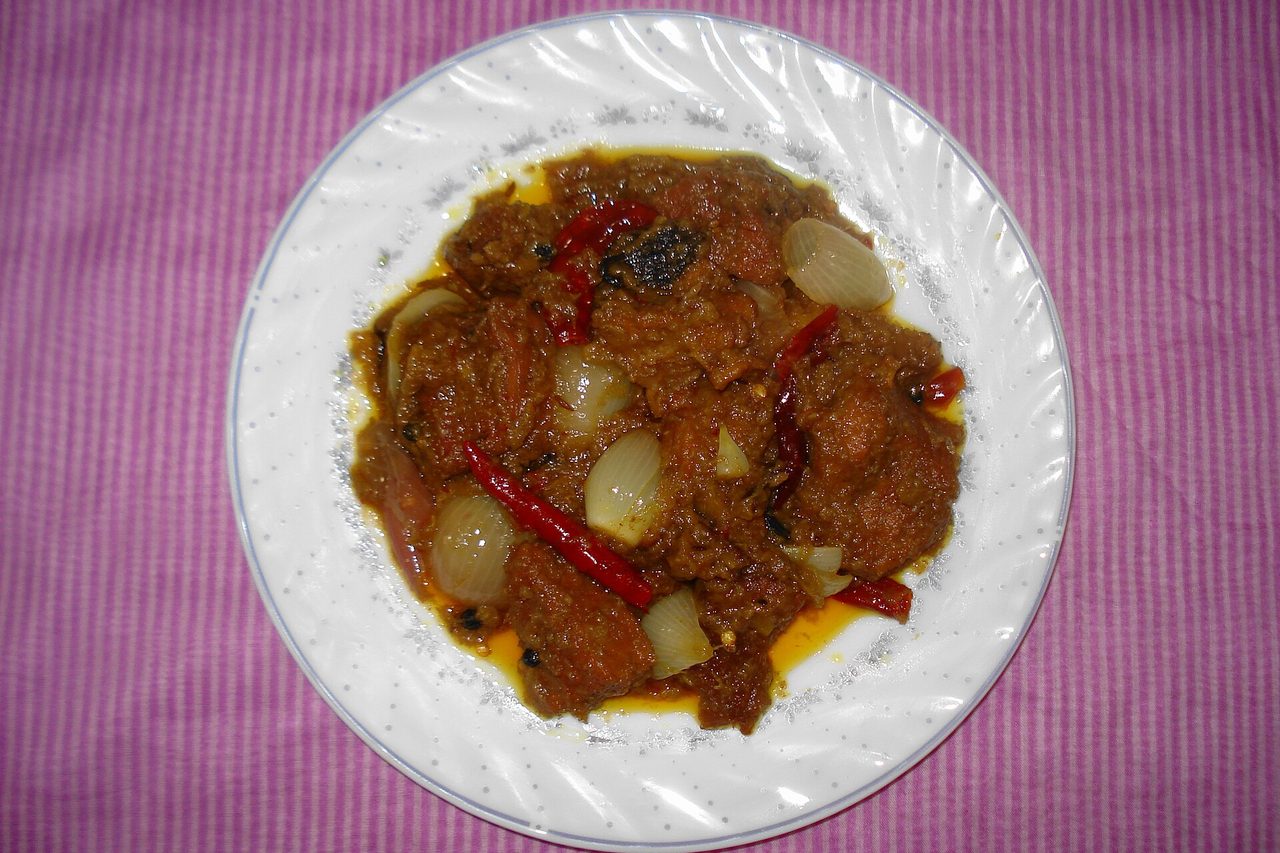
- Made with Lao Gan Ma: what the photograph shows. A jarred chilli sauce in place of doubanjiang is much quicker and does not have the depth of the fermented paste.
Tips
- The reason for cooking it twice is the knife. Warm belly squashes under the blade instead of slicing, because the fat is soft. Chilled through, the fat is firm and 2-3mm becomes possible. Pyeonyuk uses the other half of the same fact — there the gelatine sets and glues the fibres so it can be cut thin, here the fat setting is enough. Neither can be sliced hot.
- It curls because it is thin. Lean and fat contract at different rates with heat. In a thick slice that difference is absorbed; at 2mm the whole piece bends, into what the Sichuanese call a lamp shade. It is the mark of a good huiguorou, and flat pieces mean the slices were too thick.
- Almost no oil goes in. A tablespoon to start, and the rest renders out of the pork — and frying the doubanjiang in that rendered pork fat is what makes the dish smell the way it does.
- The second stage differs from suyuk and carnitas. Suyuk stops when the boiling stops; carnitas raises the heat while still submerged in fat so the surface fries. Here boiled pork is sliced into a different dish.
- Do not burn the bean paste. Thirty seconds is enough and longer turns it bitter; the oil running red is the signal.
- Keep the cooking water. It is a clean pork broth, good for soup or fried rice.
- Boiling it a day ahead is the easy way. It has to be cold anyway, so simmer it the night before and the dish itself takes ten minutes.
The basics behind this dish
- Knife Skills: Grip, Cuts, and Why Size MattersHow you hold the knife matters more than how fast you cut. The pinch grip, the claw hand, and why uniform size is a cooking decision rather than a cosmetic one.
- Blooming Spices: Why Aromatics Go into Fat FirstStir ground spice into liquid and half the aroma never arrives, because most aroma compounds are fat-soluble. The thirty-second window, and the order things go in.
- Dry Heat and Moist Heat: Choosing the MethodRoasting and simmering are not hotter and cooler versions of one thing — they are different families. One builds aroma, the other builds tenderness, and most good cooking uses them in sequence.
More of the same kind


More from this country


Sign in to edit.
AI-drafted, editor-reviewed · edits: 0 ·Edit history
https://cookiki.com/en/r/huiguorou · cookiki · User contributions are licensed under CC BY-SA 4.0.