
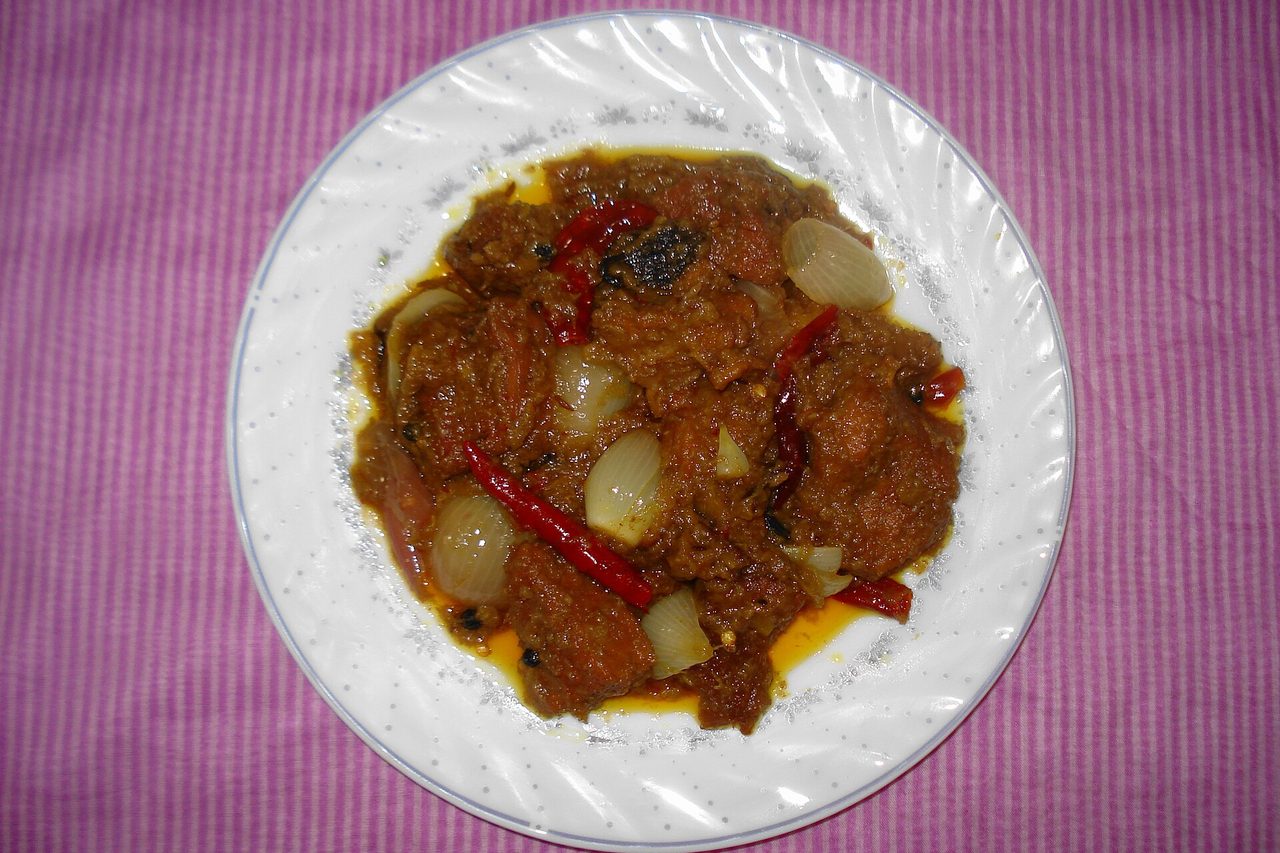
Photo: safaritravelplus · CC0
Nyama Choma (Charcoal-Grilled Goat)
Kenya's national dish: goat grilled slowly over charcoal for well over an hour, then chopped on a board. There is almost no seasoning — salt is essentially the whole list — so the fire and the time are the recipe. Served with kachumbari and ugali.
Ingredients
- The meat
- Goat · Bone-in leg or ribs; young goat is best2 kg
- Coarse salt · Effectively the entire seasoning2 tbsp
- Black pepper · Coarsely ground; optional
- Optional marinade
- Lemon juice · The local standard uses almost nothing3 tbsp
- Garlic · Minced4 cloves
- Ginger · Grated15 g
- Oil · To keep the surface from drying2 tbsp
- Kachumbari (the side salad)
- Tomatoes · Deseeded and diced; it must not go watery3 medium
- Onion · Red for preference; sliced thin, 5 min in cold water1 medium
- Coriander · Finely chopped1 handful
- Chilli · Finely chopped, to taste1
- Lime or lemon juice2 tbsp
- Salt · Only just before serving
- To serve
- Ugali · Stiff maize porridge; rice instead
- Charcoal · Hardwood; avoid anything that smells of lighter fluid
Steps
- ⏲ 30 min
Keep the goat in large pieces — a whole leg, a rack of ribs — pat it dry and rub coarse salt all over. Leave 30 minutes at minimum, a few hours if you can. If you are marinating, do it now.
- ⏲ 30 min
Light the charcoal and wait until it is covered in white ash. Meat over live flame chars outside and stays raw inside. Rake the coals to one side to create a direct zone and an indirect one.
- ⏲ 5 min
Put the meat over the indirect zone — the side with no coals under it — and cover with a lid or a metal sheet. From here it is closer to smoking than grilling.
- ⏲ 70 min
Turn every 10–15 minutes for at least an hour. The rendering fat bastes the surface, so there is nothing to brush on. Rushing gives you tough meat that is still red inside.
- ⏲ 10 min
Meanwhile make the kachumbari. Deseed and dice the tomatoes; slice the onion thin and soak it 5 minutes in cold water, then drain — that takes the harshness out for eating raw. Mix with coriander, chilli and lime juice.
- ⏲ 10 min
Once the meat is tender — the flesh pulls easily from the bone and a fork meets no resistance — move it to the direct zone for the last 5–10 minutes to brown the outside. That is where the aroma comes from.
- ⏲ 10 min
Off the fire, rest 10 minutes. Cut it straight away and the juices run out onto the board.
- ⏲ 5 min
Chop it into bite-sized pieces on a wooden board. Salt the kachumbari now, toss it, and serve with ugali — pinch off the ugali by hand and use it to pick up the meat and salad.
Tips & Variations
Variations
- Beef or lamb: Kenyans use beef ribs (mbavu) and lamb too. Goat is the classic, but beef ribs are easier to find and more forgiving.
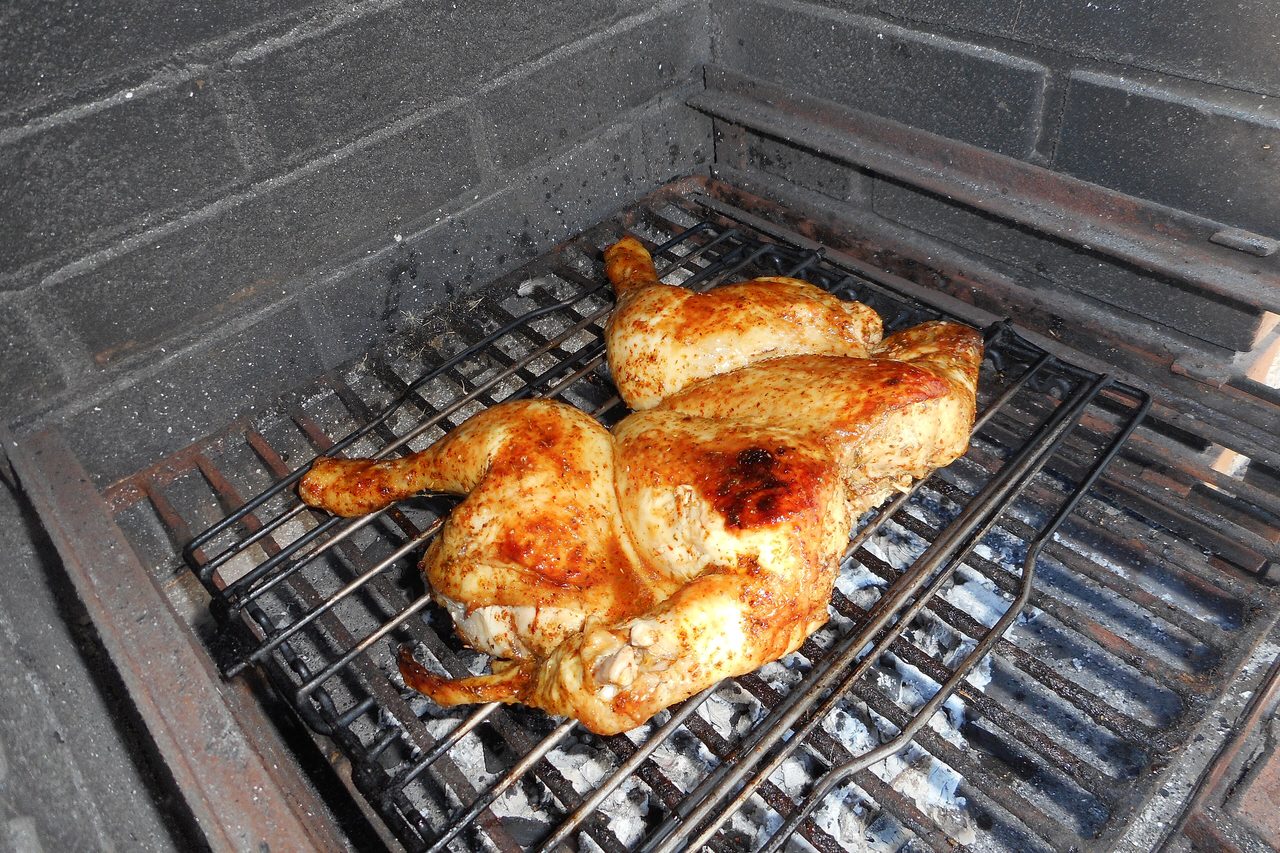
- Chicken (kuku choma): chicken cooks far faster, 40–50 minutes. Weight the indirect zone even more heavily so the skin does not burn.
- Whether to marinate: plenty of Nairobi places use salt alone; others use lemon, garlic and ginger. The less seasoning, the more the fire and the meat show — with good goat, salt is enough.
- Pili pili sauce: chilli, garlic and lemon blended into a hot sauce. Kachumbari plus pili pili is the standard pair of accompaniments.
- In an oven: with no charcoal, 150°C for 90 minutes, then the grill element to colour it. No smoke, but a similar texture — see Dry heat and moist heat.
- The relatives: Tanzania has the same dish, and Caribbean Jerk Chicken, Greek Souvlaki and Turkish Kebab all belong to the same "meat over coals" family. What sets nyama choma apart is whole pieces, long and slow, and barely seasoned.
Tips
- Wait for the white ash. The commonest failure is putting meat over coals that are still flaming: the outside chars while the inside stays raw, and there is no recovering from it.
- Cook most of it in the indirect zone. Coals to one side, meat to the other is the essential structure. Direct heat is only for the last 5–10 minutes. The chemistry of that colour is in Browning.
- An hour is the floor, not the target. Goat is full of connective tissue and needs the time. Do not judge by thermometer — judge by whether a fork slides in without resistance. The reasoning is in Braising.
- Salt early and generously. On a large piece, salt only ever touches the surface, so you need volume, and 30 minutes or more lets it penetrate — see Salt.
- Salt the kachumbari last. Salted early, the tomato and onion weep and the salad floods. Its whole job is to cut the richness of the meat, so it has to stay crisp.
- Rest before cutting. The bigger the piece, the more juice you lose. Ten minutes is enough.
- Resist the urge to add seasonings. Nyama choma is a dish about meat and fire. In Kenya it is a weekend thing: several people around one fire, the chopped board in the middle, eaten with your hands.
The basics behind this dish
- Grilling: Distance, Zones, and Flare-UpsOn a grill the heat is radiant, so distance is temperature. Why you build two zones, why a flare-up means you are already late, and why sugary marinades go on at the end.
- Browning and the Maillard ReactionMeat fails to brown for one of three reasons: it is wet, the pan is cool, or you put too much in at once. Plus how the brown film stuck to the pan becomes your sauce.
- Cooking Meat: Temperature, Resting, and Cutting Against the GrainDoneness is a core temperature, not a number of minutes. What resting actually does, how to handle a thick cut, and why the direction you slice changes the texture.
More of the same kind


Sign in to edit.
AI-drafted, editor-reviewed · edits: 0 ·Edit history
https://cookiki.com/en/r/nyama-choma · cookiki · User contributions are licensed under CC BY-SA 4.0.