
Photo: Aimeabibis · CC BY-SA 4.0
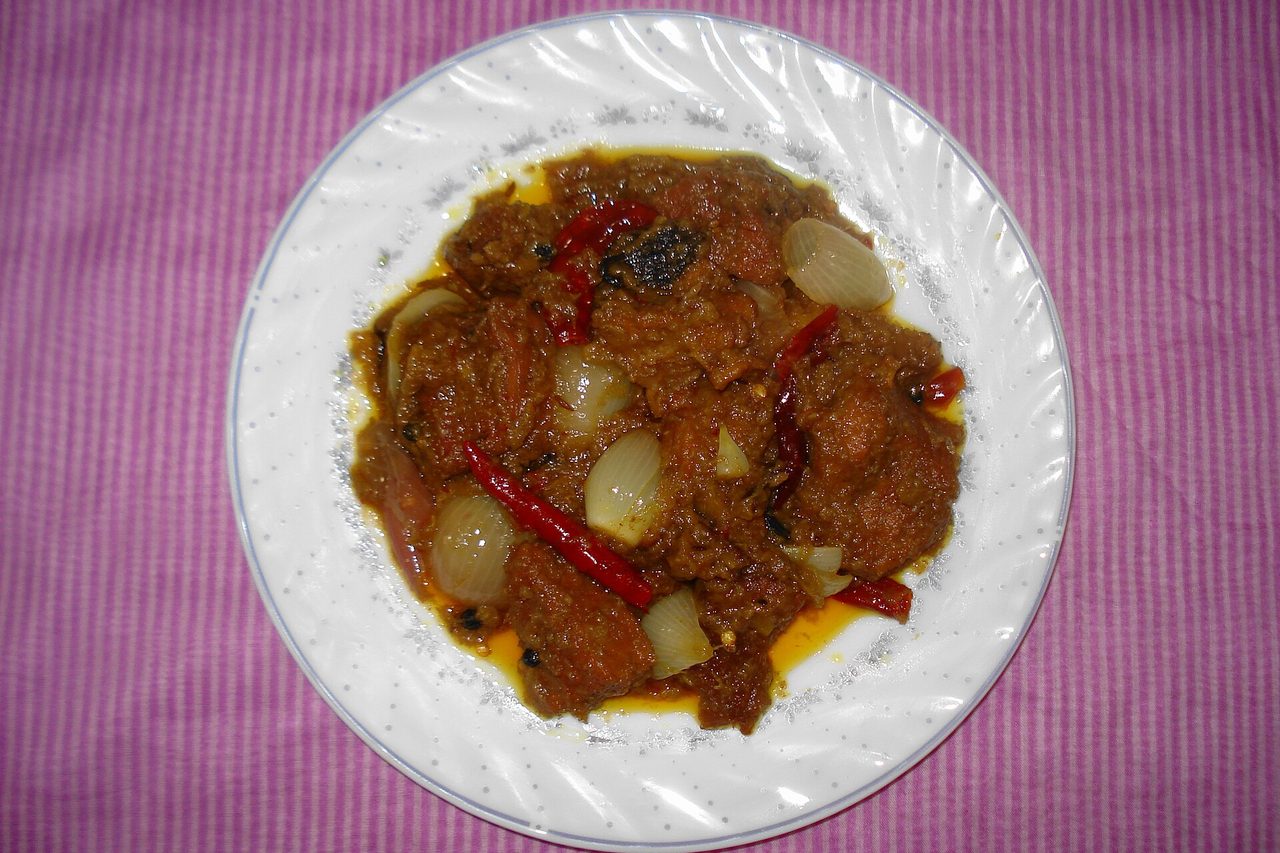
Amiwo (Tomato Cornmeal with Fried Fish)
Benin's signature dish: a red tomato and chilli sauce that cornmeal is stirred into until it sets firm. The point is that the cornmeal is cooked in sauce rather than water — and if you don't set some sauce aside first, there is none left to serve alongside.
Ingredients
- The sauce base
- Ripe tomatoes · Or 3 tbsp tomato paste plus 300g tomatoes500 g
- Onion · Roughly chopped1
- Garlic3 cloves
- Scotch bonnet or red chilli · The Beninese version is properly hot; adjust1
- Ginger · Optional, grated1 tsp
- Palm oil or groundnut oil · Palm oil brings colour and aroma4 tbsp
- Water or stock1 L
- Salt1.5 tsp
- The cornmeal
- Fine white cornmeal · Ground maize, not cornflour/cornstarch400 g
- The fish
- Tilapia or firm white fish · Slashed diagonally on both sides2 whole
- Lime or lemon juice · To season the fish2 tbsp
- Garlic · Minced, for the fish2 cloves
- Salt · For the fish1 tsp
- Oil for frying · Enough for a shallow fry300 ml
- Alongside
- Onion and tomato salad · Thinly sliced, dressed with lime
Steps
- ⏲ 20 min
Slash the fish diagonally on both sides and rub in the lime juice, minced garlic and salt. Leave 20 minutes. The cuts let the seasoning reach the flesh and help it cook evenly.
- ⏲ 5 min
Blend the tomatoes, onion, garlic, chilli and ginger to a smooth purée.
- ⏲ 15 min
Fry the purée in the palm oil over medium heat for 10–15 minutes, until it darkens and the oil separates out onto the surface. Skip this and the sauce stays sharp and thin — the principle is in Blooming spices.
- ⏲ 5 min
Add the litre of water or stock and the salt and bring to a simmer.
- ⏲ 2 min
Ladle out about 2 cups of the sauce and set it aside. That is the sauce you serve alongside — take it out now or the cornmeal absorbs the lot and there is none left.
- ⏲ 10 min
With the remaining sauce at a simmer, rain the cornmeal in a little at a time while stirring hard with a wooden implement. Tipped in all at once it forms lumps that will not stir out.
- ⏲ 15 min
Keep stirring 10–15 minutes until it is stiff enough to hold its shape on a spoon. It is ready when the mass comes together and starts pulling away from the side of the pot.
- ⏲ 10 min
Turn the heat low, cover, and cook 5–10 minutes more. Cornmeal has to cook through or it keeps a raw, floury taste.
- ⏲ 14 min
Meanwhile fry the fish. Heat the oil over medium-high, pat the fish dry and fry 5–7 minutes a side until the skin is crisp. Do not keep turning it — see Heat control.
- ⏲ 4 min
Shape the amiwo into rounds with a wetted spoon or small bowl and plate it with the fish, the reserved sauce, and the onion and tomato salad.
Tips & Variations
Variations
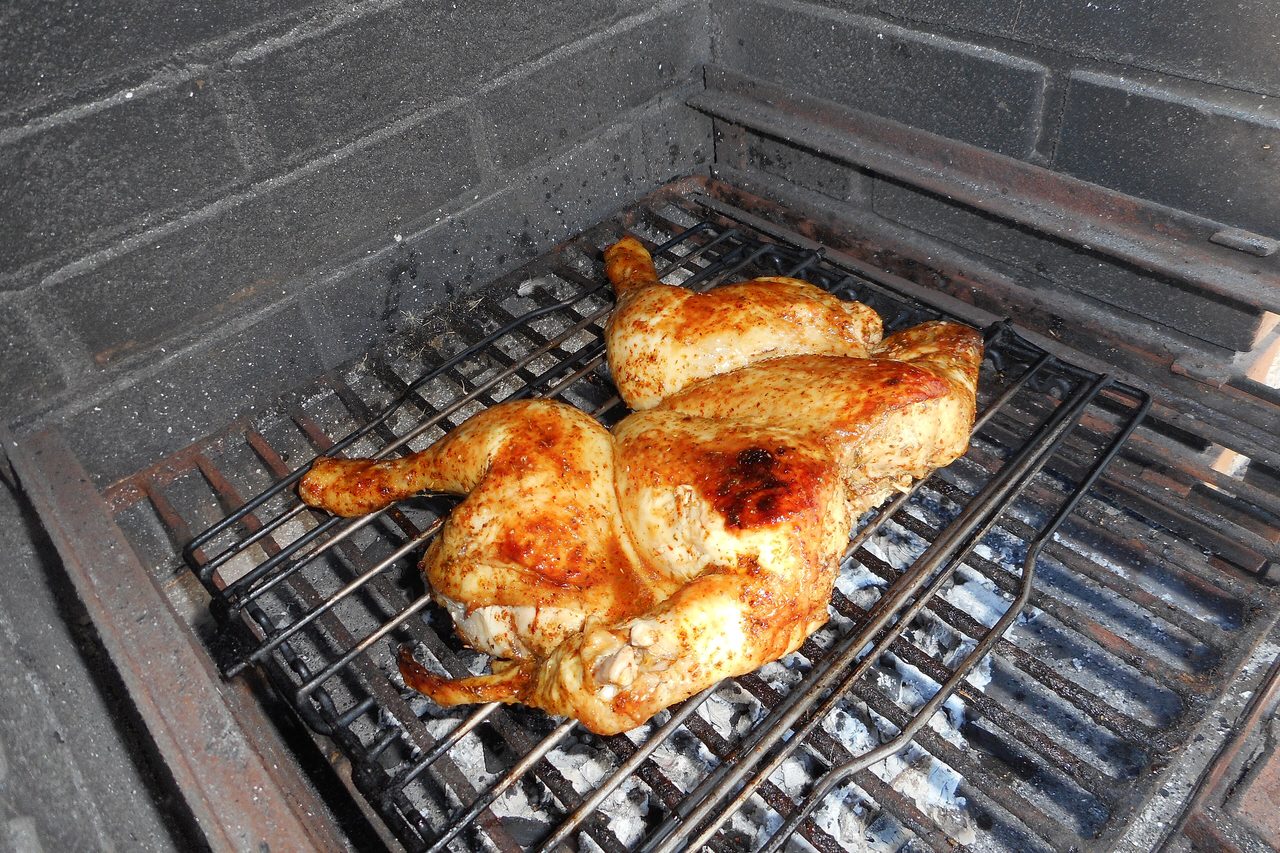
- With chicken: grilled or fried chicken instead of fish is just as usual. The sauce and the amiwo stay the same.
- Without palm oil: groundnut or neutral oil works. You lose some redness and the particular palm aroma, but since the tomato supplies most of the colour here it matters less than it does in calulu.
- Heat: Beninese cooks use scotch bonnet generously and it comes out properly hot. Simmering the chilli whole and lifting it out leaves the aroma with much less of the burn.
- How it differs from akassa: the same cornmeal, fermented and cooked without sauce, has its own name — akassa. What makes amiwo amiwo is that it is cooked in sauce.
- The West African neighbours: Ghanaian waakye, Nigerian jollof rice and Ivorian kedjenou are the neighbours. Amiwo is the one where the grain arrives as a firm mass rather than as separate grains.
- Same technique, another continent: raining grain flour into simmering liquid and beating it stiff is exactly what Libyan bazin does. Colombian and Venezuelan arepas use the same cornmeal but griddle the dough instead.
Tips
- Fry the tomato purée until the oil separates. It is the step first-timers skip and the one that makes the biggest difference. Under-fried tomato leaves a sharp raw acidity and a thin sauce. Darkening colour and oil rising to the surface are the signals.
- Set sauce aside before the cornmeal goes in. Forget and there is nothing to serve alongside: 400g of cornmeal drinks every drop.
- Rain the cornmeal in. Tipped in at once it will lump, and lumps do not stir out later.
- It takes some arm. Stirring gets harder as it stiffens. Use a wooden implement and steady the pot with a damp cloth so you can hold it one-handed.
- Give it the covered rest. Killing the heat as soon as the texture is right leaves the floury taste of raw maize. It needs 5–10 minutes under a lid.
- Pat the fish dry. Fish out of a marinade is wet, and wet fish spits in oil and sticks its skin to the pan.
- Do not keep turning the fish. Leave it until the skin has set and releases from the pan by itself, then turn it once.
- Season at the sauce stage. The cornmeal brings no salt of its own, so the sauce should taste slightly too salty before the flour goes in for the finished dish to be right — see Salt and seasoning.
- Shape it hot. Once cool it sets too firm to scoop into rounds. A wetted spoon stops it sticking.
The basics behind this dish
- Browning and the Maillard ReactionMeat fails to brown for one of three reasons: it is wet, the pan is cool, or you put too much in at once. Plus how the brown film stuck to the pan becomes your sauce.
- Cooking Meat: Temperature, Resting, and Cutting Against the GrainDoneness is a core temperature, not a number of minutes. What resting actually does, how to handle a thick cut, and why the direction you slice changes the texture.
- Knife Skills: Grip, Cuts, and Why Size MattersHow you hold the knife matters more than how fast you cut. The pinch grip, the claw hand, and why uniform size is a cooking decision rather than a cosmetic one.
More of the same kind


Sign in to edit.
AI-drafted, editor-reviewed · edits: 0 ·Edit history
https://cookiki.com/en/r/amiwo · cookiki · User contributions are licensed under CC BY-SA 4.0.