
Photo: Takeaway · CC BY-SA 4.0
Fu Pei Kuen (Fried Tofu Skin Rolls)
A Cantonese dim sum of pork and prawn rolled in tofu skin and fried. The wrapper is not rolled from a dough at all: it is the film that forms on the surface of hot soy milk as water leaves, lifted off and dried. No coagulant, no acid, and neither starch nor gluten.
Ingredients
- For rolling
- dried tofu skin sheets · fuzhu; fresh sheets are better if you can get them3 large
- cornflour · for the sealing paste1 tbsp
- water · slaked with the cornflour above1 tbsp
- Filling
- minced pork · about 20 per cent fat200 g
- prawns · patted dry and roughly chopped150 g
- bamboo shoot · blanched and finely diced; water chestnut also works50 g
- dried shiitake · soaked, squeezed hard and finely chopped3
- spring onion · white parts, finely chopped2 tbsp
- ginger · minced1 tsp
- soy sauce1 tbsp
- oyster sauce1 tsp
- sesame oil1 tsp
- sugar0.5 tsp
- white pepper0.25 tsp
- cornflour · for the filling1 tbsp
- To fry and serve
- frying oil · neutral, high smoke point800 ml
- Worcestershire sauce · for dipping, as Cantonese dim sum houses serve it2 tbsp
Steps
- ⏲ 10 min
Lay the dried tofu skin between damp cloths for 10 minutes. Do not put it in water. It is ready when it folds without cracking.
- ⏲ 8 min
Squeeze the shiitake hard, blanch and drain the bamboo shoot, and pat the prawns dry. Water in the filling is half this dish.
- ⏲ 4 min
Put all the filling ingredients in a bowl and stir one way only until it turns tacky and holds together in a mass.
- ⏲ 4 min
Cut the tofu skin into 15x20cm pieces. Overlap two pieces wherever a sheet has split.
- ⏲ 10 min
Lay a line of filling near the edge, roll once to cover, fold both sides in and roll up tight. Seal the end with the cornflour paste.
- ⏲ 8 min
Bring the oil to 160-170C. Hotter than that and the wrapper turns bitter before the filling is cooked.
- ⏲ 5 min
Fry four at a time for 4-5 minutes to a deep gold, in one pass. Do not fry these twice.
- ⏲ 3 min
Drain on a rack, not on paper. Cut each roll into three on the diagonal and serve with Worcestershire sauce.
Tips & Variations
Variations
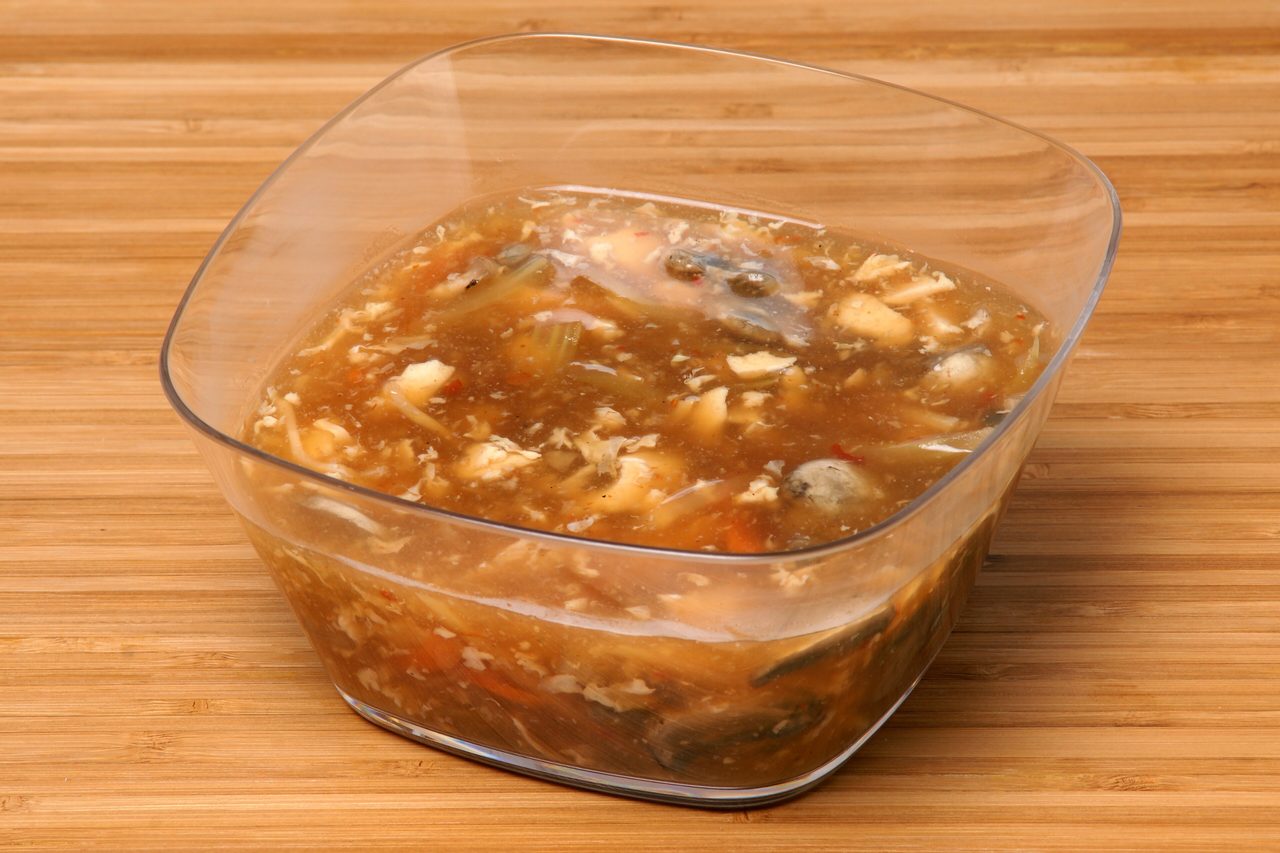
- Finished in sauce, as in the photograph: the fried rolls plated and covered in a stock-and- oyster-sauce gravy thickened with cornflour, with spring onion on top. Crispness traded for a wrapper that has drunk the sauce, and common in dim sum houses.
- Sin juk kuen (鮮竹捲): the same film used the other way round. Rolled in dried tofu skin and steamed in a bamboo basket, so the film takes water back and turns very soft; bamboo shoot is the usual filling. The last tip below is about that difference (steaming).
- Vegetarian: tofu, carrot, shiitake and bean sprouts instead of the pork and prawn. The wrapper is soy too, so the ingredients overlap — which makes drying the filling matter more, not less.
- Other fillings: chicken, fish and beef are all used. ko.wikipedia says the same: the filling varies and only the outer skin is always tofu skin.
- What it shares a table with: har gow, siu mai and cheung fun. Four wrappers made of four different things.
Tips
- This wrapper is neither starch nor gluten. Cha gio sorts fried wrappers into two materials: what separates it from a wheat spring roll is that "the wrapper is starch rather than gluten". Har gow holds down the starch end — "on heating there is no protein to set white and opaque — only starch gelatinising, which goes clear". The premise the two share and neither states is that a wrapper is rolled out of a dough. Tofu skin is soy protein, it is not gluten, and it was never rolled out of anything.
- The film is made by evaporation, not by setting. Douhua sets out the two ways soy protein is stood up: "Acid gives you lumps; a salt gives you a gel.". Tofu skin uses neither. Soy milk held just under the boil in a shallow tray loses water from its surface, and the protein and fat left behind there concentrate and knit into a single sheet. The same page writes that "Soy protein has to unfold before a coagulant can attach to it." — here there is no coagulant to attach, and the unfolding is the entire mechanism.
- Which is why each sheet lifted off leaves the milk weaker. The first sheet is the thickest and the fattiest; later ones come thinner and take longer to form. That is what graded tofu skin is about, and thin sheets are simply doubled up.
- Dried tofu skin is limbered, not soaked. Cha gio says of rice paper "Wet it, do not soak it.", and this arrives at the same instruction by a different route. A starch film that takes up water goes gluey; a protein film that takes up water goes slippery and tears along the grain of the sheet. Ten minutes between damp cloths is safe; a bowl of water splits it before you have rolled anything.
- Water in the filling costs more here than in cha gio. That page's "Half the job is getting water out of the filling." holds unchanged, with one extra reason. A starch wrapper gelatinises in the oil into a rigid shell that can resist the steam inside; tofu skin has no starch to set. A wet filling softens the film from within before the oil can dry it.
- One fry, at a lower temperature. Cha gio says "150°C to cook the filling, five minutes' rest, then 185°C to blister.", and what that second pass is for is bursting a starch film into bubbles. A protein film has nothing to blister. What it does instead is go straight to Maillard, protein meeting a little sugar (browning and the Maillard reaction), so the window between gold and bitter brown is short. 160-170C, once, is the whole of it (deep frying).
- Steaming uses the same film in reverse. Frying drives the last water out of it until it snaps like glass; steaming puts water back into a dried sheet until it is tender. One material, two opposite textures, and very little in between — tofu skin warmed halfway is simply tough.
The basics behind this dish
- Knife Skills: Grip, Cuts, and Why Size MattersHow you hold the knife matters more than how fast you cut. The pinch grip, the claw hand, and why uniform size is a cooking decision rather than a cosmetic one.
- Salt: When You Add It Matters More Than How MuchThe same amount of salt either draws water out or seasons all the way through, depending on when it goes in. Osmosis, seasoning in layers, and why salt types are not interchangeable by volume.
- Heat Control: Preheating, Oil, and Reading the PanThe same ingredients become a different dish depending on pan temperature. When to add the oil, how to read heat by sound, and which dishes want low heat instead.
More of the same kind


More from this country


Sign in to edit.
AI-drafted, editor-reviewed · edits: 0 ·Edit history
https://cookiki.com/en/r/fu-pei-kuen · cookiki · User contributions are licensed under CC BY-SA 4.0.