
Goma-ae (Spinach Dressed in Ground Toasted Sesame)
A Japanese side of blanched spinach dressed in toasted sesame ground coarse, with nothing but soy and sugar added. The fat arrives inside a ground solid rather than as an oil, which is why the greens have to be wrung out harder than usual before they are dressed.
Ingredients
- Greens
- spinach · split the root ends and wash out the grit300 g
- salt · for 1.5L of blanching water15 g
- Sesame dressing
- white sesame seeds · raw, not pre-toasted; about 4 tbsp40 g
- sugar1.5 tbsp
- soy sauce1.5 tbsp
- dashi · leave it out if you have none; do not use water instead1 tbsp
Steps
- ⏲ 3 min
Toast the sesame in a dry pan over low heat, shaking it. It is ready when the seeds start to pop and crush between your fingers. Take it off before the colour deepens.
- ⏲ 4 min
Tip it hot into a mortar and grind. Break down about half and leave the rest whole. You want oil coming out and the mass clumping like a damp crumb.
- ⏲ 1 min
Stir the sugar, soy and dashi into the ground sesame. It should sit on a spoon rather than run off it.
- ⏲ 40 sec
Bring 1.5L of water with 15g salt to the boil and blanch the spinach with the lid off, root ends in first, for 30-40 seconds.
- ⏲ 30 sec
Move it to cold water for 30 seconds. Longer than that and the flavour leaches out instead.
- ⏲ 2 min
Squeeze it hard by hand, cut into 4cm lengths, and squeeze again. The second squeeze is the one that matters.
- ⏲ 1 min
Toss with the dressing just before serving. Dressed early, the salt pulls water out of the leaves and thins it.
Tips & Variations
Variations
- Green beans, carrot, broccoli: blanch firmer vegetables 2-3 minutes and use the same dressing. After spinach, green beans are the commonest version in Japanese homes.
- With black sesame: greyer and far stronger in aroma. Push the sugar up a little.
- Shira-ae: the same family, with drained tofu crushed into the dressing. Softer, and it stretches further.
- With miso: a tablespoon of white miso instead of the soy. Rounder salt, but the sesame comes through less (fermented pastes).
- With peanuts: grind roasted peanuts the same way for piinattsu-ae. The particles are bigger, so the dressing is coarser.
Tips
- Here the fat arrives as a solid, not a liquid. Sigeumchi-namul closes a two-case list over the same kind of leaf: horta is not wrung out "because hot leaves take up olive oil while cooled and squeezed ones only carry it on the surface", while "This dish has a few drops of sesame oil, so leftover water pushes the seasoning off instead." — so that one is squeezed hard. It sums up: "Same kind of leaf, different amount of fat, different handling.". The premise the two share and neither states is that the fat is a pourable liquid. Goma-ae's fat is locked inside a ground seed and the dressing is a damp crumb. So this is neither handling: the greens are wrung out not because there is little oil, but because the dressing has no liquid phase to take water up into.
- Which makes the second squeeze a real step. Water left in the leaves is not absorbed; it thins the dressing from the outside. Grey liquid pooling in the dish is almost always lost here rather than in the blanching.
- Grind it coarse; ground fine it becomes a different ingredient. The sesame paste in dan dan noodles is the fine version, and that page says "It separates easily, and liquid added all at once makes it seize into lumps". Finely ground sesame is an emulsion with oil as the continuous phase, so it separates and lumps. Half-ground sesame is a suspension of broken cell walls holding their own oil, with no emulsion there to break. Run it long in a food processor and you have made sesame paste rather than this dish.
- There is a reason to grind it straight off the heat. Blooming spices starts from aroma being fat-soluble — "Stirred into water only some of it comes out; hit with hot oil, far more is extracted and it spreads through the whole dish". The dishes on that page pour in the fat separately to carry the aroma across; sesame is roughly half that fat by weight. So here the extraction step is not adding oil but breaking the cell walls, and the mortar stands where the pan would. Ground cold, the oil is stiff and comes out reluctantly.
- It is not the same dish as a sprinkle of whole seeds. Unground, the hull stays intact and most of the seed passes through, giving up little aroma and little oil. Seeds scattered on top are garnish; here the seed is the entire seasoning.
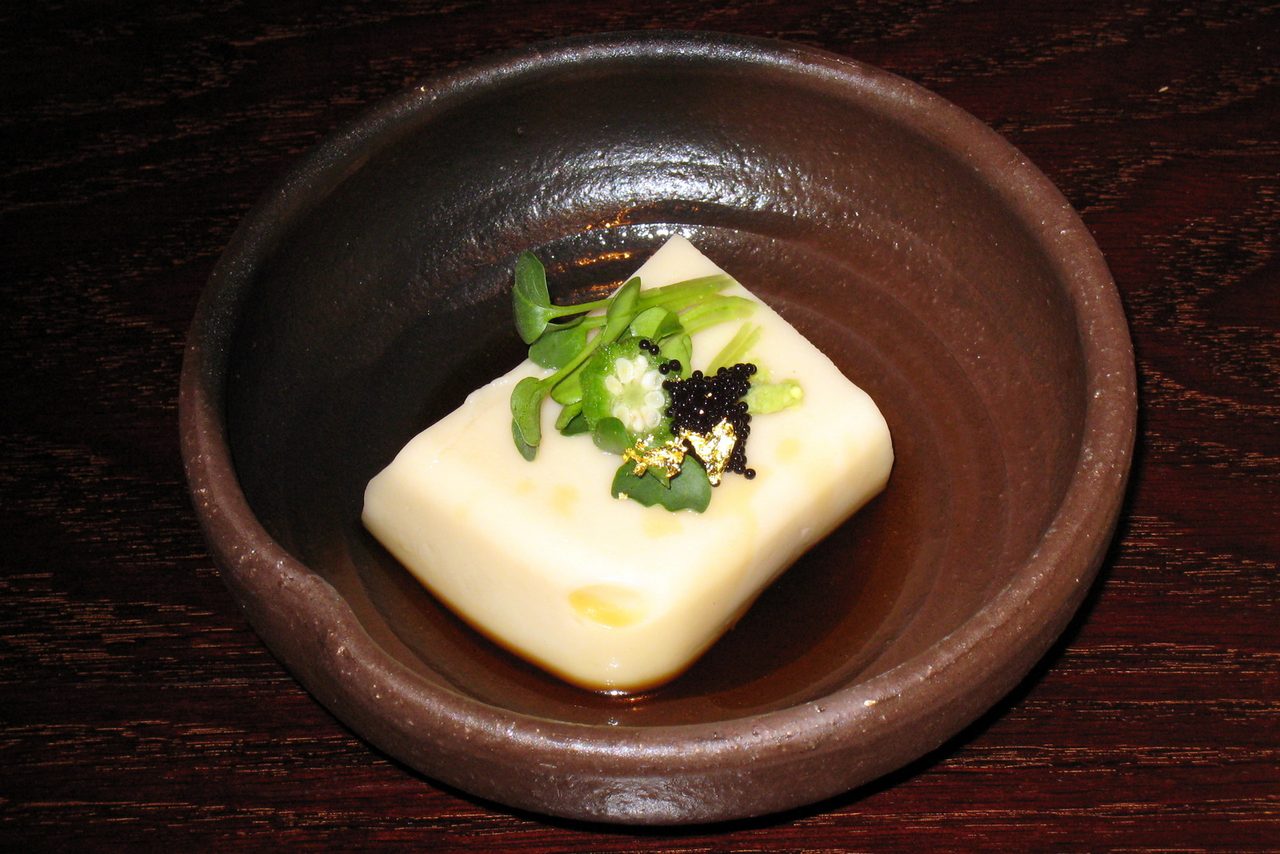
- The opposite use of the same seed is goma-dofu. There the sesame is ground smooth into an oily paste and trapped inside a kudzu-starch gel, and that fat obstructing the starch network is what the dish is about. Here there is no gel to trap anything and no paste is made at all. Same ingredient, opposite handling.
- The sugar is higher than it looks. Sesame hulls carry a bitterness, and the sugar is what answers that alongside the salt of the soy (balancing flavour). To make it less sweet, cut the soy before you cut the sugar.
- The blanching itself is sigeumchi-namul's. Lid off, plenty of water, salted properly. That page reduces the technique to one line — "cook briefly, dilute the acid, and give the acid a way out". It is not restated here.
The basics behind this dish
- Blanching: Keeping Vegetables GreenBlanched vegetables go dull because of acid and heat. Why the pot should be large, why the lid stays off, and what the ice bath is really for.
- Salt: When You Add It Matters More Than How MuchThe same amount of salt either draws water out or seasons all the way through, depending on when it goes in. Osmosis, seasoning in layers, and why salt types are not interchangeable by volume.
- Knife Skills: Grip, Cuts, and Why Size MattersHow you hold the knife matters more than how fast you cut. The pinch grip, the claw hand, and why uniform size is a cooking decision rather than a cosmetic one.
More of the same kind


More from this country


Sign in to edit.
AI-drafted, editor-reviewed · edits: 0 ·Edit history
https://cookiki.com/en/r/goma-ae · cookiki · User contributions are licensed under CC BY-SA 4.0.