
Photo: ecodallaluna · CC BY-SA 2.0
Hwangnam-ppang (Gyeongju Red Bean Pastry)
A very thin wheat casing wrapped around whole-bean red bean paste, stamped with a chrysanthemum and baked on a hot plate. It began in 1939 in the Hwangnam district of Gyeongju and took the neighbourhood's name. It is closer to a ball of bean paste with a skin than to bread, so the whole thing is how thin you wrap it and how far down you cooked the paste.
Ingredients
- Makes 12
- Whole-bean paste
- adzuki beans · soaked overnight, skins left on — the skins are what make it hwangnam-ppang300 g
- sugar · in two additions, only once the beans are fully soft180 g
- corn syrup · for gloss and moisture; add 20g more sugar instead20 g
- salt2 g
- Casing
- plain flour · sifted200 g
- sugar40 g
- egg1
- milk · adjusted by how stiff the dough is50 ml
- melted butter · or neutral oil20 g
- bicarbonate of soda · very little; more gives bitterness and dark speckles2 g
- honey · it keeps the casing from drying out10 g
- To finish
- egg yolk · beaten with 1 tsp water as a wash1
Steps
Soak the beans overnight. Next day bring them to the boil in fresh water and throw that water away — that is what takes the astringency out.
- ⏲ 60 min
Cover generously with water and simmer gently 50-60 minutes, until a bean crushes under your finger. Do not skin them.
- ⏲ 30 min
Pour off most of the water and cook the paste down 20-30 minutes, adding the sugar in two lots. It is ready when a spatula drawn across the base leaves a trail that closes slowly. Stir in the syrup and salt and take it off the heat. Under-cook the paste here and the casing bursts in the oven.
Cool the paste and divide it into 12, rolled into balls. Wrapped while hot it slackens the dough and tears it.
Make the casing. Mix the egg, sugar, honey and milk, stir in the melted butter, then add the sifted flour and bicarbonate and mix only until no dry flour shows. Worked hard it turns tough and will not thin out.
- ⏲ 30 min
Cover and rest it in the fridge 30 minutes. It firms up and stops sticking to your hands, which is what makes thin wrapping possible at all.
Divide the dough into 12. With lightly oiled hands, flatten a piece on your palm, set a ball of paste on it and close the dough around it. The casing wants to be thin enough that the paste shows through — that is the entire skill of this pastry. Gather the seam underneath and press it shut.
Seam side down, press it gently flat and stamp the top with a chrysanthemum stamp. Without one, score a radial comb pattern with the back of a fork. The pattern is decoration and a vent for escaping steam at the same time.
Heat the oven to 180°C. Space them on a tray and brush on the egg wash very thinly — laid on thick it fills the pattern in.
- ⏲ 18 min
Bake 15-18 minutes. Stop at pale gold, not deep brown. Longer and the thin casing dries out and cracks while the paste goes stodgy.
- ⏲ 20 min
Cool on a rack 20 minutes. Straight from the oven the casing is fragile and tears when you pick one up. Fully cool, the casing takes up moisture from the paste and softens.
Tips & Variations
Variations
- Hwangnam-ppang and Gyeongju-ppang: the original was made from 1939 by Choi Young-hwa (1917-1995) in the Hwangnam district of Gyeongju, and the name Choi Young-hwa bread is used for it too. Other makers later produced the same thing under the general name Gyeongju-ppang, usually slightly larger and with a different stamp. The method is effectively identical.
- Not the same as chalbori-ppang, Gyeongju's other speciality: a chewy barley-flour bun with bean paste that is steamed, not baked, so its skin is nothing like this one.
- With skinned paste: koshian, with the skins removed, is far smoother and reads sweeter. But the character of hwangnam-ppang is the bite of the whole bean skins, so swapping it moves the pastry towards manju.
- Without a stamp: radial lines scored with a fork or chopstick will do. The pattern is not only decoration but the route steam escapes by, so with none at all the casing balloons and splits — prick it with a toothpick instead.
- In an air fryer: 170°C for 12-14 minutes. The heat comes hard from above, so do not turn them; lay a sheet of paper over the top.
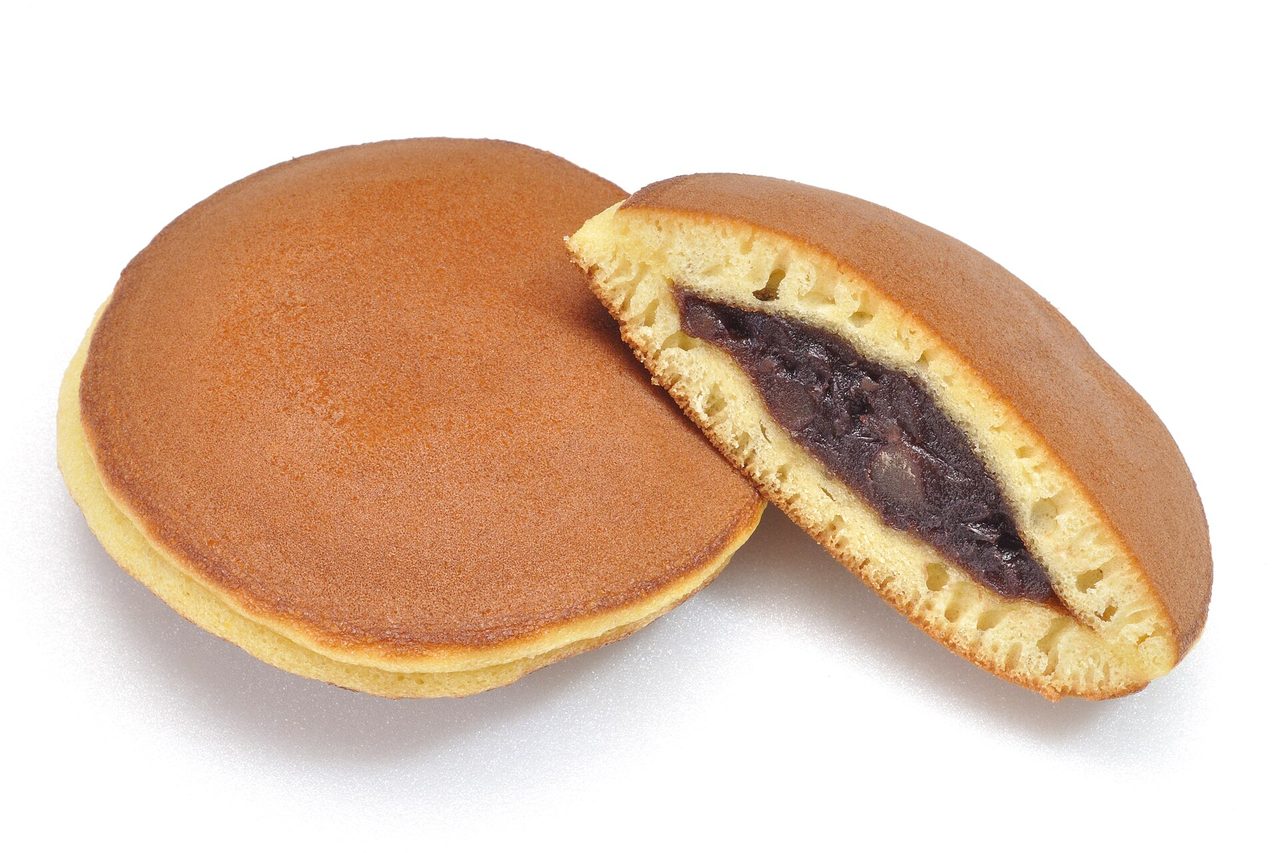
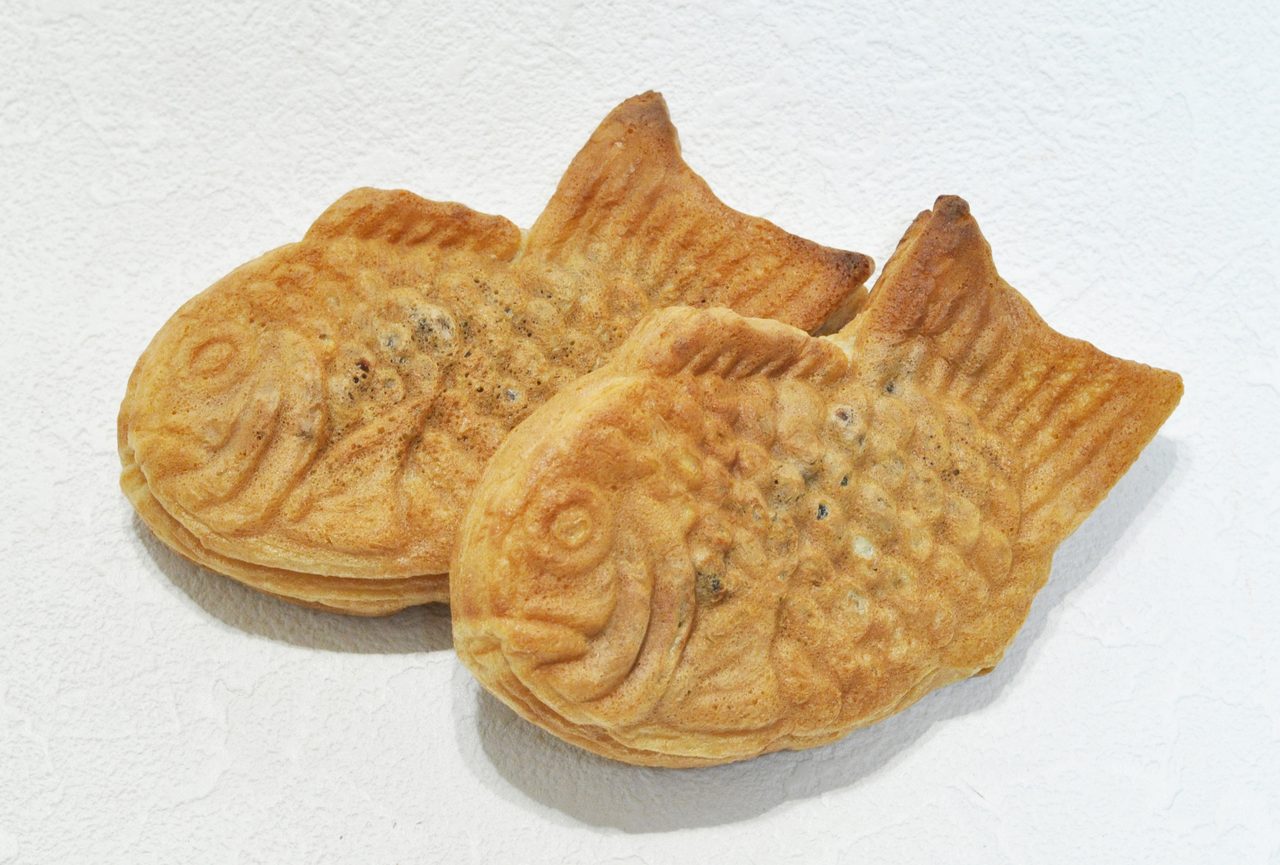
- Related red bean pastries: dorayaki bakes its two skins separately and sandwiches the paste, and taiyaki pours a thin batter into a mould. Hwangnam-ppang instead wraps the casing by hand, which puts its handwork closer to songpyeon or mandu.
Tips
- Cooking the paste down far enough is the first hurdle. The casing is thin, so even slightly too much moisture inside turns to steam and pushes it apart in the oven. The mark is a spatula trail that closes slowly — and stop a touch loose, because it firms further as it cools.
- Sugar only after the beans are fully soft. Sugar added early tightens the skins by osmosis and the beans stop softening. That order applies to pulses generally (soaking, what sugar does).
- Throw the first boiling water away. The astringency (saponins) leaves with it.
- Do not knead the casing dough. Develop gluten in a soft flour and it will not thin out, and bakes tough. Stop as soon as no dry flour shows (dough and gluten, choosing flour).
- The 30 minutes in the fridge is what makes thin wrapping possible. Freshly mixed, the dough sticks to your hands and tears the thinner you try to press it. Cold, it firms and handles completely differently.
- Thin enough that the paste shows through. That is the definition of this pastry. A thick casing just gives you a bean bun, and the casing-to-paste ratio that makes it hwangnam-ppang is gone.
- Gather the seam underneath and press it shut. A seam left open is where it splits in the oven (wrapping and sealing).
- The pattern is a vent. The chrysanthemum is not only there to be pretty: the pressed grooves thin the casing and steam leaves along those lines. Where you cannot stamp, toothpick holes do the same job.
- Stop at pale gold. A casing this thin dries far faster than other breads. By the time it is deep brown it has already started to crack, so watch the clock rather than the colour (what your oven is doing, browning).
- Egg wash very thinly. Laid on thick it fills the grooves and the stamping was for nothing.
- Better fully cooled. Straight from the oven the casing is fragile and the hot paste tastes of little but sugar. As it cools the casing draws moisture from the paste and softens (serving temperature).
- Keeps two or three days at room temperature. Refrigerated, the casing goes dry and crumbly. To keep them longer, wrap individually and freeze; thaw at room temperature and a brief steam brings them close to fresh (freezing and thawing, steaming, reviving leftovers).
The basics behind this dish
- Deep Frying: Temperature, Batter, and the Second FryFrying is not cooking in oil so much as trading the food's water for it. Two temperatures, three kinds of coating, and why the second fry exists.
- Heat Control: Preheating, Oil, and Reading the PanThe same ingredients become a different dish depending on pan temperature. When to add the oil, how to read heat by sound, and which dishes want low heat instead.
- Knife Skills: Grip, Cuts, and Why Size MattersHow you hold the knife matters more than how fast you cut. The pinch grip, the claw hand, and why uniform size is a cooking decision rather than a cosmetic one.
More of the same kind


More from this country


Sign in to edit.
AI-drafted, editor-reviewed · edits: 0 ·Edit history
https://cookiki.com/en/r/hwangnam-ppang · cookiki · User contributions are licensed under CC BY-SA 4.0.