
Photo: Jeon Han (Korea.net) · CC BY-SA 2.0
Omija Hwachae (Cold-Steeped Five-Flavour Berry Punch)
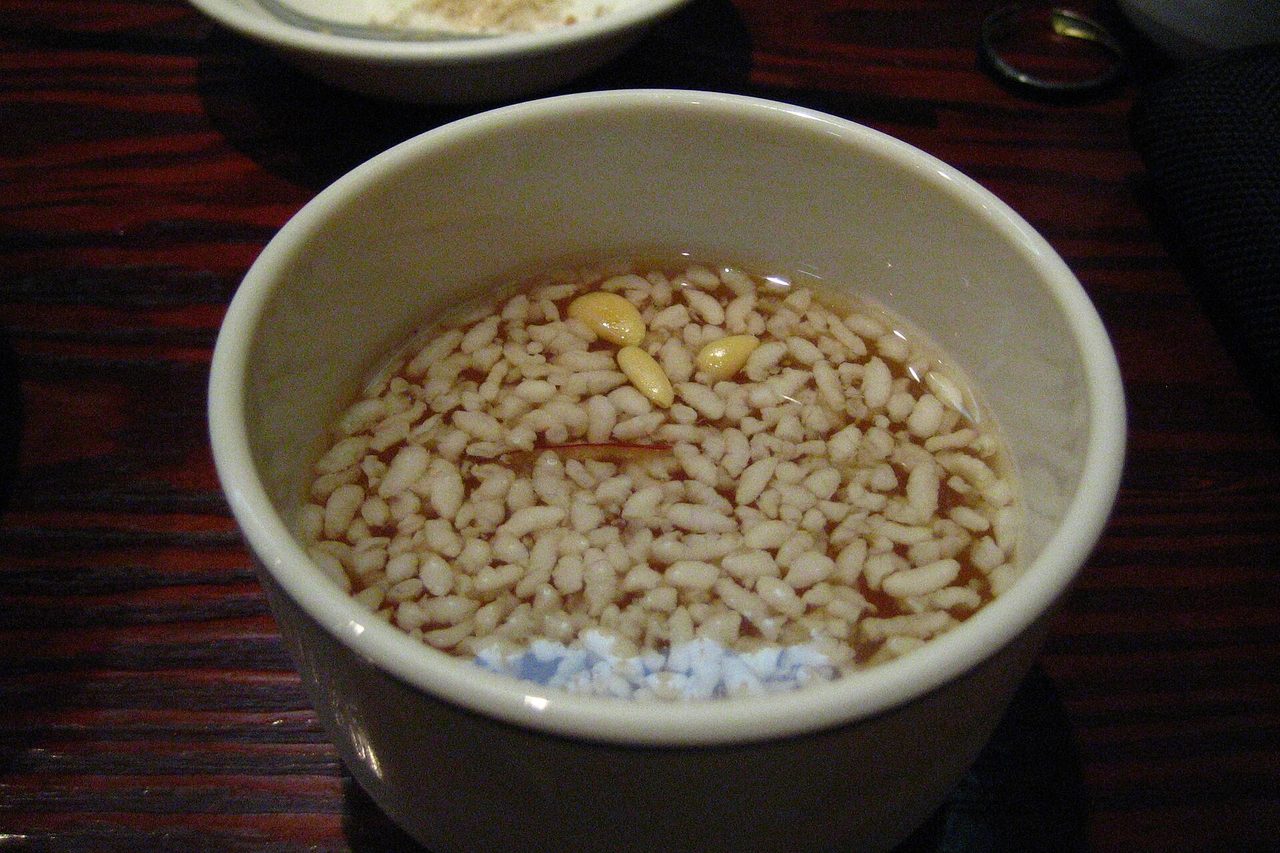
A Korean summer punch: dried omija berries steeped overnight in cold water, the red liquid strained off and sweetened with honey or sugar, then served cold with flower-cut pear and pine nuts floating on top. Sour first, sweet behind it.
Ingredients
- dried omija (schisandra) berries30 g
- water · boiled once and cooled completely1 L
- honey · or sugar syrup; add more to taste80 g
- Korean pear0.25
- pine nuts1 tbsp
- azalea petals · optional, spring only
Steps
- ⏲ 30 sec
Rinse the berries once, quickly, in cold water to wash off dust, and drain. A long wash takes flavour with it.
Add the berries to 1L of the cooled water, cover, and steep in the fridge overnight (10-12 hours). Do not boil.
When the water is red, strain it through a fine cloth. Do not press the berries; take only what runs through.
- ⏲ 2 min
Stir in the honey. It dissolves slowly in cold water, so loosen it in a little of the liquid first. Taste it cold and adjust the sweetness.
Slice the pear 3mm thick and cut out flowers with a small cutter. Pinch the tips off the pine nuts.
Pour the chilled punch into bowls, float the pear and pine nuts on top and serve at once.
Variations
- Azalea hwachae. In spring, float azalea petals. Make sure they are azalea and not the poisonous royal azalea (cheoljjuk).
- Watermelon hwachae. Scoop watermelon into the omija water.
- Omija cheong. Berries layered 1:1 with sugar and left to make a syrup; stir into water when you want a glass.
Tips
- Do not boil. Boiled, it becomes omija tea. This punch is steeped cold.
- Do not press the berries when straining. Pressing clouds the clear red.
- Sweeten after straining. Then you decide the amount last.
- Judge the sweetness cold. Cold dulls sweetness (serving temperature).
More detail and the reasons why (1)
- One berry, two drinks. Omija tea is made by boiling the berries; the punch is made by leaving them in water until it turns red, then straining. Sourness is the strongest of the omija's five tastes, and heat or pressing also draws the bitter and astringent notes out of the seeds and skins. Steeping cold for a long time and taking only what runs through keeps this a sour-sweet drink. The honey is there to support the sourness, not to cover it, so the sour should still come first once it is sweetened (balancing flavour). Served beside sikhye, the two split the work: malt sweetness in one, fruit acid in the other. At the spring hwajeon outings, a punch of honey water or omija water with azalea petals floating in it went with the flower cakes.
The basics behind this dish
- Eggs: Coagulation Temperatures and What They DecideWhite sets at 62°C, yolk at 68°C. Those two numbers explain scrambled eggs, boiled eggs, steamed custard and crème anglaise all at once.
- Why Sauces Split: Emulsions and Pan SaucesA cream sauce breaking and a carbonara scrambling are the same failure. Temperature and emulsifiers — plus how to bring a split sauce back.
- Knife Skills: Grip, Cuts, and Why Size MattersHow you hold the knife matters more than how fast you cut. The pinch grip, the claw hand, and why uniform size is a cooking decision rather than a cosmetic one.
More of the same kind


More from this country


Sign in to edit.
Written with AI · how we check it · Edit history
https://cookiki.com/en/r/omija-hwachae · cookiki · User contributions are licensed under CC BY-SA 4.0.