
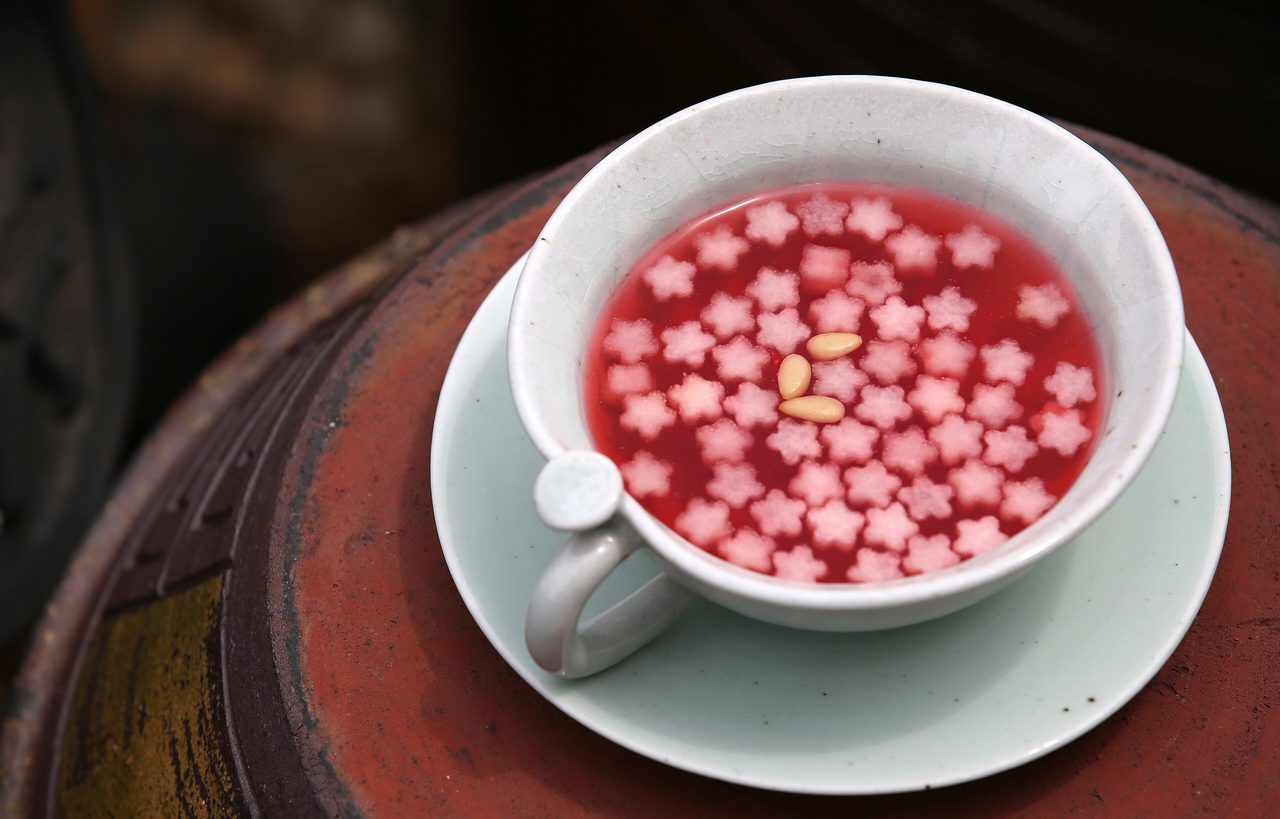
Photo: ayustety · CC BY-SA 2.0
Sikhye (Sweet Rice Drink Made with Barley Malt)
A sweet Korean rice drink. Cooked rice is covered with water steeped from barley malt and kept warm until the malt's enzymes have turned the starch inside each grain into sugar; when the hollowed grains start to float it is done. The grains are lifted out and kept aside, the liquid is boiled once to stop the enzymes and sweetened with sugar, and it is served chilled with the grains and a few pine nuts floating on top.
Ingredients
- Malt water
- barley malt powder (yeotgireum) · sprouted, dried and ground barley200 g
- water · lukewarm3 L
- Rice
- short-grain rice · some glutinous rice may be mixed in300 g
- To finish
- sugar · 100-200g, to taste150 g
- ginger · thinly sliced; optional1 knob
- pine nuts · to float on top1 tbsp
- jujubes · pitted and cut into fine strips; optional2
Steps
- ⏲ 30 min
Stir the malt powder into 3L of lukewarm water and leave it 30 minutes, then rub it hard with your hands and strain it through a fine sieve. Discard what stays in the sieve.
- ⏲ 60 min
Leave the strained water to stand for 1 hour or more so the cloudy sediment settles. Pour off only the clear water above it and throw the sediment away; stirred back in, it makes the drink murky.
- ⏲ 30 min
Rinse the rice, soak it 30 minutes and cook it with a little less water than usual, so it comes out firm. The grains must stay whole and separate rather than turning mushy.
Put the rice in a rice cooker, pour the clear malt water over, stir once and set it to keep warm. Do not press cook — boiling kills the enzymes and the rice will never sweeten.
After 4-6 hours, when grains start rising to the surface a few at a time, it is done. Press one between your fingers: it should feel hollow, little more than a skin.
Lift the grains out with a sieve and rinse them two or three times in cold water. Drain and keep them in a covered container in the fridge.
- ⏲ 10 min
Pour the remaining liquid into a pot with the sugar and ginger and bring it to the boil over high heat. Skim off the foam and boil 10 minutes more over medium heat; this boil is what stops the conversion. Taste and add sugar if needed.
Remove the ginger, cool, and chill in the fridge. To serve, put a spoonful of grains in each cup, pour the sikhye over and float a few pine nuts and jujube strips on top.
Variations
- Pumpkin sikhye (hobak-sikhye): ripe pumpkin, steamed and mashed, goes in with the malt water. It comes out yellow and sweeter.
- With glutinous rice: cooking part of the rice from glutinous rice makes softer grains and a slightly fuller drink.
- Andong sikhye: the same name for a different food. Radish, chilli powder and ginger go in and it turns red; it is closer to a cool, spicy water kimchi than to a sweet drink.
- Not sikhae: sikhae is fish fermented with grain and salt, a salty side dish with nothing in common with this drink but the sound of its name.
- With sujeonggwa: the other sweet drink on a Korean holiday table, cinnamon and ginger water with dried persimmons soaking in it.
More detail and the reasons why (1)
- Dansul and gamju: regional names for sikhye. Dansul can also mean an alcoholic drink fermented with nuruk, so the one made with barley malt is sikhye. Japanese amazake is also rice turned sweet, but it takes its enzymes from rice koji rather than from malt.
Tips
- Lift the grains out before the boil. Boiled with the liquid they swell, break and take on its colour. Rinsed in cold water and added back in the cup, they float white and whole.
- Settle the sediment and discard it. The cloudy layer in malt water is fine powder washed out of the malt. Using only the clear water above it gives a clear amber drink.
- Keep it cold and drink it within three days. Boiled and chilled, sikhye keeps for a few days in the fridge. Store the grains separately or they soak up the liquid and sink.
More detail and the reasons why (5)
- The same enzyme as yeot, used for the opposite purpose. Both rely on amylase from barley malt cutting rice starch into maltose at 55-60°C. Yeot cooks a thick porridge so all the starch is laid out in front of the enzyme, and once it has converted, squeezes the grains out and throws them away. Sikhye needs its grains, so it cooks firm rice rather than porridge, and the enzyme hollows each grain while the grain keeps its shape (the water ratio from cooking rice, set on the low side).
- The floating grain is the doneness sign and the garnish. A grain whose starch has been turned into sugar and carried off is light enough to rise. So when a few start floating, it is done, and those grains are what floats in the cup. What yeot throws away is what sikhye shows off.
- There is a time not to boil and a time to boil. Bring it to the boil even once while it is converting and the enzymes die; it will never sweeten. Once it has converted, it is boiled on purpose: that stops the conversion where it is and takes off the raw smell of the malt. Unboiled sikhye turns sour quickly.
- Sugar goes in at the end. The maltose the malt makes is about a third as sweet as sugar (what sugar does), so the converted liquid is less sweet than you expect and is adjusted with sugar during the boil. There is no reason to add it earlier: the enzyme's job is to cut starch, not to set the sweetness.
- Pumpernickel is the case where the grain brings its own enzyme. Rye dough makes sugar with its own amylase and spends it on colour. Sikhye brings the enzyme in from outside, from sprouted barley.
The basics behind this dish
- Eggs: Coagulation Temperatures and What They DecideWhite sets at 62°C, yolk at 68°C. Those two numbers explain scrambled eggs, boiled eggs, steamed custard and crème anglaise all at once.
- Why Sauces Split: Emulsions and Pan SaucesA cream sauce breaking and a carbonara scrambling are the same failure. Temperature and emulsifiers — plus how to bring a split sauce back.
- Knife Skills: Grip, Cuts, and Why Size MattersHow you hold the knife matters more than how fast you cut. The pinch grip, the claw hand, and why uniform size is a cooking decision rather than a cosmetic one.
More of the same kind


More from this country


Sign in to edit.
Written with AI · how we check it · Edit history
https://cookiki.com/en/r/sikhye · cookiki · User contributions are licensed under CC BY-SA 4.0.