
Kama (Roasted Grain Flour Whipped with Kefir)
Estonia's grain flour and the dessert made from it: barley, rye, oat and pea roasted whole, then milled, then whisked into kefir until it holds soft peaks. The point of the flour is that it has already been cooked. Its starch is dextrinised before it is ever milled, so it hydrates in cold liquid and needs no oven at any stage — which is why it was carried on journeys. Dasik uses roasted flour too, but binds it with honey and the pressure of a mould; here the liquid is the binder.
Ingredients
- Kama flour (if roasting your own)
- pearl barley100 g
- rye grain100 g
- oat groats60 g
- dried yellow peas · where the protein in kama comes from40 g
- The dessert (kamavaht)
- kama flour · shop-bought kama starts here80 g
- kefir · or 200ml plain yoghurt loosened with 200ml milk400 ml
- double cream · cold100 ml
- sugar30 g
- salt1 pinch
- To serve
- strawberry or lingonberry jam4 tbsp
- seasonal berries · blueberries, raspberries100 g
Steps
- ⏲ 10 min
Rinse the barley, rye, oats and peas separately and dry them completely. Each grain roasts at its own speed — roast them together and the oats scorch before the peas are ready.
- ⏲ 10 min
Dry-roast one grain at a time over medium-low heat, stirring constantly, until it darkens a shade and smells nutty: 8-10 minutes for barley and rye, about 6 for oats, about 12 for peas.
- ⏲ 4 min
Cool completely, then grind to the fineness of flour. Ground warm, the grains give up oil and clump.
- ⏲ 3 min
Sieve twice, regrinding whatever stays behind. That is kama flour; airtight, it keeps for months.
- ⏲ 2 min
Pour the kefir into a bowl and whisk the kama in gradually, through a sieve. Tipped in at once it forms lumps, and those lumps do not come out.
- ⏲ 20 min
Whisk in the sugar and salt and leave it 20 minutes. The flour drinks the liquid and the mixture thickens.
- ⏲ 3 min
Whip the cold cream separately only to soft peaks. Whipped stiff, it turns the kefir mixture heavy.
- ⏲ 2 min
Fold the cream into the kama mixture in two additions with a spatula. Fold, do not stir.
- ⏲ 1 min
Spoon into bowls, run a line of jam over the top and scatter the berries. Good at once, firmer after an hour in the fridge.
Tips & Variations
Variations
- Talkan / talkkuna: the same thing under other names across a wide band — talkkuna in Finland, talkan or tolqon in the Turkic languages, tolohkna in the Võro-speaking south of Estonia. The Finnish version steams the grain first, mills it, and roasts it last, which gives a duller aroma and a coarser texture.
- The grain ratio: barley usually carries half or more of it. Oats are sometimes replaced with wheat flour, and black beans are sometimes added. Do not drop the peas — a good share of the savoury depth is theirs.
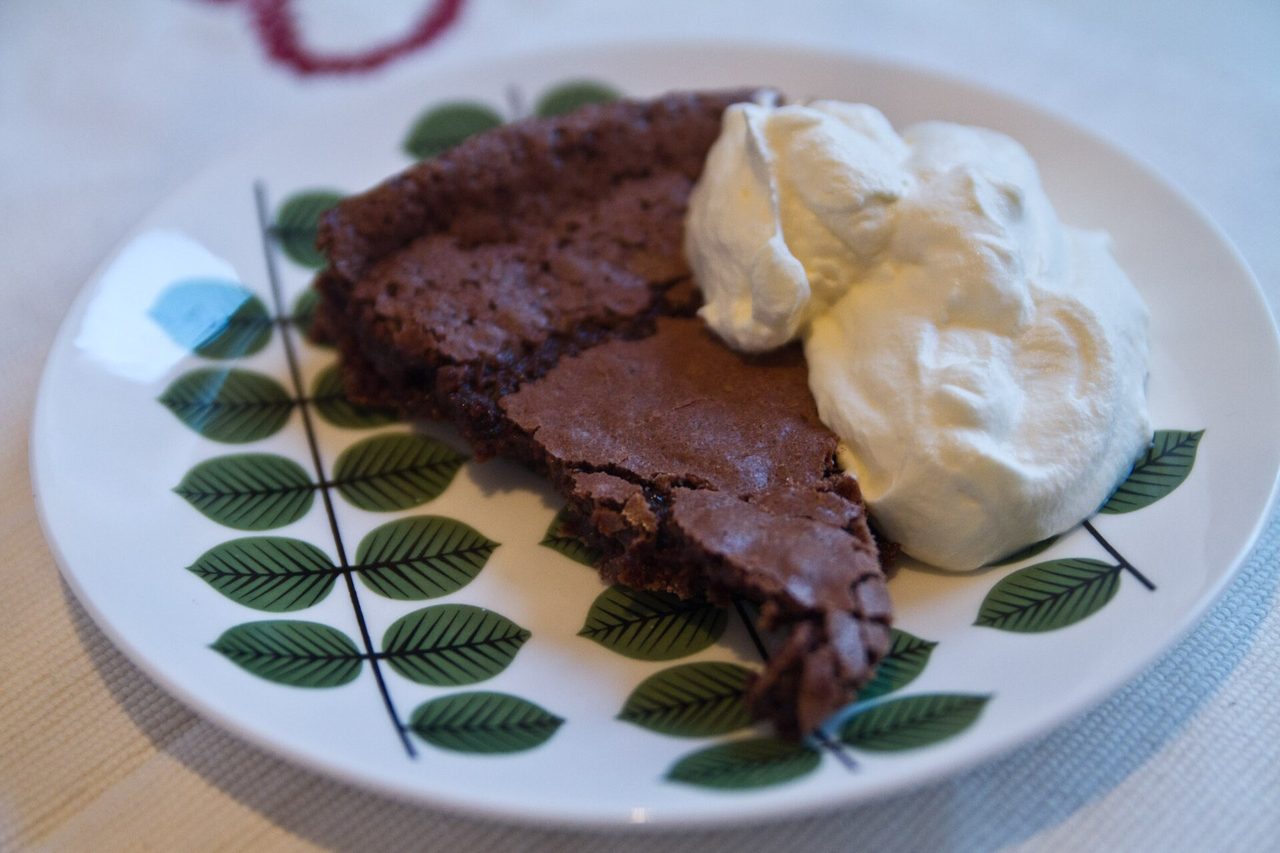
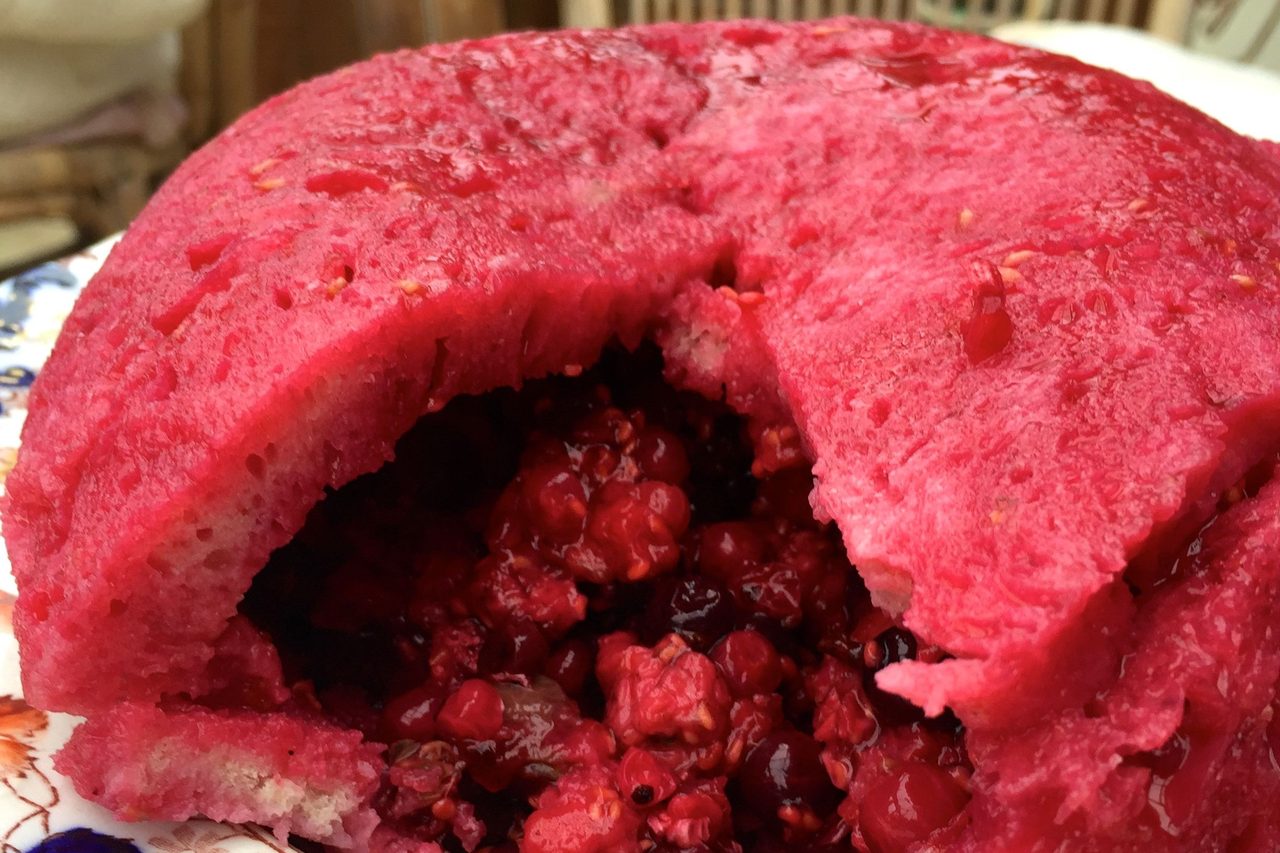
- As breakfast: the everyday form is not a dessert at all, just kama stirred into milk or kefir with sugar and berries. The photograph is kamavaht, the whipped version with cream folded through.
- Beside dasik: both confections start from roasted flour. Dasik is blunt that raw flour will not do, and then binds it with honey's viscosity and the pressure of a carved mould, with no liquid anywhere. Kama takes the same premise in the opposite direction: the liquid is the binder.
- Against mohinga: mohinga dry-toasts chickpea flour too. But it toasts for aroma and then whisks the result into broth and boils it. With kama, the roasting is the cooking.
Tips
- Why it does not need cooking. Choosing flour explains flour through protein. Kama has no intention of building gluten; the interesting part is its starch. Roasting whole grain breaks starch down into dextrins and sets some of it gelatinised, so stirred into cold kefir it tastes cooked. Wheat flour treated the same way tastes exactly as raw as it is.
- Compare it with a roux and the direction reverses. Thickening a sauce cooks flour in butter to lose the raw taste and pays for it in thickening power — which is why a brown roux thickens less than a white one. Kama pays the same price while roasting. The difference is that kama was never trying to thicken anything, so the loss costs it nothing.
- Sieve the flour in, and put the flour into the liquid. Liquid poured onto flour wets the outside and seals a dry core inside the lump. Douhua pours soy milk onto the coagulant rather than the reverse, which looks like the same instruction backwards — but that is about how fast two things meet, and this is about the order in which one of them gets wet.
- The roast is the whole flavour. One shade darker is nutty; two is bitter. Scorched grain cannot be recovered, and kefir's sourness does not cover it.
- Why kefir rather than milk. Milk works and tastes flat. Kama brings savoury depth and neither sweetness nor acid, and balancing flavour is the reason the sour dairy matters: without acid the bowl has nothing to push against. The jam is there for the same reason more than for the sugar.
- It needs the full 20 minutes to thicken. Add more flour because it looks thin when freshly mixed and twenty minutes later the spoon will stand up in it.
The basics behind this dish
- Soaking: Beans, Rice, and Everything DriedWhen beans refuse to soften no matter how long you boil them, and when the soaking water is an ingredient rather than waste. The old rule about salt is wrong.
- Choosing Flour: Protein Is the Whole StoryBread, plain and cake flour differ in one number: protein. What that number decides, how to fake one from another, and the things sold beside flour that are not flour at all.
- Eggs: Coagulation Temperatures and What They DecideWhite sets at 62°C, yolk at 68°C. Those two numbers explain scrambled eggs, boiled eggs, steamed custard and crème anglaise all at once.
More of the same kind


Sign in to edit.
AI-drafted, editor-reviewed · edits: 0 ·Edit history
https://cookiki.com/en/r/kama · cookiki · User contributions are licensed under CC BY-SA 4.0.