
Kiritanpo (Grilled Rice Tubes Simmered in Chicken Hotpot)
An Akita hotpot: cooked rice pounded until about half the grains are broken, pressed onto skewers as tubes and grilled, then simmered briefly in chicken broth with chicken, burdock, maitake and Japanese parsley.
Ingredients
- Kiritanpo
- short-grain (non-glutinous) rice · cooked a little firm360 g
- salted water · for your hands1 bowl
- thick wooden skewers or round wooden chopsticks4
- Hotpot
- chicken stock1.2 L
- boneless chicken thigh · bite-sized300 g
- burdock root · shaved, kept in water1
- maitake mushrooms · torn150 g
- leek or thick spring onion · sliced on the bias1
- seri (Japanese parsley) or watercress · 5cm lengths1 bunch
- shirataki noodles · blanched; optional150 g
- soy sauce4 tbsp
- sake2 tbsp
- salt0.5 tsp
Steps
Cook the rice with slightly less water than usual so it comes out a little firm.
While it is hot, pound it in a mortar until only about half the grains are broken. Without a mortar, put it in a plastic bag and beat it with a rolling pin.
Divide into four. Wet your hands with salted water, wrap the rice round the end of a skewer and stretch it into a tube about 15cm long, then roll it on a board to even the thickness.
- ⏲ 25 min
Grill, or roast at 230°C, turning, until golden all over: 20-30 minutes.
Once it has cooled a little, twist out the skewers and cut each tube on the diagonal into three or four pieces, or tear it by hand.
- ⏲ 10 min
Bring the stock to the boil with the chicken and burdock, skim, and simmer 10 minutes. Season with the soy sauce, sake and salt.
- ⏲ 5 min
Add the maitake, shirataki, leek and kiritanpo and simmer gently for 5 minutes.
- ⏲ 30 sec
Lay the seri on top and serve as soon as it wilts.
Variations
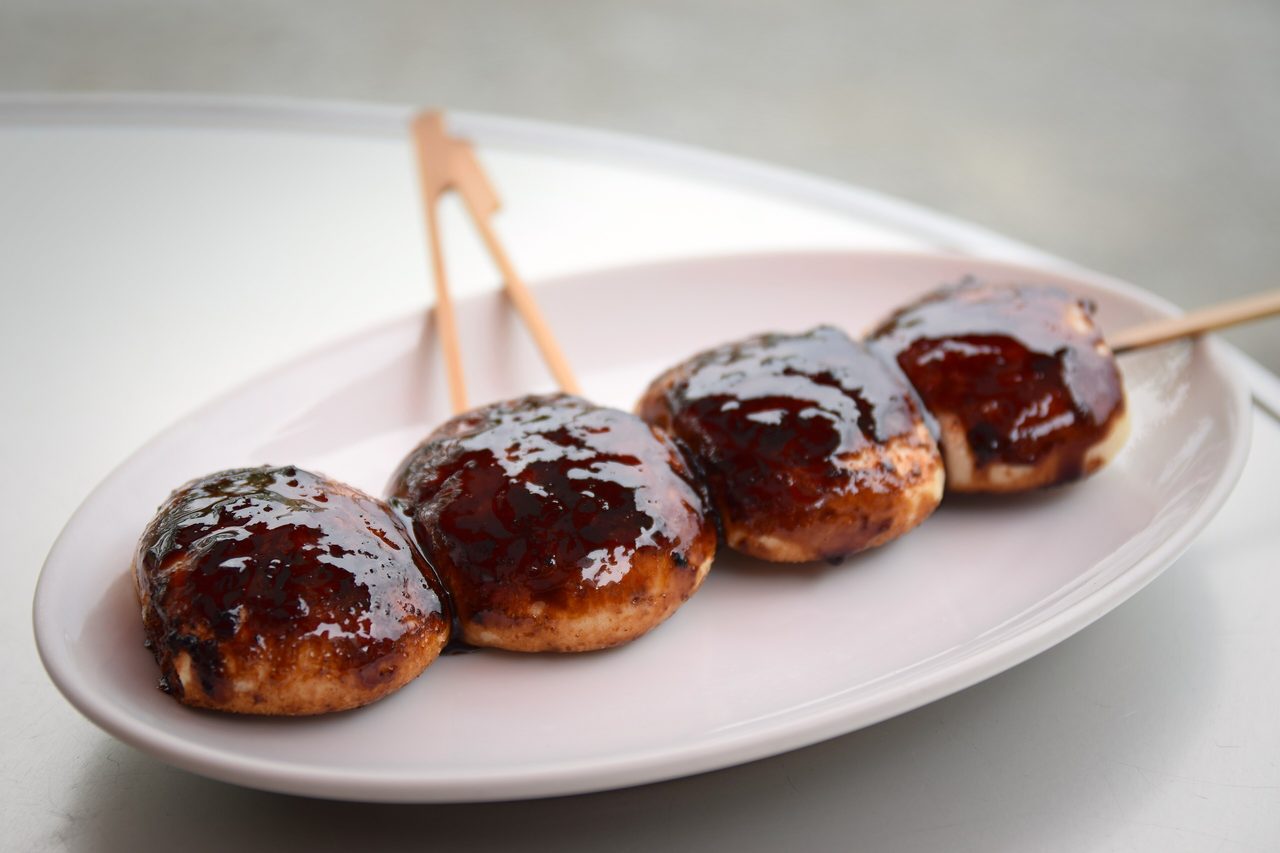
- Miso-tsuke tanpo. Spread miso on the grilled tanpo, or spread it and grill again. Miso on a skewer over the fire is the same idea as dango and dengaku.
- Damako mochi. The same rice rolled into ping-pong balls and put into the pot ungrilled.
- Without shirataki or shiitake. The Yamada style of Odate uses neither; Kazuno adds shirataki.
- With new-crop rice. Around Kazuno and Odate, gatherings are held to cook kiritanpo hotpot when the new rice comes in.
Tips
- Pound only until about half the grains are broken. That is why it is called hangoroshi, "half-killed".
- It is ordinary rice, not glutinous rice.
- Wet your hands with salted water. The rice will not stick to them.
- Roll it on a board once it is on the skewer. An even thickness grills evenly.
- Simmer it only briefly in the pot.
- The seri goes on last.
More detail and the reasons why (2)
- Crushed on purpose, the opposite of onigiri. Onigiri is pressed lightly so the grains do not burst. Kiritanpo pounds the rice until half the grains are broken and then spreads it round a skewer as a tube. It is not taken as far as a smooth rice cake like the garaetteok in tteokguk either, so the grains still show on a cut face. And it goes into the pot already grilled for 20-30 minutes and golden on the outside.
- It is said to come from leftover rice. Japanese Wikipedia says kiritanpo grew out of finding a use for cold rice, and relates a story of Matagi hunters coming down from the mountains who crushed their leftover rice onto sticks, grilled it, and either simmered it with the game birds, wild herbs and mushrooms they had brought back or ate it spread with miso. A survey of shop-bought hotpot sets found the same seven things in every one: kiritanpo, chicken, leek, seri, burdock, maitake and the soup.
The basics behind this dish
- Browning and the Maillard ReactionMeat fails to brown for one of three reasons: it is wet, the pan is cool, or you put too much in at once. Plus how the brown film stuck to the pan becomes your sauce.
- Cooking Meat: Temperature, Resting, and Cutting Against the GrainDoneness is a core temperature, not a number of minutes. What resting actually does, how to handle a thick cut, and why the direction you slice changes the texture.
- Knife Skills: Grip, Cuts, and Why Size MattersHow you hold the knife matters more than how fast you cut. The pinch grip, the claw hand, and why uniform size is a cooking decision rather than a cosmetic one.
More of the same kind


More from this country


Sign in to edit.
Written with AI · how we check it · Edit history
https://cookiki.com/en/r/kiritanpo · cookiki · User contributions are licensed under CC BY-SA 4.0.