
Photo: KaMan · CC BY-SA 4.0
Salt-Rising Bread
The white loaf the Appalachian settlers baked before commercial yeast, leavened by bacteria rather than by yeast. This site had three ways to inflate a dough — yeast, an acid meeting a base, and trapped steam — and this is the fourth, and the only bread here whose leavening organism is a bacterium. The selection tool is temperature. Fermentation basics gives three bands, 20-25°C, 10-15°C and below 4°C; this starter is held at 38-45°C, above all three, because that is the band where wild yeast and lactic bacteria lose and Clostridium wins. Having been picked out that way, the dough then rises back down at about 22°C. Hot to select, cool to rise.
Ingredients
- The starter (the day before)
- milk · scalded, taken to just below the boil250 ml
- coarse cornmeal · the polenta grind60 g
- sugar15 g
- salt · not for flavour but for the ferment — see below5 g
- potato · optional; peeled and thinly sliced, and it can replace the cornmeal1
- The sponge
- lukewarm water250 ml
- strong white flour250 g
- The dough
- strong white flour · a little more if it needs it400 g
- salt8 g
- butter · softened25 g
- sugar10 g
- butter for the tin10 g
Steps
- ⏲ 15 min
Scald the milk — take it to just below the boil — and pour it over the cornmeal, sugar and salt in a warm jar, stirring. Add the sliced potato now if you are using it. Let it fall to 45°C before you go on; hotter and you kill the bacteria too. No yeast goes anywhere near this.
Hold the jar at 38-45°C for 6-16 hours. An oven proving setting, a yoghurt maker, a cool box with a pan of warm water in it — anything that holds the band. This temperature is the whole bread: at 30°C the wild yeasts win, and much past 50°C nothing grows at all. Do not attempt it without a thermometer.
Judge it by smell. A layer of foam on the surface and a strong cheesy, soured-milk smell mean it is working. The failure list in fermentation basics says that slimy with a rotten smell means failed, and this is where the two part company: what you want here is a sharp cheesy smell. Sour, musty or mouldy, or no foam at all after 16 hours, and you throw it out and start again. The cause is nearly always the temperature.
- ⏲ 120 min
Strain the cornmeal and potato out (leaving them in is fine too) and stir the liquid with 250ml lukewarm water and 250g flour to a thick batter. Cover it and hold it at 30-32°C for two hours, until it domes and bubbles.
- ⏲ 10 min
Work in the 400g of flour, the salt, the sugar and the softened butter, and knead 8-10 minutes. Keep it slightly firmer than a yeast dough.
- ⏲ 120 min
Shape it and put it into a buttered loaf tin. Cover it and leave it at room temperature, around 22°C, for two to three hours, until it has grown by about half. Do not warm it here — taken back up to incubation temperature it slackens rather than gassing again. It is far slower than a yeast dough, and that is normal.
- ⏲ 40 min
Bake at 190°C for 35-40 minutes. Tap the base; it should sound hollow.
- ⏲ 60 min
Turn it out onto a rack and cool it completely. Cut warm, the close crumb compresses.
Tips & Variations
Variations
- One of four ways to inflate a dough on this site. Baguette uses commercial yeast, Irish soda bread an acid meeting a base, chapati trapped steam — and this one bacteria. It is the only one of the four that uses a living organism that is not a yeast.
- Jeungpyeon is the closest pair. That one also ferments for gas rather than for keeping or for flavour, with the acid as a by-product. The difference is who does the work: jeungpyeon pours in makgeolli and brings its yeast with it, while this adds nothing and uses temperature to pick one organism out of what is already on the flour and the cornmeal. Fermentation basics calls fermenting "rigging a competition"; this bread does that literally.
- The safety logic is natto's. As that page already sets out, fermentation basics says safety comes from the acidity dropping fast rather than from cleanliness — and natto's pH climbs instead, its safety resting on a pure culture on sterilised beans. Nothing acidifies here either. The difference is that natto buys its culture and this has none, and that the oven kills everything at the end.
- A potato starter: slices of raw potato steeped in the milk in place of the cornmeal is the commoner American method. It uses the bacteria on the potato, works more reliably, and smells considerably worse.
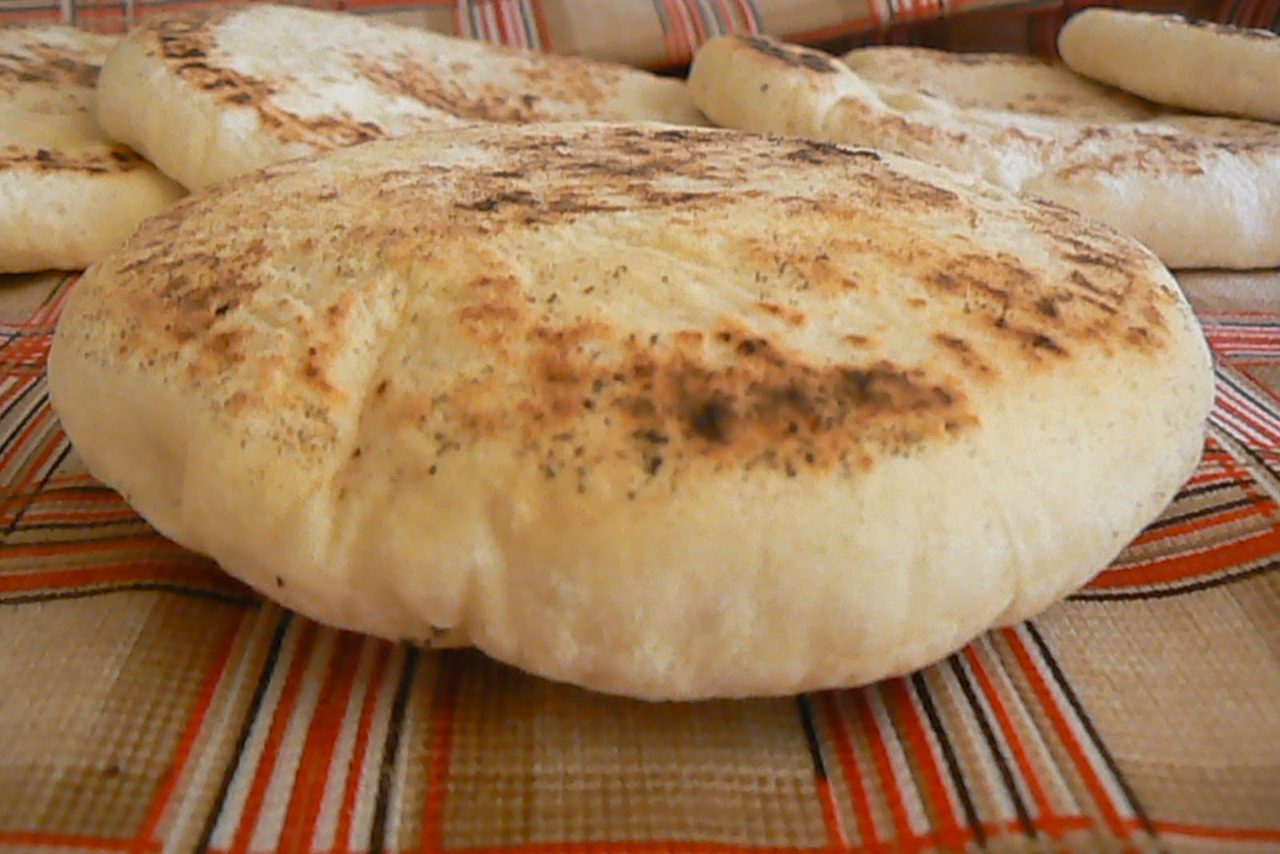
- A close crumb is correct. Bacteria make gas more slowly and less of it than yeast does, and ko.wikipedia defines this bread as a dense white one. The very fine, tight crumb showing through the split side of the loaf in the photograph is what it should look like; do not expect anything like the open holes of a baguette.
- It is a toasting bread. Strong-smelling and close-textured, it is far better toasted than fresh. A handful of bakeries in the American midwest and east keep it going; it is best known in West Virginia and is also made in New York State and western Pennsylvania.
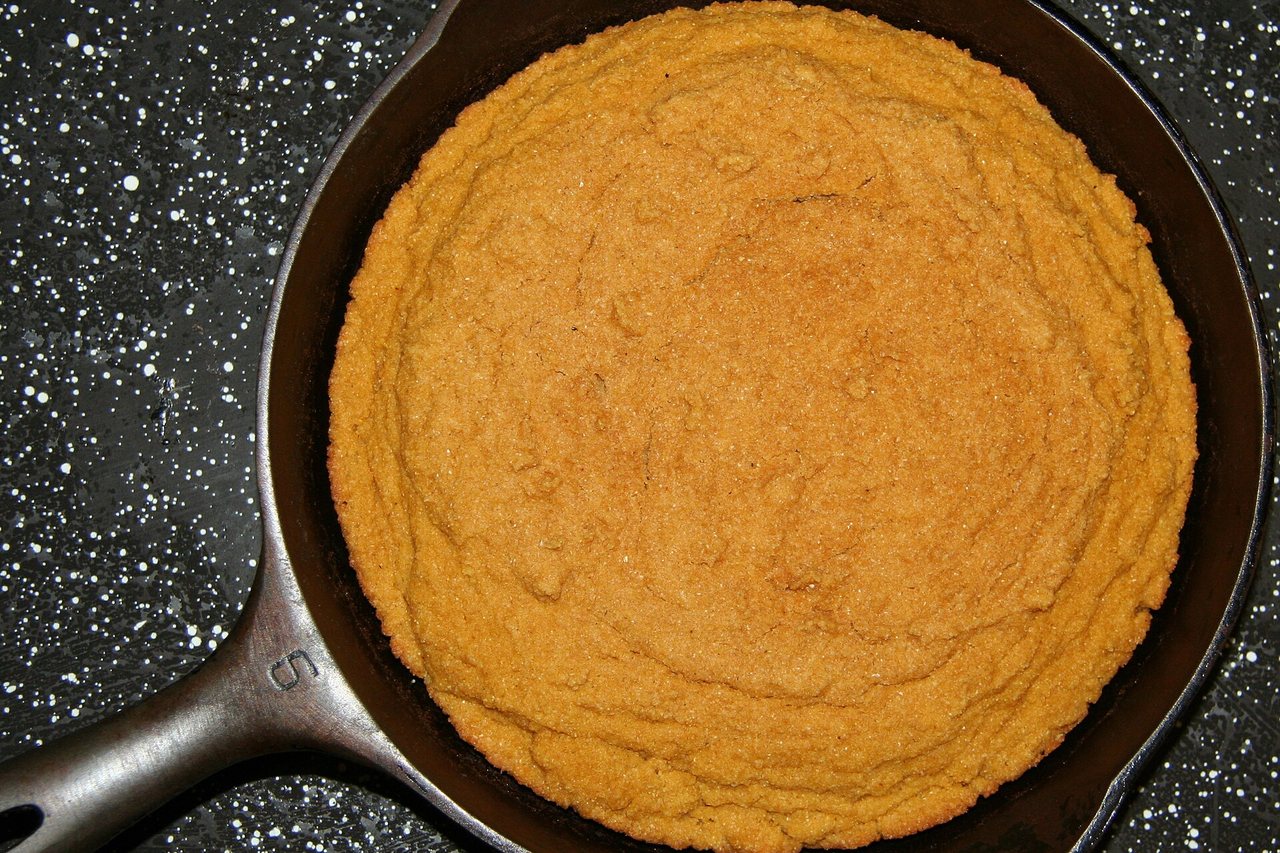
- Its relation to cornbread: here the cornmeal is not the body of the bread but food for the bacteria. The same ingredient is the whole loaf in one place and the starting point of a ferment in the other.
- The name: one account has it that the salt is the raising agent; another that the dough bowl was stood on a heated block of rock salt to hold its temperature overnight. The second points straight at what is actually hard about this bread.
Tips
- A thermometer is the only tool that matters. Holding 38-45°C is the whole bread, and it is nearly always the cause when one fails.
- Keep yeast away from it. A yeast dough working in the same kitchen can take the starter over. Holding the yeasts back is also why a little salt goes in.
- Trust the smell. A sharp cheesy smell is right; sour, musty or mouldy is a failure. Hongeo-hoe draws the same distinction about a different smell.
- Prove the shaped loaf cool. Warmed back up to incubation temperature it only slackens.
- Slow is normal. More than twice as long as a yeast dough. Adding yeast because it looks stuck makes a different bread.
- It is safe. The Clostridium perfringens strains involved are non-toxigenic, and the bake kills everything in any case.
- It stales fast. Almost no fat and a close crumb means it firms up within a day. Slice and freeze it, and toast from frozen.
The basics behind this dish
- Fermentation Basics: Salt, Temperature, and AirFermentation is controlled spoilage. You control it with exactly three levers — salt, temperature, and keeping air out — and the failure signs are unambiguous.
- Dough and Gluten: When to Build It and When to Avoid ItThe same flour and water becomes a dumpling wrapper or a tender pancake. The difference is whether you built gluten or avoided it — and kneading and resting do different jobs.
- Heat Control: Preheating, Oil, and Reading the PanThe same ingredients become a different dish depending on pan temperature. When to add the oil, how to read heat by sound, and which dishes want low heat instead.
More of the same kind



More from this country


Sign in to edit.
AI-drafted, editor-reviewed · edits: 0 ·Edit history
https://cookiki.com/en/r/salt-rising-bread · cookiki · User contributions are licensed under CC BY-SA 4.0.