
Photo: Paul Keller · CC BY 2.0
Pollo al Ajillo (Garlic Chicken)
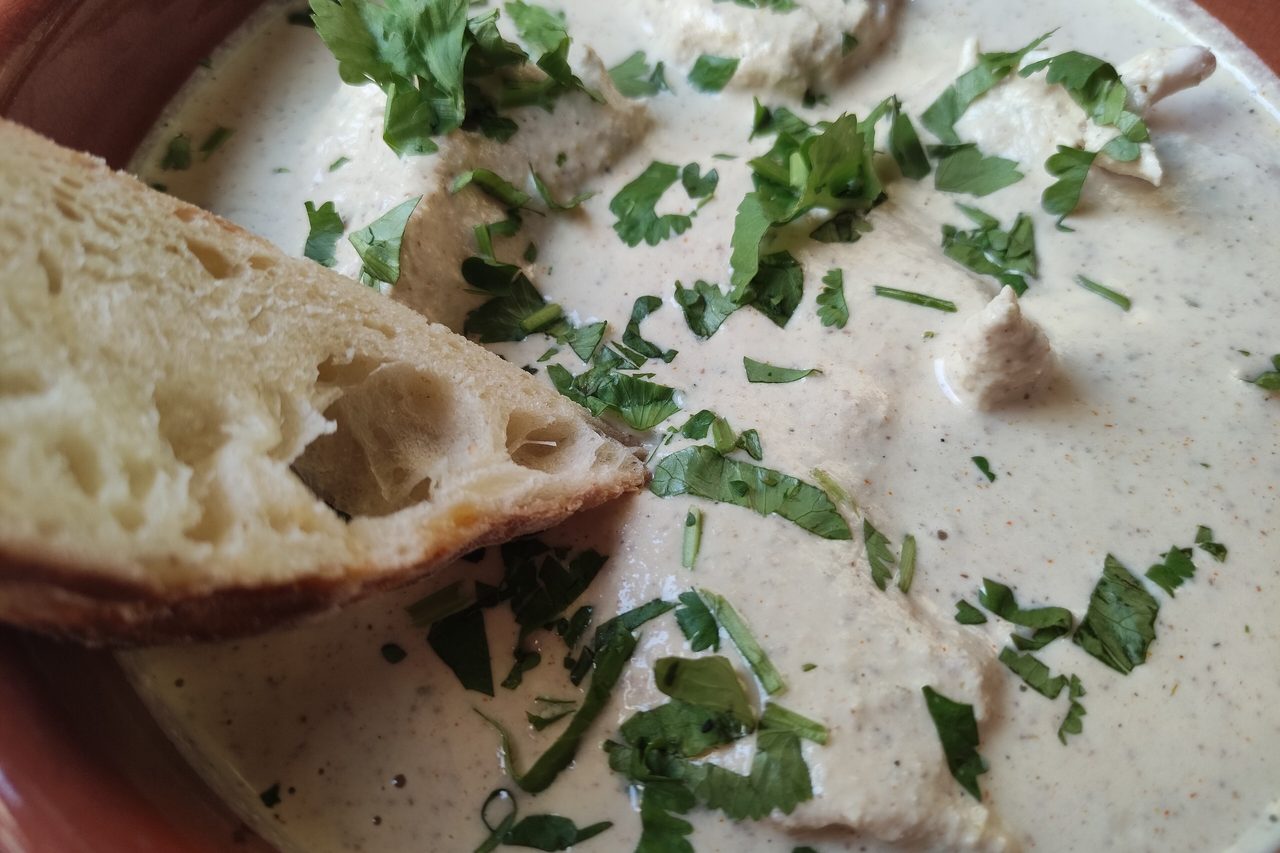
Bite-size chicken browned in olive oil with plenty of garlic and finished with white wine — the Spanish garlic chicken, the poultry cousin of gambas al ajillo. One pan, and irresistible with bread to mop up the sauce.
Ingredients
- Chicken thighs · bite-size pieces600 g
- Garlic · whole or sliced10 cloves
- Olive oil5 tbsp
- White wine · or sherry0.5 cup
- Bay leaf1
- Paprika · optional0.5 tsp
- Dried chili · optional1
- Salt & pepper · to taste
- Parsley · to garnish
- Baguette · to serve
Steps
- ⏲ 2 min
Season the chicken with salt and pepper.
- ⏲ 3 min
Heat olive oil in a pan and gently fry the garlic over low heat until golden and fragrant (don't burn it).
- ⏲ 6 min
Turn up the heat and brown the chicken on all sides.
- ⏲ 6 min
Add the white wine, bay leaf, paprika, and dried chili, and simmer until the alcohol cooks off and the sauce reduces a little.
- ⏲ 1 min
Season with salt and pepper and scatter parsley. Serve with baguette to soak up the sauce.
Tips & Variations
Variations
- Sherry version: Use Spanish sherry instead of white wine for deeper flavor.
- With potatoes: Griddle thin potato slices (patatas) alongside.
- Spicier: Add more dried chili.
- Herbed: Add rosemary and thyme.
Tips
- Fry the garlic low and slow for aroma, but don't burn it — burnt garlic turns bitter.
- Brown the chicken well for the best flavor.
- After the wine goes in, scrape the pan to dissolve the browned bits into the sauce.
- The sauce is rich — baguette is a must.
- The garlic goes in before the meat because the oil is the dish. Cooking oils says of this dish's sibling that in aglio e olio and gambas al ajillo the oil "is the sauce, not the cooking medium" — which is why they use extra-virgin and keep it at medium heat or below. Five tablespoons for 600g of chicken is not a frying quantity; it is the quantity you would use to make a sauce. So the first three minutes are an infusion, not a base: you are moving the garlic's aroma, which is fat-soluble, into the fat you are going to eat.
- And that is where this dish parts from gambas al ajillo. A prawn cooks in two minutes, so the oil never has to leave low heat — the garlic sits in it from start to finish. Chicken has to brown, which means the pan must go up to a temperature the garlic cannot survive; that is the one extra step this recipe has and the sister dish does not. The Spanish answer is simple: lift the golden garlic out with a slotted spoon before the heat goes up, and return it at the end with the wine. It is not in the method above, and it is the single thing most likely to rescue a batch.
- Why burnt garlic is bitter rather than merely dark. Blooming spices sorts garlic by heat: gentle and it is sweet and nutty, browned it is deep, past that it is acrid, and the same guide notes that garlic and ginger burn much faster than onion. Sliced garlic is low in water and high in sugars, so it goes from golden to bitter in seconds rather than minutes. Watch the colour, not the clock.
- The wine is doing two jobs. It lifts the fond — the browned residue that browning calls the point of searing at all — and it reduces into what little liquid the dish has. Cooking alcohol is worth reading on the first of them: simmering does not drive all the alcohol off, so give it a real minute or two of bubbling rather than a splash and straight to the plate.
The basics behind this dish
- Browning and the Maillard ReactionMeat fails to brown for one of three reasons: it is wet, the pan is cool, or you put too much in at once. Plus how the brown film stuck to the pan becomes your sauce.
- Cooking Meat: Temperature, Resting, and Cutting Against the GrainDoneness is a core temperature, not a number of minutes. What resting actually does, how to handle a thick cut, and why the direction you slice changes the texture.
- Knife Skills: Grip, Cuts, and Why Size MattersHow you hold the knife matters more than how fast you cut. The pinch grip, the claw hand, and why uniform size is a cooking decision rather than a cosmetic one.
More of the same kind


More from this country


Sign in to edit.
AI-drafted, editor-reviewed · edits: 0 ·Edit history
https://cookiki.com/en/r/pollo-al-ajillo · cookiki · User contributions are licensed under CC BY-SA 4.0.