
Photo: Kritzolina · CC BY-SA 4.0
Ftira (Ring Bread Stuffed with Tuna and Capers)
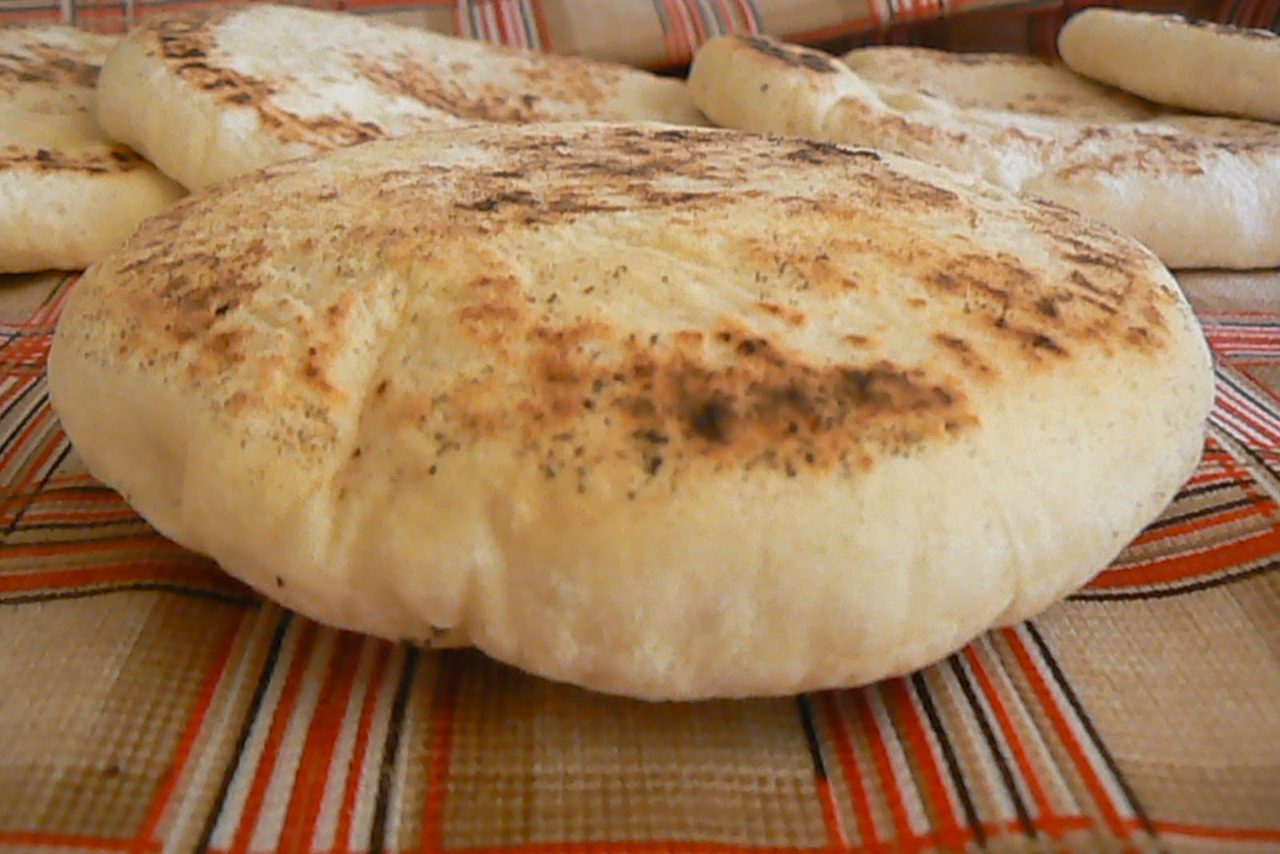
Malta's national food, and what UNESCO listed in 2020 is the craft of making the bread. A sourdough is pressed flat by hand with a hole through the middle and baked, so the finished loaf is two thick crusts with almost no crumb between them. That is the whole point of it. The cut faces are rubbed with a ripe tomato until the bread is stained and wet and then doused in olive oil — and every other sandwich on this site does the opposite. A jambon-beurre butters the bread edge to edge to keep the filling's moisture out of the crumb. A ftira lets the moisture in on purpose.
Ingredients
- The dough (two 22cm loaves)
- strong white flour400 g
- semolina · coarse; use more flour if you have none100 g
- sourdough starter · active; see Variations if you have none150 g
- water · lukewarm280 ml
- salt10 g
- olive oil · into the dough1 tbsp
- semolina · for dusting2 tbsp
- The filling (ftira biż-żejt)
- tinned tuna · in oil; use the oil too2 tins
- ripe tomatoes · two to rub in, one sliced3
- kunserva · Malta's thick tomato paste; ordinary paste works2 tbsp
- capers · salted or in brine, rinsed2 tbsp
- black olives · stoned and halved60 g
- red onion · sliced very thin0.5
- olive oil4 tbsp
- mint leaves · or basil6
- boiled potato · thinly sliced; optional1
Steps
- ⏲ 20 min
Mix the flour, semolina, starter and water to a rough mass and leave it 20 minutes. Add the salt and the oil and knead 8 minutes. This is a low-hydration dough, so it is stiff at first, and that is correct.
- ⏲ 240 min
Cover and prove 4 hours. Sourdough takes its time, and it does not need to double — about half again is enough (fermentation basics).
- ⏲ 30 min
Divide in two, shape into balls and rest 30 minutes.
- ⏲ 10 min
Use no rolling pin. On a board dusted with semolina, press each ball out with your palm and fingertips to about 22cm across and 1.5cm thick. Then push a hole through the middle with your fist. The point is to stop the centre rising, which is why a finished ftira is two crusts with almost nothing between them.
- ⏲ 45 min
Cover with a cloth and prove 45 minutes. Heat the oven to 250C with a heavy tray or a baking stone inside it (what your oven is doing).
- ⏲ 14 min
Slide them onto the hot tray and bake 14 minutes, until deep gold and hollow when tapped. Cool completely on a rack. Cut warm, that thin crumb compresses.
- ⏲ 5 min
Split a ftira horizontally into two rounds. Halve a ripe tomato and rub it hard onto the cut faces — keep going until you are holding only skin, pushing the juice and pulp into the bread. This is the move the whole sandwich turns on.
- ⏲ 2 min
Spread a thin layer of kunserva and pour on the olive oil generously. Be mean here and you get a dry sandwich. Add the oil from the tuna tin as well.
- ⏲ 7 min
Pile on the tuna, the rinsed capers, olives, red onion, sliced tomato and the potato if you are using it, tear the mint over and season. The potato mops up whatever oil the bread did not take.
- ⏲ 20 min
Put the lid on, press it down hard with your hands and leave it 20 minutes for the tomato juice and oil to travel through the crumb. Cut in half and eat it in your hand.
Tips & Variations
Variations
- Gozo ftira: on the sister island it is closer to a pizza than a sandwich — open, topped with thinly sliced potato, or folded over like a calzone. Same dough, different dish.
- Other fillings: sardines, tuna, hard-boiled egg, ġbejniet (Maltese sheep's cheese) and pickled ġbejna are all standard. A kiosk will ask you what you want in it.
- With no sourdough: use 4g of instant yeast instead and cut the first prove to 90 minutes. It rises the same, and with none of the acidity it tastes flatter and stales in a day. The sourdough version is what UNESCO listed.
- The exact opposite of jambon-beurre: that page calls its butter "waterproofing", taken edge to edge to keep the ham's moisture out of the crumb, and banh mi squeezes its pickles dry so the bread stays crisp. A ftira pushes tomato juice and oil into the crumb on purpose.
- Against salade niçoise and brik: tuna, olives, capers and potato are one Mediterranean set. A niçoise places them without mixing, a brik wraps them in paper-thin fried pastry, a ftira presses them into bread.
- What it shares with solyanka: nearly everything in the filling is preserved — tuna in oil, salted capers, olives, reduced tomato. Solyanka uses that as its flavour axis; here it is what makes the thing portable.
Tips
- Cool it completely before cutting. With a crumb that thin, a blade on a warm loaf compacts it and it does not open up again.
- Really rub the tomato. Slicing it on and rubbing it in are two different sandwiches. You are done when you are left holding the skin.
- Rinse the capers. Salted ones go in salty, and there is salt in the tuna and the olives already (salt and seasoning).
- Preheat the tray. A low-hydration dough meeting 250C metal sets its surface at once, and that is where the thick crust comes from.
- The twenty minutes under pressure is cooking time. A ftira is better twenty minutes after it is made than straight away, which is also why Malta wraps one in the morning and eats it at noon.
The basics behind this dish
- Dough and Gluten: When to Build It and When to Avoid ItThe same flour and water becomes a dumpling wrapper or a tender pancake. The difference is whether you built gluten or avoided it — and kneading and resting do different jobs.
- Heat Control: Preheating, Oil, and Reading the PanThe same ingredients become a different dish depending on pan temperature. When to add the oil, how to read heat by sound, and which dishes want low heat instead.
- Knife Skills: Grip, Cuts, and Why Size MattersHow you hold the knife matters more than how fast you cut. The pinch grip, the claw hand, and why uniform size is a cooking decision rather than a cosmetic one.
More of the same kind


Sign in to edit.
AI-drafted, editor-reviewed · edits: 0 ·Edit history
https://cookiki.com/en/r/ftira · cookiki · User contributions are licensed under CC BY-SA 4.0.