
Scaccia (Thin Dough Folded in Layers over Tomato and Cheese)
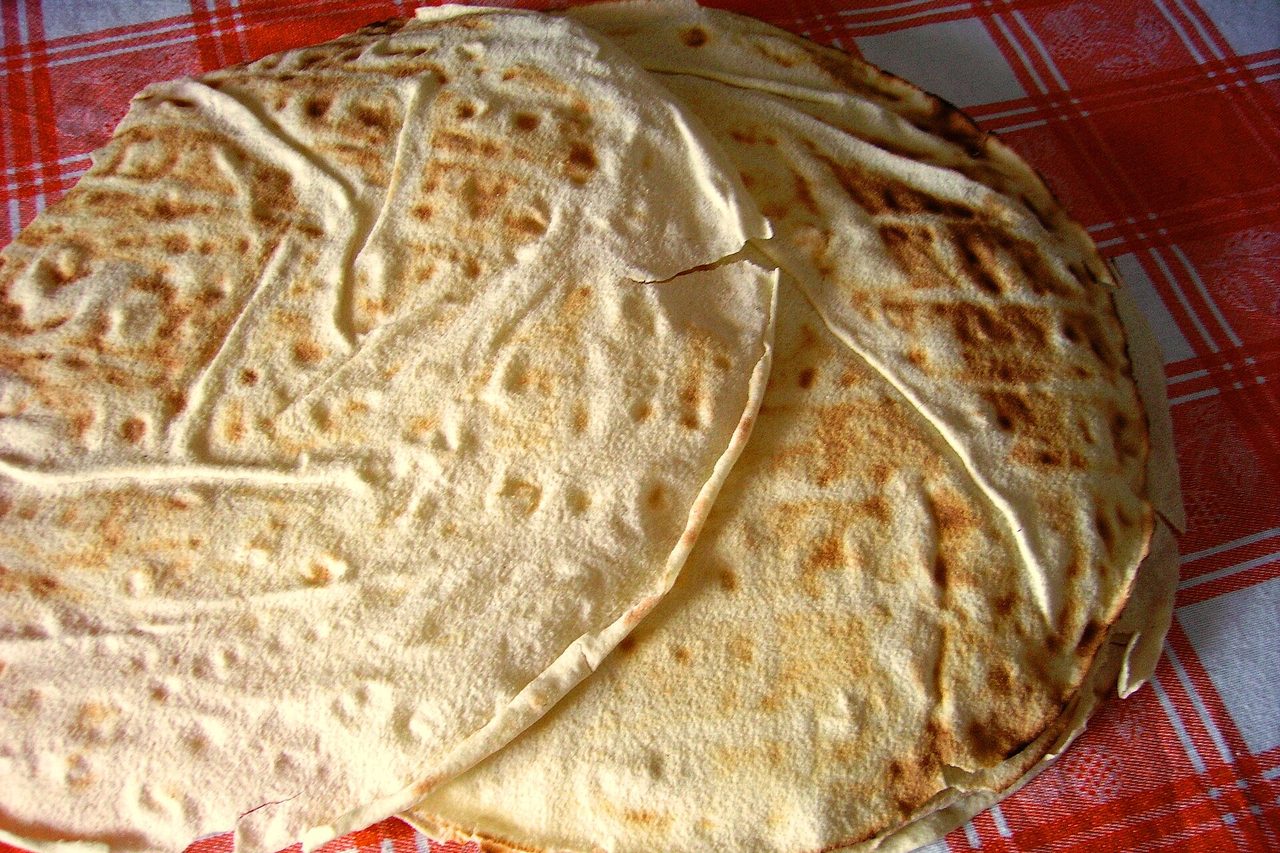
A flatbread from Ragusa in Sicily: a very thin rectangle of dough spread with thick tomato sauce and cheese, folded three or four times and baked. Cut open, dough and filling run in alternating layers. Eaten hot or cold.
Ingredients
- Dough
- finely milled durum semolina (rimacinata)500 g
- lukewarm water300 ml
- dried yeast4 g
- salt10 g
- olive oil2 tbsp
- Filling
- tomato passata500 ml
- garlic1 clove
- caciocavallo or provolone · thinly sliced200 g
- basil1 handful
- olive oil2 tbsp
- salt · to taste
Steps
- ⏲ 120 min
Mix the semolina, yeast, water and oil and knead for 10 minutes, then add the salt and knead 5 minutes more. When smooth, cover and leave until doubled.
- ⏲ 30 min
Meanwhile soften the garlic in the oil, add the passata and simmer gently until thick. Season with salt and let it cool.
Divide the dough in two and roll each on a floured surface into a rectangle of about 40x50cm, thin enough to see through.
Spread a thin layer of sauce over the middle third and add cheese and basil. Fold one side over it, spread more sauce and cheese on top, then fold the other side over.
Fold the ends in the same way to make a flat rectangle and press the edges to seal. Prick the top in a few places with a fork.
- ⏲ 40 min
Set on an oiled tray and bake at 200°C until golden.
Let it rest about 10 minutes before slicing. Serve hot or cold.
Variations
- Ricotta and onion. Fold in ricotta and onion instead of tomato. That is the one on the right of the photograph.
- Tomato and aubergine. Add fried aubergine to the filling.
- Tomato and onion. Baked without cheese.
Tips
- Roll the dough thin enough to see through. Thicker, the layers stay raw in between.
- Cook the sauce down thick. A runny one soaks the dough.
- Spread the filling thinly. A little on every layer.
- Seal the edges well. So the filling cannot leak in the oven.
- Prick the top. Steam escapes and it does not balloon.
- Hot or cold. Cooled, the layers still hold.
More detail and the reasons why (1)
- The filling is what separates the layers. Congyoubing separates its layers with an oil paste and then rolls them flat. Gözleme folds its filling in once and cooks on a griddle. Scaccia folds raw dough over a wet filling three or four times and goes into the oven, so every sheet of dough has to cook between two layers of sauce. That is why the dough is rolled very thin and the sauce cooked down first. Lasagne stacks pasta that is already cooked, so it never has this problem.
The basics behind this dish
- Dough and Gluten: When to Build It and When to Avoid ItThe same flour and water becomes a dumpling wrapper or a tender pancake. The difference is whether you built gluten or avoided it — and kneading and resting do different jobs.
- Heat Control: Preheating, Oil, and Reading the PanThe same ingredients become a different dish depending on pan temperature. When to add the oil, how to read heat by sound, and which dishes want low heat instead.
- Knife Skills: Grip, Cuts, and Why Size MattersHow you hold the knife matters more than how fast you cut. The pinch grip, the claw hand, and why uniform size is a cooking decision rather than a cosmetic one.
More of the same kind


More from this country


Sign in to edit.
Written with AI · how we check it · Edit history
https://cookiki.com/en/r/scaccia · cookiki · User contributions are licensed under CC BY-SA 4.0.