
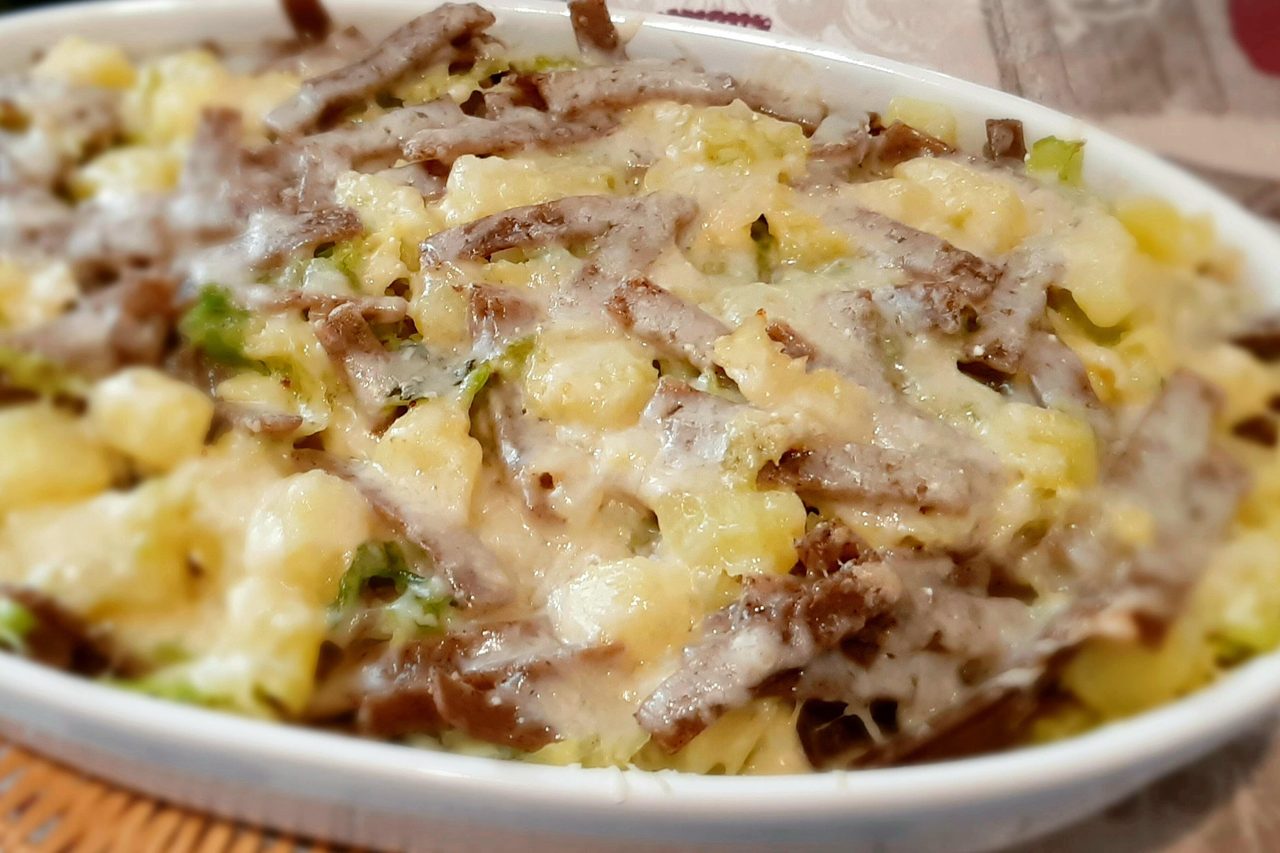
Photo: Federica.tamburini.75 · CC BY-SA 4.0
Garganelli (Comb-Ridged Egg Pasta with Peas and Pancetta)
An egg pasta from Romagna: a thin sheet cut into small diamonds, each wrapped round a thin stick and rolled over a ridged board like a weaver's comb, so the tube carries fine crosswise ridges. Served with peas, shallot and pancetta under plenty of Parmigiano.
Ingredients
- Dough
- flour (Italian 00 or plain)300 g
- eggs3
- Tools
- ridged board (gnocchi board) or a clean new comb1
- thin wooden stick, about 5mm (pencil thickness)1
- Sauce
- pancetta · small dice100 g
- shallot · chopped1
- peas (frozen are fine)200 g
- butter20 g
- Parmigiano Reggiano · grated60 g
- salt and pepper to taste
Steps
- ⏲ 40 min
Break the eggs into the flour and knead 10 minutes to a smooth dough. Wrap and rest 30 minutes.
- ⏲ 20 min
Roll the dough 1mm thin or less and cut 4cm squares. Keep them under a cloth so they do not dry.
- ⏲ 30 min
Set one square on the ridged board as a diamond, lay the stick across the bottom corner and roll it forward, wrapping the dough round the stick. Press the last corner to seal and slide the stick out. The ridges run round the tube.
- ⏲ 30 min
Spread them on a floured tray and leave 30 minutes to dry.
- ⏲ 8 min
Fry the pancetta in a pan until it gives up its fat, add the shallot and soften it. Add the peas and 3 tbsp water and cook 5 minutes.
- ⏲ 4 min
Boil the garganelli in salted water for 3-4 minutes, drain into the pan and toss with the butter, a little cooking water and half the Parmigiano. Serve with the rest of the cheese.
Variations
- With stridoli and pancetta. The Romagna wild green stridoli fried with pancetta and tossed through. This is the version in the photograph on this page. Young spinach stands in.
- With Romagna ragù or sausage.
- In broth. Small garganelli are served in meat broth. The garganelli of the legend were first cooked in capon broth.
- Maccheroni al pettine. Emilia's larger relative, made the same way.
Tips
- Roll the sheet thin, 1mm or less. Where it overlaps it is twice as thick.
- Start from a corner. Set the square as a diamond and the tube comes out with slanted ends.
- Make the ridges by rolling, not by pressing hard.
- Let them dry a little before cooking. They hold their shape better.
More detail and the reasons why (2)
- The ridges hold the sauce. According to Italian Wikipedia, garganelli are made by rolling a small diamond of dough round a stick and ridging it on a weaving comb (the pettine) or a ridged wooden board. Orecchiette drag an eggless dough with a knife to roughen the inside, and that rough surface holds a sauce with no body of its own. Garganelli are a smooth egg dough, so the comb does that job.
- Two thicknesses in one piece. The same article says the shape resembles penne but has a different texture where the two edges overlap. Only that strip is a double layer of dough. The 1725 legend has a cook who found an animal had eaten the cappelletti filling, took a comb from the loom and rolled the leftover sheet round a stick. It is the thin egg sheet meant for a filled pasta, rolled with nothing inside.
The basics behind this dish
- Dough and Gluten: When to Build It and When to Avoid ItThe same flour and water becomes a dumpling wrapper or a tender pancake. The difference is whether you built gluten or avoided it — and kneading and resting do different jobs.
- Why Sauces Split: Emulsions and Pan SaucesA cream sauce breaking and a carbonara scrambling are the same failure. Temperature and emulsifiers — plus how to bring a split sauce back.
- Knife Skills: Grip, Cuts, and Why Size MattersHow you hold the knife matters more than how fast you cut. The pinch grip, the claw hand, and why uniform size is a cooking decision rather than a cosmetic one.
More of the same kind


More from this country


Sign in to edit.
Written with AI · how we check it · Edit history
https://cookiki.com/en/r/garganelli · cookiki · User contributions are licensed under CC BY-SA 4.0.