
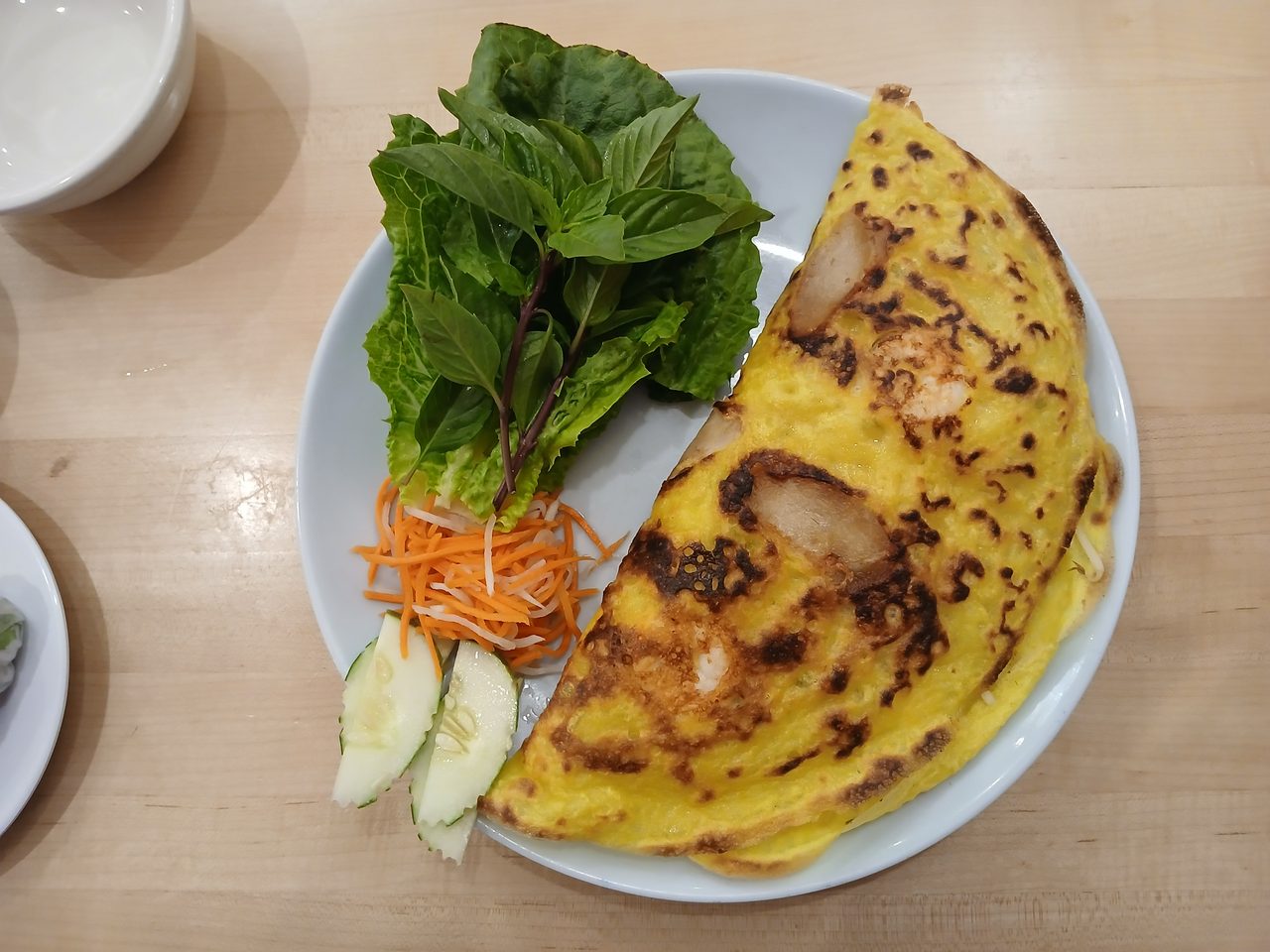
Photo: Brian Bilek · CC BY-SA 2.0
Vietnamese Lemongrass Chicken
Chicken marinated in minced lemongrass and garlic, stir-fried with fish sauce for savory depth (ga xao sa ot). The bright lemongrass aroma and sweet-salty sauce make this one-pan Vietnamese dish a rice-devouring favorite.
Ingredients
- Chicken thighs · bite-size600 g
- Lemongrass · white part, finely minced3 stalks
- Garlic · minced4 cloves
- Shallots (or onion) · minced2
- Red chili · optional1
- Cooking oil2 tbsp
- Cilantro & peanuts · to garnish, optional
- Sauce
- Fish sauce · nuoc mam2 tbsp
- Sugar1 tbsp
- Soy sauce1 tbsp
- Oyster sauce · optional1 tbsp
- Black pepper · a pinch
Steps
- ⏲ 20 min
Marinate the chicken with half the lemongrass, the garlic, fish sauce, sugar, soy sauce, and pepper for at least 20 minutes.
- ⏲ 3 min
Heat oil in a pan and fry the remaining lemongrass and shallots until fragrant.
- ⏲ 8 min
Add the marinated chicken and stir-fry over high heat until browned and cooked through.
- ⏲ 3 min
Add the oyster sauce (and red chili) and toss until the sauce coats the chicken and reduces slightly.
- ⏲ 1 min
Finish with black pepper, top with cilantro and chopped peanuts, and serve with warm rice.
Tips & Variations
Variations
- Spicier: Add more red chili for a satay-like kick.
- Lemongrass pork: Use pork belly or shoulder instead of chicken.
- Rice bowl (com): Serve over rice, com-ga-nuong style.
- Coconut version: Add a splash of coconut milk for richness.
Tips
- Mince only the tender white base of the lemongrass so it isn't fibrous.
- Fish sauce is the backbone of the flavor — don't hold back.
- Stir-fry over high heat so the chicken sears instead of steaming.
- Use half in the marinade, half in the pan for double the aroma.
- Most dishes take the aroma and throw the lemongrass away. This one eats it. In tom yum, rendang, laksa and fish amok the stalk is bruised, or blended, or dropped in whole and fished out — because lemongrass is a grass, and its cellulose does not soften however long it cooks. Time will not fix a coarse mince. That is the real reason for taking only the tender white base and cutting it as fine as you can manage: you are not seasoning a broth you will strain, you are putting it in your mouth.
- The "double aroma" tip has a mechanism. Lemongrass smells of citral, the same aldehyde family that makes lemon peel smell of lemon, and it is both fat-soluble and volatile. The half in the marinade goes in with oil and then spends minutes over high heat, which rounds it out and loses the top notes; the half fried at the start and met again by a sauce that only reduces "slightly" keeps them. Same ingredient, twice, at two different distances from the heat (blooming spices).
- The fish sauce is the salt, which is why twenty minutes is enough. What marinades do is clear that aroma stays on the surface and salt is the one thing that travels; fish sauce is heavily salted, so it seasons the meat in the time it takes to mince the aromatics. It is also worth not boiling it hard at the end — its savour sits in volatile compounds that a long reduction flattens into plain salt.
- Set beside satay. Both are Southeast Asian marinated chicken with a sweet-salty seasoning, and they part company over where the sauce is: satay grills the meat dry and pours the sauce over afterwards, this one reduces its sauce onto the chicken in the pan. One dish keeps them apart; the other joins them.
The basics behind this dish
- Fresh Herbs: Hardy, Delicate, and When to Add ThemAroma is volatile, so timing is the whole game. What separates a hardy herb from a delicate one, why the stems are worth more than you think, and why basil should never meet a knife.
- Browning and the Maillard ReactionMeat fails to brown for one of three reasons: it is wet, the pan is cool, or you put too much in at once. Plus how the brown film stuck to the pan becomes your sauce.
- Cooking Meat: Temperature, Resting, and Cutting Against the GrainDoneness is a core temperature, not a number of minutes. What resting actually does, how to handle a thick cut, and why the direction you slice changes the texture.
More of the same kind


More from this country


Sign in to edit.
AI-drafted, editor-reviewed · edits: 0 ·Edit history
https://cookiki.com/en/r/vietnamese-lemongrass-chicken · cookiki · User contributions are licensed under CC BY-SA 4.0.